

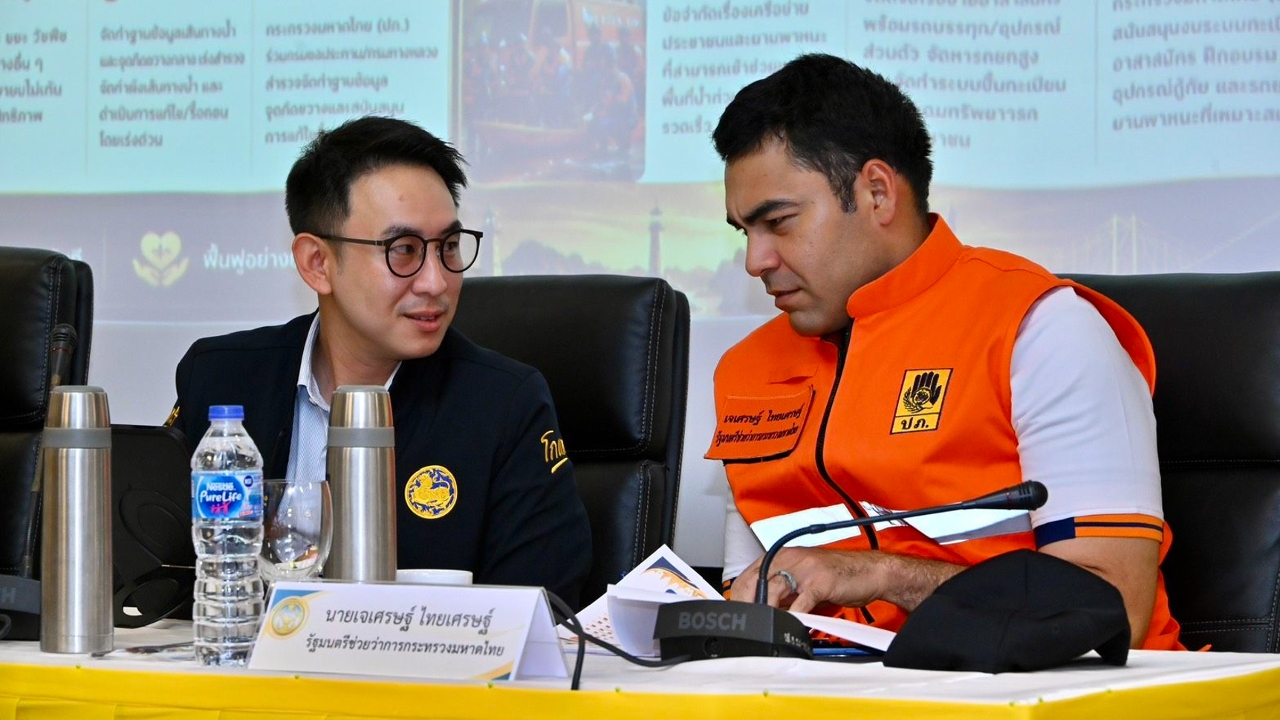
"Je Setth - Warasit" joined forces with the Cabinet to hold a workshop on disaster sub-issues, gathering plans for proactive disaster management.
At 2:00 PM on 30 Aug 2026 GMT+7, Mr. Je Setth Thaiset, Deputy Minister of Interior, together with Mr. Warasit Liangprasit, Deputy Minister of Interior, led the Ministry of Interior agencies and governors of five southern border provinces in a workshop to gather opinions on problems, obstacles, and development proposals for Songkhla, Satun, Yala, Pattani, and Narathiwat provinces. This was under the government policy on "Disaster Sub-issues." The meeting was attended by Mr. Phiphat Ratchakitprakarn, Deputy Prime Minister and Minister of Transport; Mr. Chaichanok Chidchob, Minister of Digital Economy and Society; Mr. Sanphet Boonyamanee, Deputy Minister of Transport; Mr. Phasakorn Boonylaksam, Deputy Permanent Secretary of Interior and head of internal security tasks; Mr. Theerapat Kachamat, Director-General of the Department of Disaster Prevention and Mitigation; Mr. Rattasat Chidchu, Governor of Songkhla, along with governors and deputy governors of the five southern border provinces, heads of government agencies, provincial disaster prevention and mitigation offices, public and private sector representatives, and related officials. The workshop took place at the Simila Meeting Room, 3rd floor, Office of the President Building, Rajamangala University of Technology Srivijaya, Mueang Songkhla District, Songkhla Province.
This meeting follows the policy of Prime Minister and Minister of Interior Mr. Anutin Charnvirakul to hold a workshop gathering opinions on obstacles and development proposals in the five southern border provinces, focusing on disaster issues to integrate cooperation from all sectors to solve recurring disaster problems in the southern region.
Regarding Songkhla province, proposals included sustainable preparedness and recovery measures such as developing an intelligent warning system, establishing vertical shelter buildings in the economic city, applying the Hat Yai Model Plus curriculum, and seeking support for a mega flood prevention project. Satun emphasized the need to expand water level monitoring points to cover every village, improve the flexibility of advance fund regulations to align with actual damage, and procure rescue machinery suited to local conditions.
Yala province, facing flooding from heavy rainfall and lacking urban planning with protective systems, proposed a water diversion canal bypassing Yala city and urban planning adjustments to accommodate lowland areas with controlled land use zones. Pattani, as a downstream area, proposed installing automatic weather stations covering all 116 local administrative organizations, constructing standard temporary shelters, and importantly, revising land and building tax criteria to incentivize private landowners to designate land as retention basins. Narathiwat proposed resolving budget regulation issues through risk-based budgeting, promoting localized disaster insurance subsidized by the state, and surveying safe zones for relocating assets to reduce economic losses.
All in-depth proposals and solutions from the five southern border provinces will be compiled for presentation at the first official off-site Cabinet meeting of 2026. The integration of information, water management linking upstream to downstream, and cooperation among all sectors mark a significant step in disaster preparedness, building confidence, and restoring quality of life for residents in the southern region toward becoming safe and livable cities sustainably.