

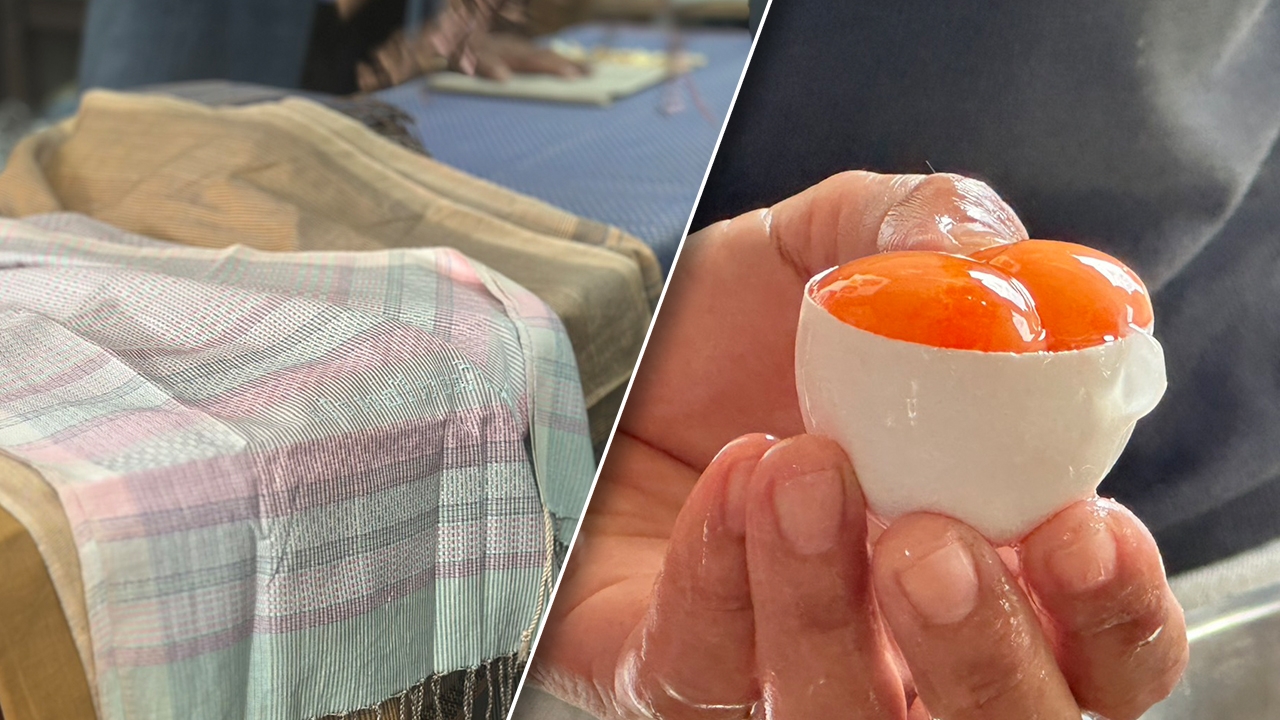
The Office of the Permanent Secretary of the Ministry of Interior led the media to view Songkhla’s famous products—Ratchawat patterned fabric, Kai Khrop eggs, and sour mangoes—ahead of the Cabinet’s mobile meeting, aiming to stimulate the community economy and expand markets.
On 30 Aug 2026 in Songkhla, the Public Relations Division of the Office of the Permanent Secretary of the Ministry of Interior took members of the media on a field visit.The Cabinet meetingofficially held offsite (Cabinet mobile meeting) in Songkhla and the inspection visit during 31 Aug – 1 Sept.,On the same day, the group visited community products and OTOP items known as local identity specialties of Songkhla Province.
The first stop was a visit to the Ratchawat weaving group, Saengsongla No. 1, in Hua Khao Subdistrict, Singhanakhon District, led by Mr. Wichai Marasena, chairman of the Saengsongla No. 1 Ratchawat group, who showed the Ratchawat weaving process and revealed that they take greatpride in the Ratchawat fabric,an ancient woven cloth that is a famous local identity of Ko Yo Subdistrict. The event organizers have prepared this fabric as outfitsto be wornby the Cabinet members during the Cabinet mobile meeting in Songkhla. The group chose to weave the Ratchawat pattern, a distinctive design considered the signature pattern of Songkhla. This fabric has a long history; originally, locals called it the “Crow’s Neck” or “Kan Yaeng” pattern until it was renamed “Ratchawat” by royal decree when the King visited the South in 1900 CE (2443 BE), giving it a history of more than 126 years. For this special occasion, the group purposely used a bluish-purple color, the Prime Minister’s signature color, woven into the fabric.
Regarding production, although setting up the loom initially takes about seven days, the group prepares rolls of fabric in advance, allowing immediate weaving. Currently, their production capacity is about three meters per day, which is enough fabric to make one shirt.
Mr. Wichai said he felt very proud and pleased to present Ko Yo’s local wisdom and craftsmanship. Having national leaders wear Ko Yo woven fabric serves as a model and an important voice to communicate the community’s identity more widely, positively impacting job creation and income for villagers.
However, the chairman of the Ratchawat group also reflected on the current crisis facing local crafts: the number of Ko Yo fabric artisans has declined to fewer than 60 people, mainly due to insufficient ongoing support and competition from factory-made fabrics from other areas. The group remains committed to leading and exemplifying local craft preservation, providing villagers with supplementary income and, importantly, attracting younger generations to learn and develop Ko Yo weaving, which has existed for centuries, ensuring it remains a sustainable community heritage.
Next, the delegation visited the Songkhla Lake Agricultural Housewives Community Enterprise group in Hua Khao Subdistrict, Singhanakhon District, to observe the production of Songkhla’s Kai Khrop eggs. The media were invited to try making Kai Khrop eggs and then traveled to the Mae Tiew Sour Mango Processing Community Enterprise in Sathing Mo Subdistrict, Singhanakhon District.
Meanwhile, Ms. Ratana Maisan, Songkhla’s provincial development officer, revealed that to promote the grassroots economy, the province plans to showcase its famous products and OTOP items at the Cabinet mobile meeting, creating opportunities to expand markets and increase product value directly benefiting local people. Products from all 16 districts and network groups will be displayed, including Mo Chi sweets, roti cha chok, Kai Khrop eggs, seaweed salad, pickled sour mangoes from Singhanakhon, sour mango slushies, crispy fried white snapper skin, champada ice cream, Songkhla grilled fermented soybeans, Khlong Ngae tofu, and black pepper fish balls, among others.


