

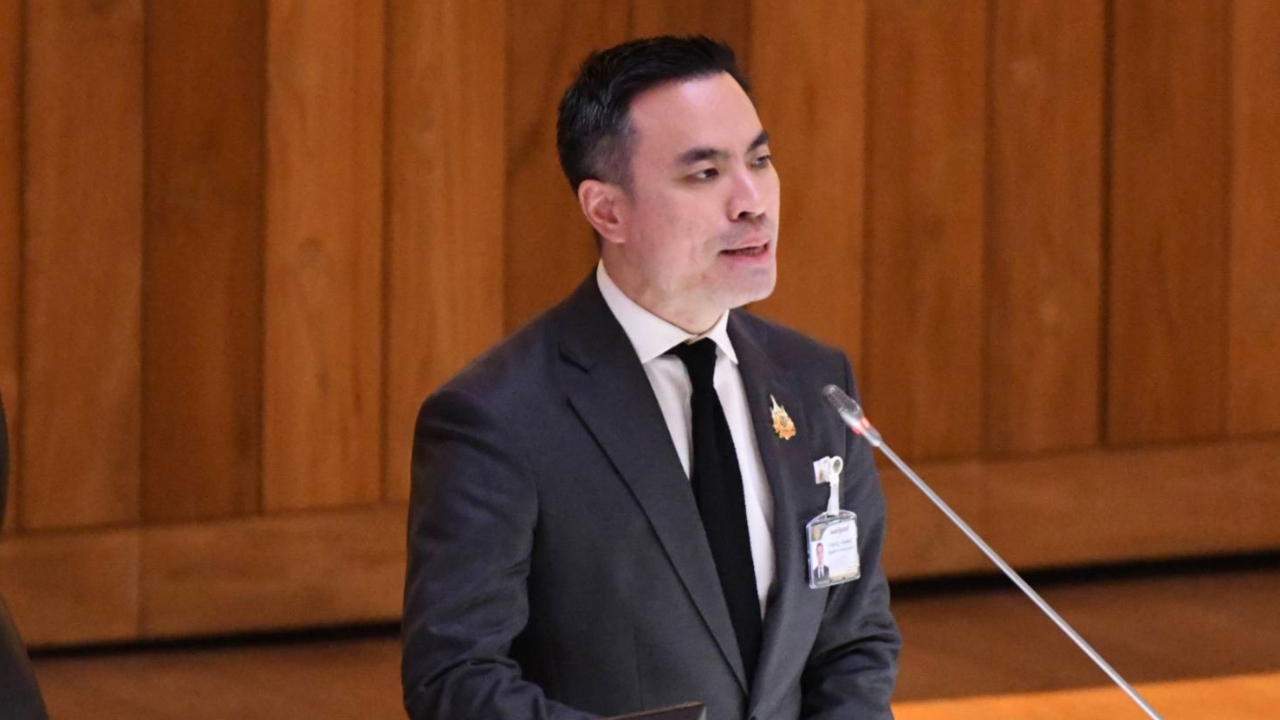
"Aeknat" explained to the Senate that the energy loan decree is not borrowing to plug financial leaks but investing in energy transition, reducing oil and LNG imports, and promoting citizen-owned solar power plants.
At 12:30 PM on 31 August 2026, at the Senate meeting room in the Parliament building, Energy Minister Aeknat Promphan explained to the Senate during consideration of the Royal Decree authorizing the Ministry of Finance to borrow funds to address the energy crisis impact and support the country's energy transition of 2026.
Aeknat said the loan decree is necessary because the energy crisis caused by Middle East conflicts severely impacts both the economy and the cost of living. Thailand consumes about 100 million liters of oil daily. Although refineries meet demand, over 90% of crude oil is imported. When crude prices surge from 60-70 to over 100 US dollars per barrel, it immediately raises overall costs.
Without the oil fund's support, diesel prices at refinery gates could exceed 60-70 baht per liter because Singapore's diesel prices once nearly hit 300 US dollars. Thailand’s electricity still relies on gas for about 60%, with about 30% of gas fuel as imported LNG. When LNG prices rise, electricity costs are pressured downward accordingly.
Aeknat said the increased oil cost of about 10 baht per liter on daily consumption of 100 million liters means Thailand bears an extra 1 billion baht per day or over 300 billion baht annually. Meanwhile, LNG electricity costs may increase by hundreds of billions baht yearly, reflecting the high damage value of this energy crisis. However, the government does not only use funds to address the issue because the oil fund pulls future oil users’ money to compensate the present. Reducing excise tax lowers state revenue, so ultimately, borrowing is unavoidable.
Aeknat said the government under Prime Minister Anutin Charnvirakul and with oversight from Deputy Prime Minister and Finance Minister Aekniti Nitithanprapas has taken unprecedented measures by using the decree to collect excess profits from six refineries due to abnormally high refining margins, totaling 17.442 billion baht, to help reduce pump prices for citizens.
Regarding electricity, the government is not only subsidizing but restructuring by extracting electricity costs from citizens' bills and reducing residential electricity rates for the first 200 units to no more than 3 baht, covering 23 million households, along with lowering electricity cost burdens by over 0.06 baht per unit.
Aeknat said the 400 billion baht loan is divided into two parts: the first 200 billion baht to directly alleviate targeted impacts on citizens, with no procurement or corruption channels, and the other 200 billion baht for sustainable energy transition investments, not just patchwork loans that allow losses to continue.
For oil, the government will accelerate promoting biofuels from Thai agricultural products—biodiesel from palm oil and ethanol from sugarcane and cassava—as an "onshore oil source" to reduce crude oil dependence, especially since Thai ethanol can be produced cheaper than Singapore benchmark gasoline prices.
Aeknat said for electricity, dependence on LNG must be reduced through renewable energy including solar, wind, hydrogen, and new technologies, while opening a clean electricity market with Direct PPAs to allow all industries access to clean power, not limited to data centers, and preparing to invest in grids supporting citizen power generation.
"This loan will invest in giving citizens the opportunity to own power plants through citizen rooftop solar or on citizens’ land, with the state investing in installation and purchasing power initially to repay the loan. Excess power helps reduce electricity costs. After repayment, the solar panels will belong to the citizens, generating long-term income and truly distributing energy capital opportunities to the people."