

Suriyas advocates the concept of “Arya Agriculture” in rubber plantation areas, blending local wisdom with technology to prepare for EUDR regulations and safeguard the global rubber export market.
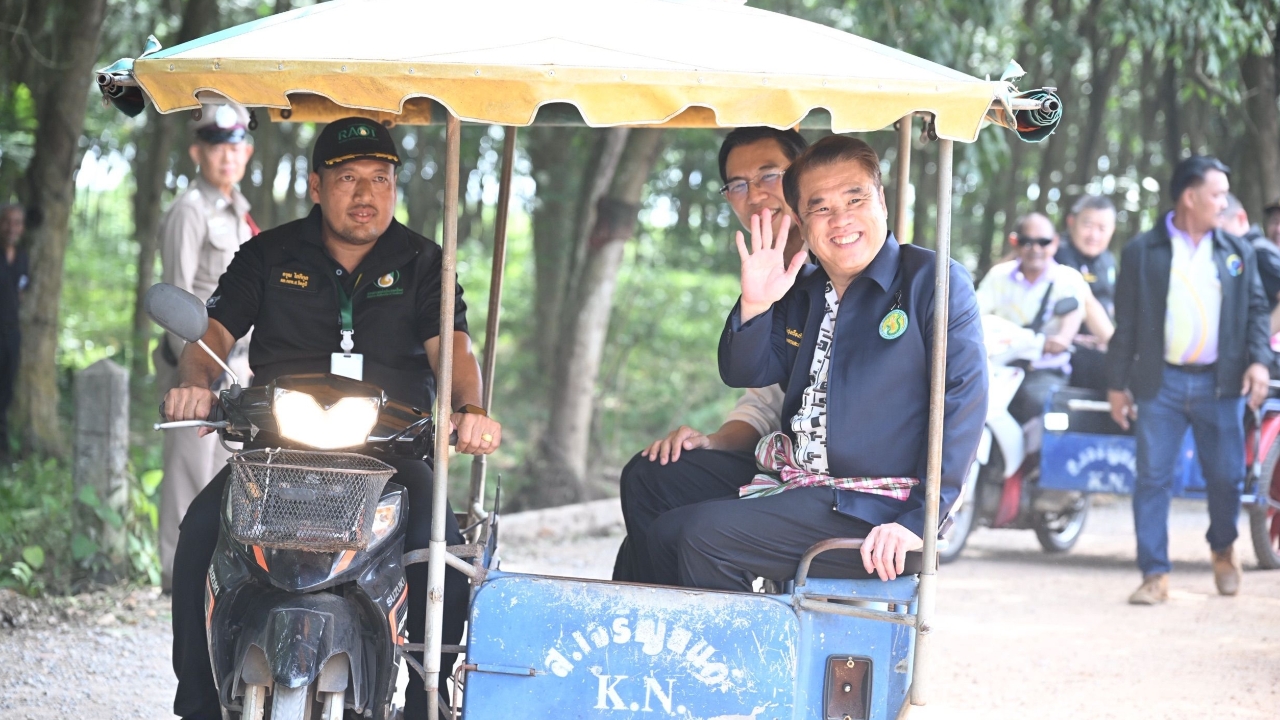
On 31 Aug 2026 GMT+7, Mr. Suriya Jungrungreangkit, Minister of Agriculture and Cooperatives, visited the Klong Chang Rubber Fund Cooperative in Bang Hriang Subdistrict, Khuan Niang District, Songkhla Province, to monitor its operations and deliver policies aimed at raising rubber farmers' incomes through Arya Agriculture. This aligns with the “Innovative Agriculture for the Sustainability of Thai Farmers” policy. Arya Agriculture is a method that combines local knowledge with technology and research to sustainably increase income. The Ministry of Agriculture and Cooperatives, through the Rubber Authority of Thailand (RAOT), has continuously promoted Arya Agriculture in rubber-growing areas by encouraging smallholder rubber farmers to shift from monoculture rubber plantations—relying solely on rubber latex income—to fully utilizing land by integrating crop cultivation, livestock, fisheries, or other suitable agricultural activities tailored to each area. This approach is combined with systematic water management, helping create diversified income for rubber farmers and, importantly, ensuring the sustainability of their rubber farming livelihoods.


Currently, as the project pilots and advances, over 75,000 rai of smallholder rubber plantations have joined the Arya Agriculture initiative by utilizing spaces that can be managed either before tapping begins or after tapping starts for intercropping, companion crops, or other compatible agricultural activities that coexist with rubber trees to generate additional income. This reflects the farmers’ readiness and positive response to transforming rubber plantations into integrated farms, which is a crucial foundation for improving farmers’ income and quality of life and driving the country’s rubber farming toward long-term sustainability. The Rubber Authority of Thailand, as the comprehensive regulatory body for rubber, aims to stabilize prices and increase farmers’ income by no less than 15,290 baht per rai annually.
At the same time, efforts to increase farmers’ income face challenges in the global market, notably the EUDR law. Rubber is a key economic crop for Thailand and one of seven commodities imported into the European Union that require traceability of product origins. Currently, Thailand’s strength is recognized by the European Commission, which classifies the country as “Low-Risk” among three risk categories. Thailand is one of 140 countries in this group, resulting in only 1% of Thai rubber shipments being randomly inspected at EU customs, reducing costs and export time for importers. Over the past four years (2021–2025), Thailand has held an average 20.3% market share of natural rubber in the EU, with exports valued at over 1.8 billion USD in 2025.


Therefore, the Rubber Authority of Thailand has developed systematic readiness measures to build confidence in product traceability and origin verification for rubber products. RAOT has registered over 1.4 million farmers and rubber plantations covering more than 15.5 million rai nationwide. The registry system collects geolocation data of plots, rubber tree age, varieties, and yield information to prove products are not sourced from deforested areas as mandated by EUDR. There is also the Thai Rubber Trade (TRT) platform operating through eight central rubber markets and over 800 network markets nationwide, supported by approximately 637 farmer institutions and rubber businesses ready to supply EUDR-compliant products with origin certification. Additionally, the Thai Rubber Traceability standard certifies rubber product management under EUDR compliance. For example, the Klong Chang Rubber Fund Cooperative is a genuine farmer cooperative with strong potential and serves as a model for other cooperatives in southern Thailand. It not only enhances value from raw rubber through intermediate processing and strengthens its members but is also the first cooperative in Songkhla province and southern Thailand to achieve Thai Rubber Traceability certification, elevating quality and management standards.
Nevertheless, the Ministry of Agriculture has assigned relevant agencies to urgently and continuously update the completeness of databases, a task that requires ongoing effort to maintain current data and enhance value creation, ensuring sustainable income generation for the country.