

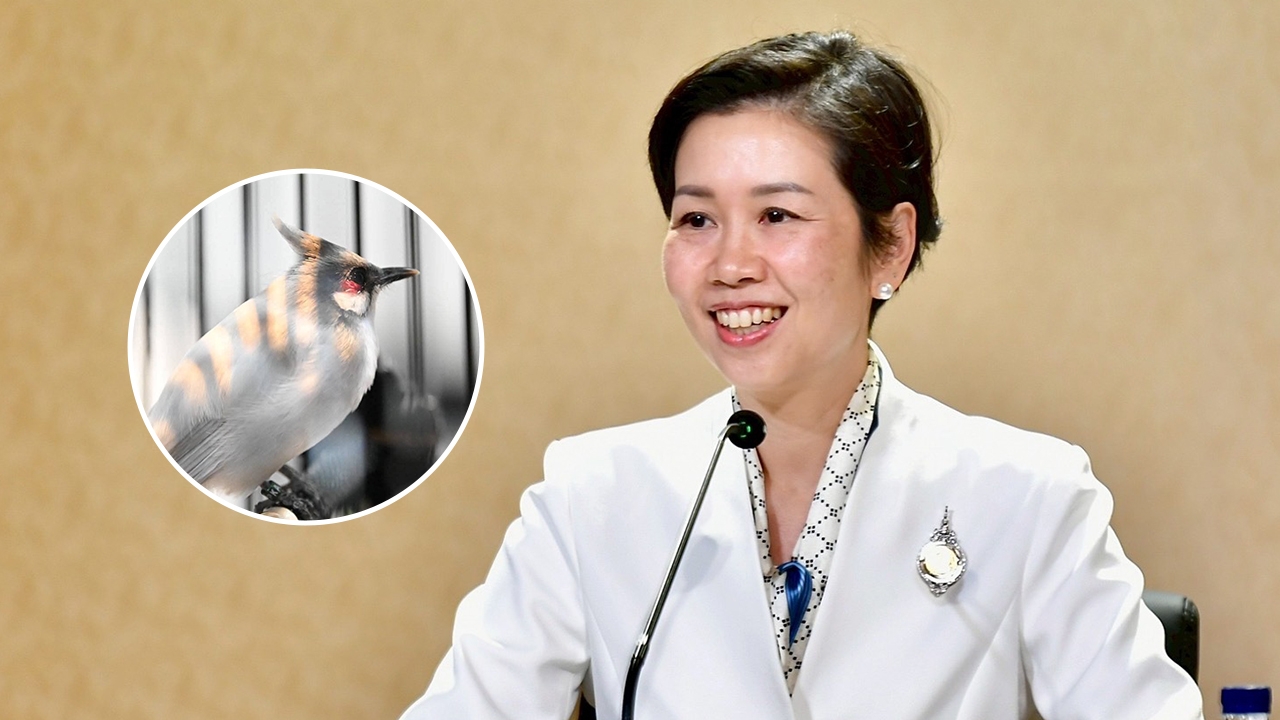
Ratchada revealed that the Southern Border Development Center (SBDC) is ready to promote careers for breeders, and producers of bird food and related equipment following the lifting of protections on the Red-whiskered Bulbul, enhancing the southern border’s identity and generating income circulation in communities.
On 1 September 2026 GMT+7, Ms. Ratchada Thanadirek, spokesperson for the Prime Minister's Office, spoke about the Ministry of Natural Resources and Environment's ministerial announcement published in the Royal Gazette on 31 August 2026 GMT+7. The announcement removes the Red-whiskered Bulbul (Pycnonotus jocosus) from the list of protected wildlife. This legal adjustment aligns regulations with the lifestyles and culture of people in Pattani, Yala, and Narathiwat provinces, where keeping Red-whiskered Bulbuls is widespread and deeply connected to local life.
For local people, the Red-whiskered Bulbul is not merely a pet but is tied to identity, culture, community relationships, and activities including competitions in which locals participate. This ministerial adjustment therefore carries significant meaning for the community and responds to long-standing local appeals.
The Prime Minister's Office spokesperson added that beyond cultural aspects, this change can expand breeding, keeping, and related activities into careers and income sources locally—from breeders to producers of food and equipment, as well as competitions and travel. This will help distribute income within communities, especially in the southern border provinces. The Southern Border Development Center has prepared plans to support these career and income opportunities.
Promoting systematic breeding also helps reduce wild bird capture, aligning with the ministry’s goal to preserve local bird-keeping traditions and culture, encourage breeding, and reduce hunting from the wild. This creates a balance between community lifestyles and natural resource conservation.
“For the people in the three southern border provinces, the Red-whiskered Bulbul is part of daily community life. This legal adjustment is not merely a regulatory fix but opens space for local identity and culture to be preserved, while creating career and income opportunities for communities alongside nature conservation,” she said.