

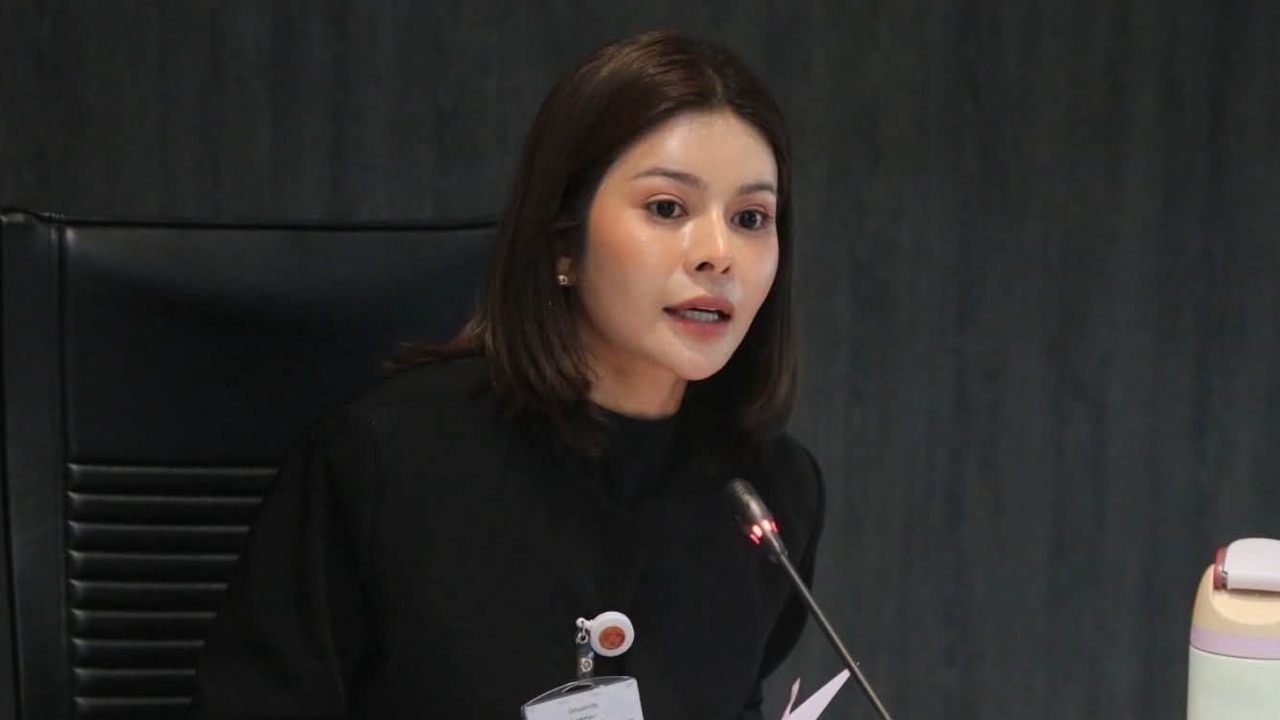
Phakamon raised concerns about the local government exam fraud case, fearing that outsourcing hiring could open the door to repeated corruption. She declared it is not enough to just revoke the names and close the case; the financial links up to those in power must be investigated. She emphasized that the public deserves clear answers.
1 Sep 2026 GMT+7 Phakamon Noon-anun, a party-list Member of Parliament from the Prachachon Party and chair of the Parliamentary Committee on Political Development, Mass Communication, and Public Participation, commented on the case of investigating fraud in the competitive examination process of local administrative organizations (LAOs), where more than 3,000 exam passers had their names revoked. She noted that current actions may still fail to answer society’s crucial questions, especially regarding those behind the scheme and the financial trails.
Phakamon added that she had previously warned about the possibility that some LAOs might rehire individuals whose names were revoked by outsourcing. If this happens, it would need close scrutiny as it could create a loophole for repeated corruption, since those who had paid bribes might be rehired at higher wages. Society will then question where the previously paid money went and whether rehiring with public funds is connected.
She also questioned whether the letters or measures from central agencies to LAOs are merely requests for cooperation or have real legal and disciplinary binding effects. She asked what mechanisms exist to monitor violations, since LAO leaders are not directly subordinate to the Department of Local Administration (DLA). Sending letters alone may be insufficient; there must be clarity on which types of hiring of these individuals are prohibited and who will conduct oversight.
Regarding reports of a new examination planned to replace the revoked 3,000-plus names, with a university scheduled to hold the exam in October, Phakamon said transparency must be ensured from the university selection process onward. The public needs guarantees that no predetermined individuals or exam results are set in advance, especially after recently losing confidence in the previous system.
Meanwhile, Phakamon expressed concern over officials stating they have completed their roles—so-called “closing the case”—by revoking exam passers’ names. She argued that revoking names should not be the end of investigations. If closing the case means ending their mission and leaving others to handle the rest, then when will the public see the truth about those behind the scheme? Large-scale corruption must be traced through financial pathways to reveal where public funds have gone and the structure of the network—not just stopping at low-level recipients or those near the exam papers.
"According to information received, some witnesses have submitted evidence of contact with political figures to relevant agencies. This must be seriously investigated. If evidence reaches politicians, it must be examined. The public has the right to ask who masterminded this large-scale scheme and who received the money," she said.
She therefore urged anyone with information about the buying and selling of positions to come forward to trusted agencies, and called on the state to implement stringent witness protection measures. "This type of corruption steals not just public funds, but the future of individuals who have prepared for exams many times and devoted their lives hoping to enter the civil service honestly. Yet those with money can buy this opportunity." "If the government wants to create equality, it must restore public confidence today."
At the end, Phakamon emphasized that investigations must expand to those behind the scenes. If any officials, local politicians, or other persons are involved, they must face justice equally. "This issue should not end with merely revoking names, retesting, or arresting low-level offenders. We must find out who created this system, who benefits, and where the public’s money ultimately went, because the public deserves clear answers."