

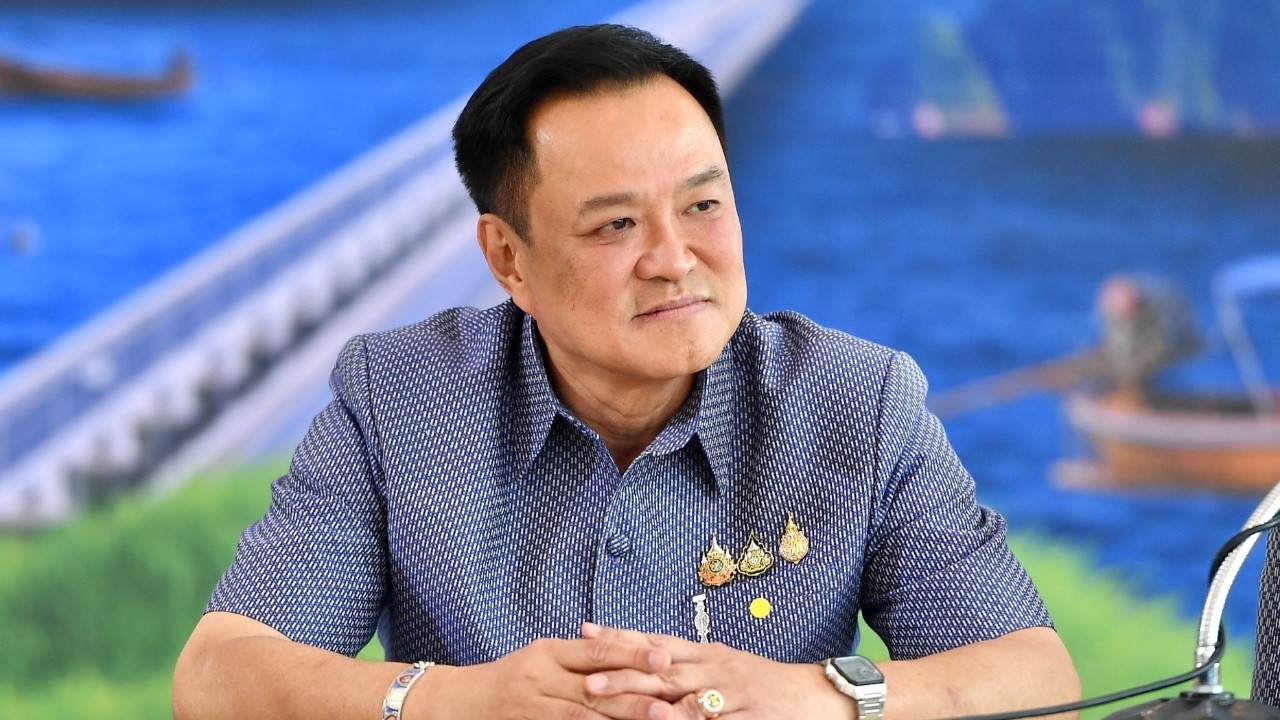
Prime Minister Anutin revealed that the cabinet approved a 100-billion-baht dual-track railway project in Southern Thailand to improve travel efficiency. He stated that universal insurance requires less expenditure but provides greater coverage, paying premiums of 15.5 billion baht annually and covering about 75 billion baht.
On 1 Sep 2026 GMT+7, at Prince of Songkla University, Hat Yai Campus, Songkhla Province.
Anutin Charnvirakul, Prime Minister and Minister of Interior, announced following the official offsite cabinet meeting that the government is advancing a major infrastructure project to serve as a key mechanism for the long-term development of the South. The cabinet approved the second phase of the dual-track railway project, with a budget of 106.79832 billion baht, covering three routes: Chumphon to Surat Thani, Surat Thani to Hat Yai Junction, and Hat Yai Junction to Padang Besar. Additionally, he requested the National Economic and Social Development Council to expedite studies on extending connectivity from Hat Yai Junction to Su-ngai Kolok District, Narathiwat Province, aiming for comprehensive transportation integration as intended by the government. This project will enhance travel efficiency and freight transport, linking the Southern economy with other regions of the country and neighboring nations.
Anutin also stated that the meeting considered the universal insurance project, which will protect approximately 30 million households nationwide against three types of hazards: floods, storms, and earthquakes. Coverage includes up to 100,000 baht per household per incident for housing damage, with no annual limits on the number of claims, and life insurance benefits of 2 million baht per person in case of death. Initial assistance can be paid within 15 days, with additional aid following within another 15 days. The government will cover insurance premiums of about 15.5 billion baht annually, providing coverage worth approximately 75 billion baht per year. Compared to current expenditures on compensation, which amount to about 45 billion baht annually, this approach is more cost-effective. According to preliminary calculations by Deputy Prime Minister and Finance Minister Akniti Nitithanprapas, this will reduce spending while increasing protection for the population, which is expected to be more beneficial overall.