

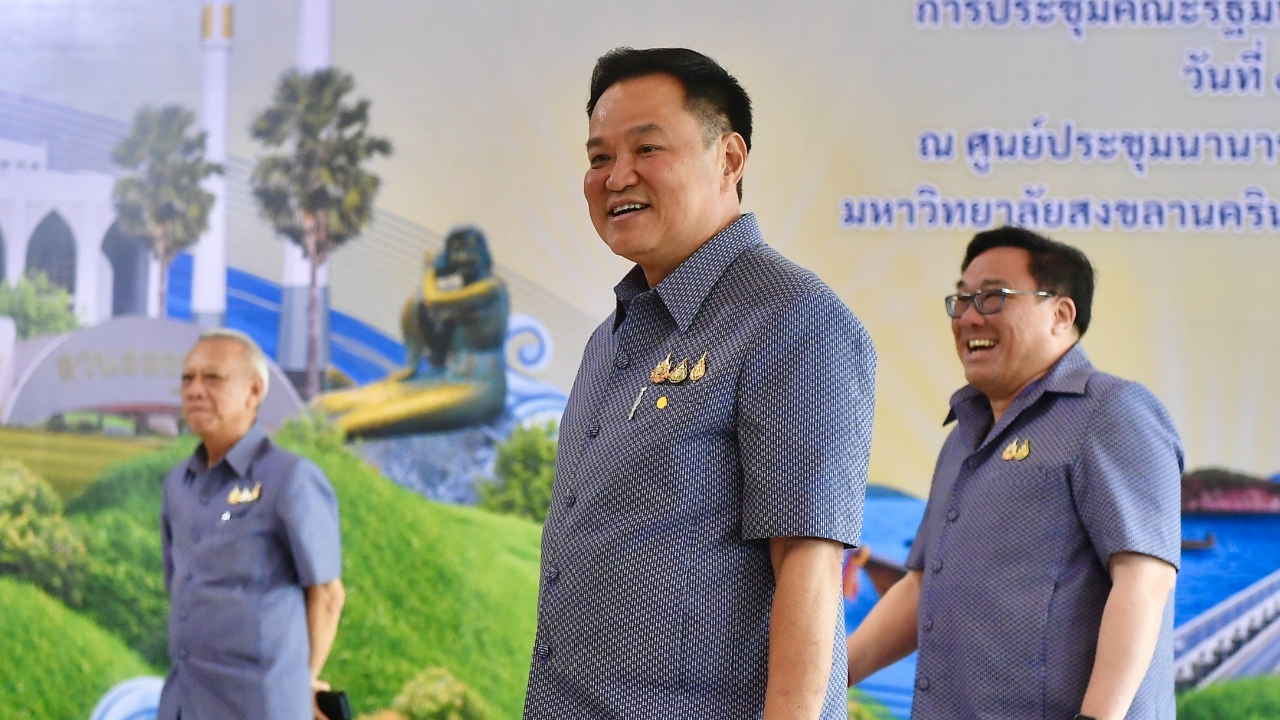
Anutin expressed amazement, pointing out that resolving unrest in the southern border provinces is a matter for the government, not a political issue. Regardless of which party is chosen, peace must be built. He did not dare claim the problem would end soon, as it has persisted for 30-40 years, but he is confident that from now on, there will be true unity.
On 1 Sep 2026 GMT+7, Anutin Charnvirakul, Prime Minister and Minister of Interior, spoke about addressing unrest in the southern border provinces. He said he has listened to the hardships of the people, including border management issues and the possibility of border checkpoint closures. Feedback indicated that closing all checkpoints would severely impact local livelihoods, so this must be considered. For areas with lower risk, officials should be allowed to supervise and control. These points reflect ongoing communication. Another matter is improving the control plans and problem-solving measures for the southern border provinces to align with current circumstances. A National Security Council meeting was held last Friday to adjust working methods toward clearer integration.
The Prime Minister added that previously, integration meant the Prime Minister and Minister of Interior were separate individuals, but now they are the same person. This will make integration more tangible. The Prime Minister oversees the police and military, while as Minister of Interior, he supervises local administration. Therefore, from now on, district chiefs, police, military, security agencies, and civilians will work together. Structural or personnel adjustments will be necessary to suit this approach. The key leaders, about four or five in number, must collaborate effectively.
When asked about recent discussions with local people emphasizing local involvement in resolving unrest, the Prime Minister said cooperation is essential. The public has told the government how it should proceed, and the government must listen. However, the people must also assist the government because it cannot know the locals better than their own relatives in the area. Therefore, the government wants to see lasting peace. It has the budget and supporting resources to achieve this.
"The intention is to enable them to build peace in their own areas if they cooperate by exchanging information. Importantly, negotiations must not be closed off. We have changed our security administration strategy to emphasize dialogue while respecting and strictly enforcing the law. Where suppression is necessary, or if they cause unrest or harm us, we will act. No one forbids us from doing this; it does not mean we never talk to them at all."
When asked if this strategic adjustment would end the southern unrest, Anutin said, "It must improve. But to say a problem that has lasted 30-40 years will change overnight with a new strategy — no one can say for sure. However, I am confident that under my leadership as Prime Minister, the government will demonstrate integrated cooperation in administration to serve the people as one. Now, the only hope and desire is for everyone’s cooperation to achieve lasting peace."
When asked whether solving problems in the three southern border provinces would increase parliamentary seats for the Bhumjaithai Party, Anutin exclaimed with surprise, then said, "Don’t ask questions like that. This is a government matter, not a political issue. Whatever the political party, the current government must serve the people. Whichever party is elected, the three southern border provinces must have peace and improved economic and quality-of-life conditions for their people."