

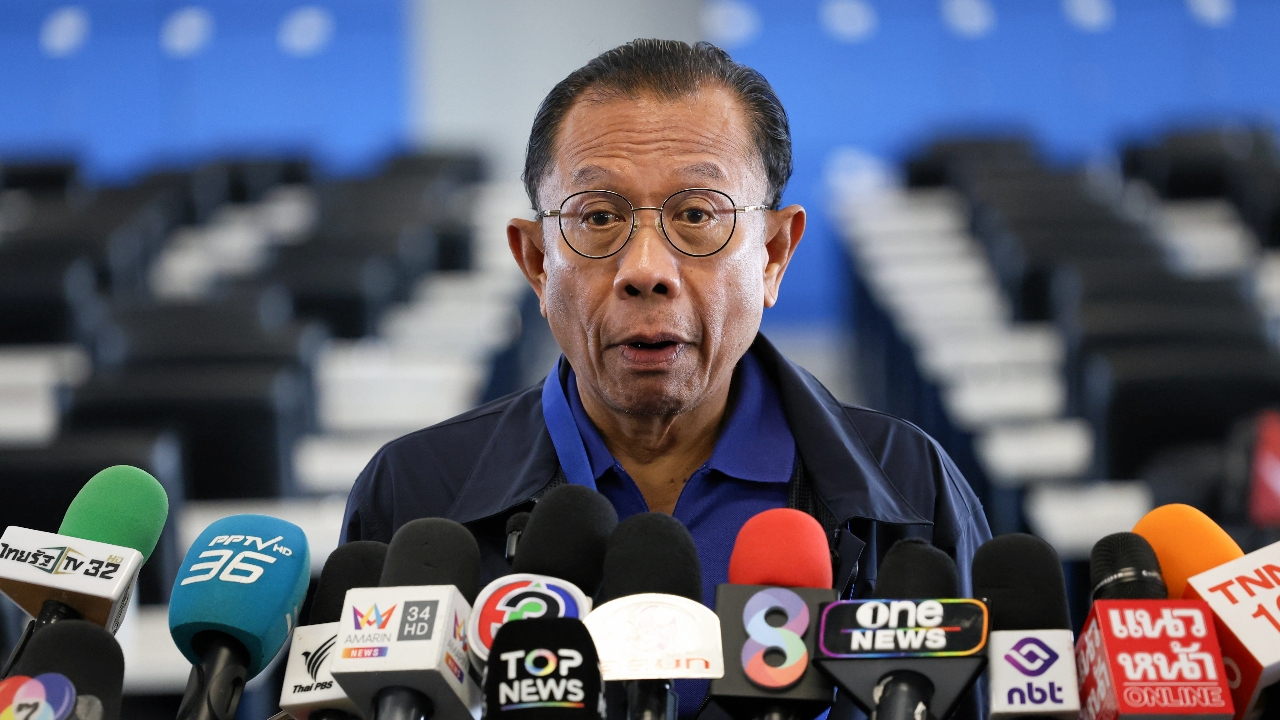
Supachai challenges conscience, asking who leaked secret Election Commission documents into political games. He notes the selective disclosure of Case 26 files to accuse various individuals while ignoring Case 36, questioning what meaning remains for the justice system.
On 2 Sep 2026 GMT+7, Supachai Jaisamut, party-list MP and legal chief of the Bhumjaithai Party, posted on Facebook regarding the public disclosure of documents related to the Election Commission's (EC) deliberations. He stated that he had previously questioned the release and interpretation of the “Case 26” files used to accuse various individuals, and wondered why “Case 36,” another part of the EC’s review process, was not mentioned.
Supachai said that recently Somchai Srisutthiyakorn revealed documents from “Case 36” publicly. He reaffirmed that his earlier principle remains unchanged; his questions were not a call to unlawfully disclose internal EC documents, but rather to ask why only information from Case 26 is released and used to accuse individuals, without providing society with a full perspective. He posted the following statement:
Supachai stated, “Case 26 has been opened, and now Case 36 is also being revealed. I still stand by my original principle. Previously, I questioned why when someone disclosed, interpreted, and loudly accused individuals based on the 'Case 26' files, there was no mention of 'Case 36,' which is another part of the EC’s deliberation process.”
He added that since Somchai Srisutthiyakorn revealed Case 36 documents, he wants to affirm that his question was never a call for anyone to unlawfully disclose internal EC documents. It was to ask why, if some parties choose to release only information from Case 26 to accuse others, they do not also tell society that the same process includes other evaluations and opinions that may differ.
Supachai said that even with Case 36 documents revealed, his stance remains: he does not support opening Case 26 files nor Case 36 files if they were obtained or disclosed unlawfully. Notably, Somchai himself stated the documents came from “an insider at the EC” and were marked “for internal use only.” Therefore, before asking what the documents say, society has the right to ask who leaked these internal documents, whether they had authority to do so, how much right the recipients have to disclose them, and why documents from the deliberation process repeatedly leak into the political arena.
Regarding the content of Case 26 or Case 36, agreement or disagreement is another matter, because ultimately the legal authorities must consider all evidence and be responsible for their own rulings. Society should not become a court deciding cases based on “selectively revealed files.”
Supachai said, “I asked about Case 36 to highlight that one should not listen to only one side. It is not to encourage anyone to distribute internal EC documents for public reading. If today Case 26 is opened and tomorrow Case 36 is opened, and all sides do this, then what meaning will remain for the term ‘justice process’?”