

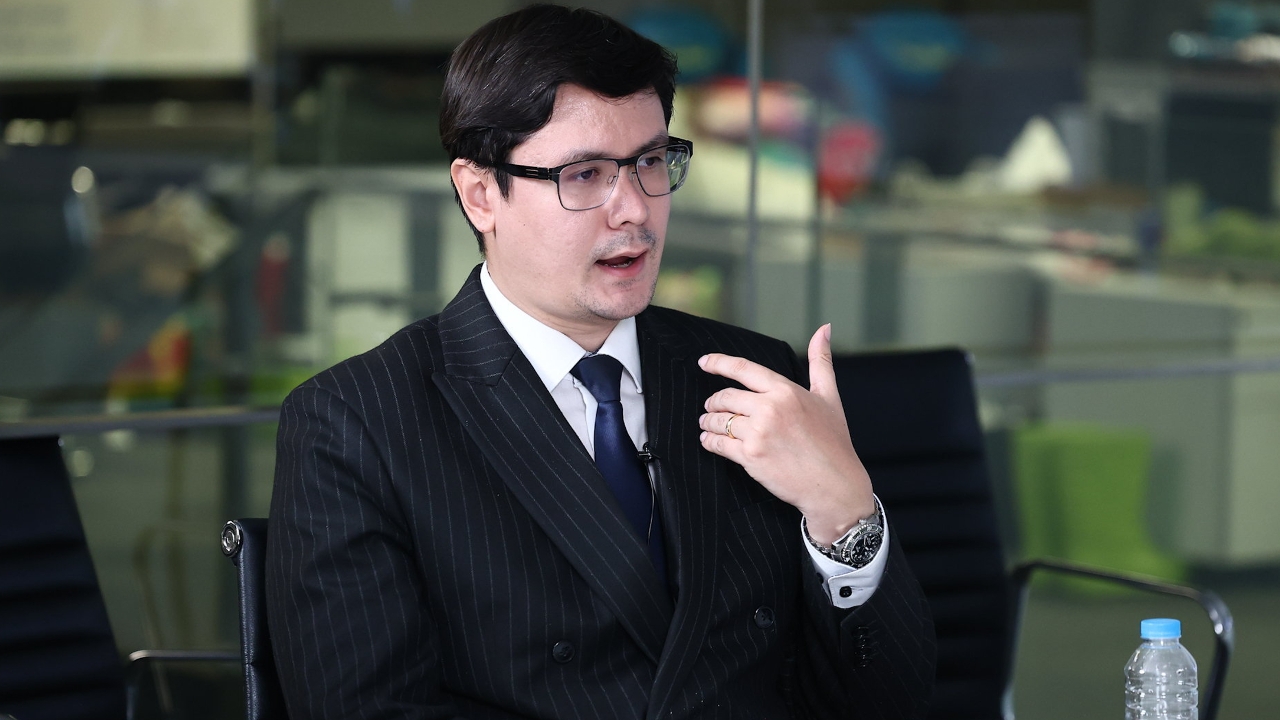
"Rome" argued that the investigation of local corruption should not be limited to civil servants only and questioned "Anutin" following "Pakorn"'s finding of wrongdoing by "Narucha." He also revealed the issue of Burapha University being removed from the TOR process and replaced, citing involvement of a "minister's office gatekeeper."
At 09:30 on 2 Sep 2026 at the Parliament Building, Rangsit Rome, party list MP and deputy leader of the People’s Party, speaking as chairman of the parliamentary commission on law, justice, and human rights, gave an update on the investigation into local exam corruption. He said recent findings show the corruption is systematic, resembling organized crime, and is not confined to civil servants alone.
Rangsit stated that the government has tried to claim no politicians are involved, but evidence, information, and credible witness testimonies clearly indicate involvement from both political figures and senior ministry executives, possibly linked to certain political parties. Limiting responsibility to a few civil servants is unacceptable, as it appears to restrict blame onto them while letting politicians evade accountability. The commission will continue seeking facts and is currently verifying whether more political actors are implicated, possibly requiring further investigation to confirm that key figures may indeed be political.
When asked about information linking to political figures, Rangsit said there is much data but he cannot disclose specifics yet, as some are confidential and received from multiple informants. The commission’s information is very clear but cannot be revealed at this stage.
Rangsit added that local exam processes typically involve government officials and contractors managing the work. Political involvement—through meetings, acquaintances, or appointments—is inappropriate and indicates corrupt practices. Some civil servants are political protégés, nurtured by political figures.
He also referenced Deputy Prime Minister for legal affairs Pakorn Nilprapunt’s statements that many individuals have been indicted and cases forwarded to the prime minister. He cited the case of Narucha Kosavisivilai, director-general of the Department of Provincial Administration, who has been indicted and whose information has been sent to the prime minister. He questioned how Prime Minister Anutin Charnvirakul will proceed.
Rangsit divided the investigation into two phases: first, focusing on civil servants, where there is an attempt to limit blame to a few individuals, though many are involved; second, on political actors, tracing back to when Burapha University was awarded the contract and corruption emerged, leading to its removal and the issuance of a new TOR, with involvement from an individual close to Prime Minister Anutin.
Rangsit said that in removing Burapha University, Anutin was cited as the reason for the cancellation, and the process has been ongoing. He characterized these actions as resembling organized crime systematically plundering the nation.
Regarding reports that senior DSI officials are involved but the government denies it, Rangsit said many people are involved in the local exam corruption network. The commission is investigating and gathering information, including unexpected names outside of typically scrutinized ministries, who serve as connectors or facilitators.
He gave an example that for someone from Srinakharinwirot University to know prominent political figures, there must be intermediaries within politics, who themselves are high-profile political actors.
On Burapha University’s request for witness protection for those providing information to the commission, Rangsit said there is widespread corruption and asked whether the government is combating corruption or targeting whistleblowers. He noted that ironically, whistleblowers are often viewed as the greatest offenders.
As chairman of the law commission and a law graduate, Rangsit urged all justice system members—some of whom are seniors and instilled with ideals of justice—not to allow intimidation of key witnesses or informants exposing corruption to persist in society.
“This is a serious issue that discourages people from providing information, which is the intimidation’s purpose. Those who have given or are giving information feel unsafe, as there is no way to know the extent of power or influence these criminal organizations can wield against ordinary people,” Rangsit said. He termed this a “blue criminal organization” that must be fought against.
Regarding the revocation of local exam candidate lists and reports that outsourced hiring methods have resumed, Rangsit said local exam corruption involves multiple aspects, including efforts to fight corruption and cases where those involved have secured positions through payments. Some names have started to emerge.
Rangsit explained the government has divided the process into stages. The commission has yet to examine details, allowing the government to work first. However, there is concern that despite segmentation, some candidates who passed may have had their scores artificially boosted. If the evaluation relies solely on scores, it raises doubts about effectively solving corruption. The return to outsourced hiring methods also challenges confidence in the local exam process. The commission is focusing on identifying the masterminds behind the corruption.
On witness protection measures, Rangsit said initial discussions are underway with several options to consider. They are consulting with Burapha University to determine the most suitable form of protection, as some approaches may not make informants feel safer, which would deter them from coming forward. He affirmed that the commission already has very clear information, and relevant authorities likely possess all necessary data for enforcement.
Regarding I.B. Foods company’s scheduled testimony tomorrow, Rangsit asked the public to await the press conference. This is the first time the commission has summoned the company, which holds various data being gathered—not just exam answer sheets or individual connections but also related information.
On summoning Srinakharinwirot University again, Rangsit said this time they called the dean directly, unlike before when the dean never appeared in person. The dean is believed to hold key secrets about the case, making his testimony crucial. He understands the dean may not attend, but the commission will assess how well those attending on his behalf can answer questions. The dean’s direct testimony would greatly benefit all parties.
In conclusion, Rangsit said that whether individuals in education or government are coerced into wrongdoing or actions deviate from intended purposes, providing information to the commission is of utmost benefit. The commission seeks not just minor players but the major figures behind the entire affair.