

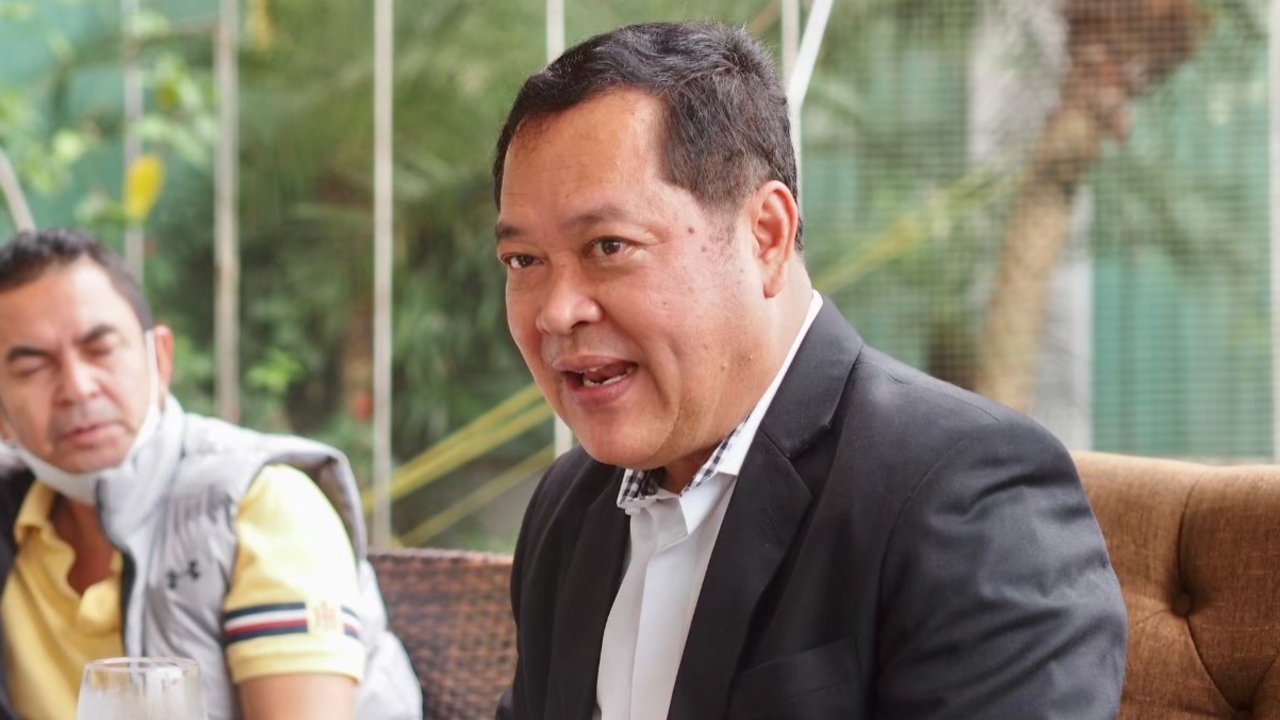
Police Colonel Tawee points out that rigging in the Senate election and zero votes suggest a legislative assumption of collusion in the voting process, deeming the election neither honest nor fair. He stresses that the Election Commission must petition the Supreme Court to conduct the investigation and ruling on this matter.
2 Sep 2026 GMT+7 Police Colonel Tawee Sodsong, leader of the Prachachart Party, commented on the Election Commission's statement on 31 Aug 2026 that Section 96(4) is a transitional provision that has expired and does not apply to the 2024 Senate election. Regarding the 2024 Senate election, he explained that the demand is not to automatically order a re-election when zero votes reach 10 percent or more. Instead, the Election Commission must not overlook the circumstances involving candidates who did not vote for themselves or received zero votes as evidence of systemic hiring and collusion.
Police Colonel Tawee further revealed that as a participant in the Special Case Committee meetings on 25 Feb and 6 Mar 2025, he listened to investigations and helped consider accepting a money laundering case involving over 300 million baht as a special case. Facts showed candidates were hired and paid from district level at 5,000 baht, provincial level at 10,000 baht, up to national level at 40,000-100,000 baht, including testimonies related to 138 senators.
The key issue to examine is not just who received zero votes, but whether individuals were hired to run as candidates to deliver votes to designated candidates. If so, this contradicts the constitution's intent for free and secret voting according to law. The term “sacrificial candidates” here means those who forfeit their own chance of election to transfer votes to others. If caused by hiring or controlled voting by lists, it violates the constitution's Article 107 principle of self-selection.
Moreover, “receiving no votes” and “not voting for oneself” are distinct facts, but when occurring extensively across 20 occupational groups, they must be examined alongside evidence of hiring, candidate recruitment, and other collusion in connection. The document “Background of the Senate Election Act, Volume 2,” pages 297-300, outlines provisions on candidates receiving zero votes and assumptions of collusion in transitional provisions. Page 190 discusses prohibiting receiving money, assets, or other benefits to vote for or against candidates, describing such acts as serious fraud and rigging.
Although the assumption under Section 96(4) cannot be directly applied to the 2024 Senate election, the occurrence of over 10 percent of candidates not voting for themselves in 12 occupational groups must still be considered with other evidence. This includes patterns of ballot markings with identical sequences in the morning round across all 20 occupational groups, averaging 15-20 ballots per group, and cross-voting patterns in the afternoon divided into 4 lines of 5 groups each, showing identical numbering in 5 positions sequentially. The top 6 candidates averaged about 60 votes while ranks 7-10 averaged about 28 votes. These patterns require investigation to connect with voting lists, testimonies, and payment evidence.
Additionally, irregularities appear in the number of candidates and concentration of elected senators. In 13 provinces with a combined population of about 11 million, there were 14,915 district-level candidates and 78 elected senators: Buriram 14, Phra Nakhon Si Ayutthaya 7, Surin 7, Ang Thong 6, Songkhla 6, Satun 6, Amnat Charoen 5, Nakhon Si Thammarat 5, Loei 5, Sisaket 5, Uthai Thani 5, Surat Thani 4, and Nakhon Nayok 3.
Meanwhile, another 13 provinces—Kalasin, Kamphaeng Phet, Tak, Narathiwat, Phetchabun, Maha Sarakham, Mae Hong Son, Roi Et, Lopburi, Sakon Nakhon, Sa Kaeo, Udon Thani, and Uttaradit—with a similar combined population of about 11 million had only 5,162 district-level candidates, nearly three times fewer than the first group, and no elected senators at all.
The Prachachart Party leader added that this provincial difference alone does not confirm fraud since senators are elected by occupational groups, not directly by province. However, the concentration anomaly is irregular and must be investigated by the Election Commission alongside evidence of candidate recruitment, financial flows, communications, forensic data, voting lists or number sets, and mathematical and statistical voting patterns.
These evidences represent only part of the picture but collectively form a strong basis rather than mere suspicion, for the Election Commission to determine whether the evidence concerning each accused person meets the standard of “credible evidence” indicating fraud or complicity that renders the election dishonest or unfair. After election results are announced, the constitution’s Article 226 and Article 62 of the Senate Election Act only require “credible evidence.” They do not mandate the Election Commission to elevate the standard to proving guilt beyond reasonable doubt as in criminal cases.
Police Colonel Tawee concluded by saying, the Election Commission has the authority to assess evidence but not to adjudicate or revoke rights—that authority rests with the Supreme Court in this process. When evidence meets legal standards, the Election Commission must file a petition with the Supreme Court, allowing the accused a fair trial and enabling the Supreme Court to investigate and decide to uphold the rule of law. .