

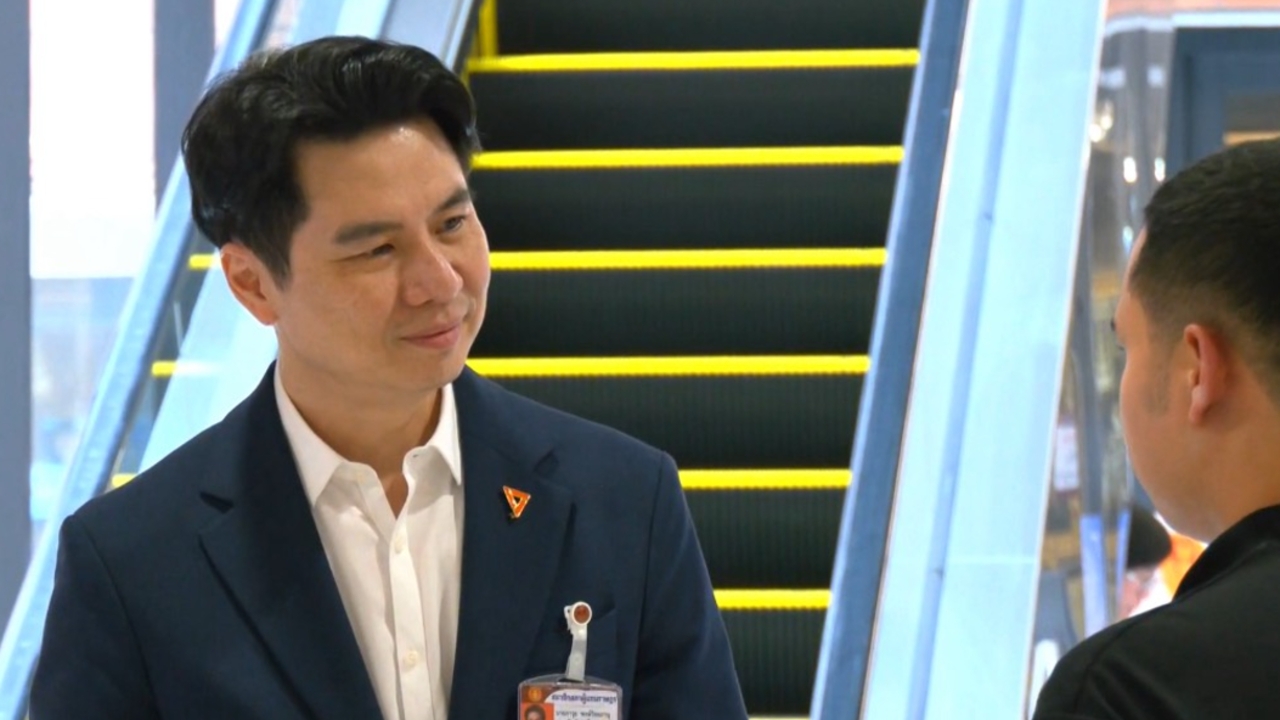
Pawat pointed out that the distorted Thai language in the TH-AI Passport project is because a low-cost option was chosen first. He urged the government to involve external experts in acceptance testing and to openly disclose information. He expressed pride in debating until the 1.6 billion baht budget was reduced to payments based on actual usage.
Pawat clarified the Thai language distortion in the TH-AI Passport project stems from initially selecting a low-cost option. He advised users to choose AI models suitable for their tasks and urged the government to bring in outside experts for acceptance testing and transparency. He expressed pride in debating until the 1.6 billion baht budget was adjusted to pay based on actual usage but expressed concern about a lack of sustained long-term use.
On 2 Sep 2026, Mr. Pawat Pongwittayaphanu, party-list MP from the People's Party, explained the issue with the TH-AI Passport project: technically, the AI-generated images look like an alien language because the base model used to create images is not strong in Thai language. This model was chosen because it was affordable. Consequently, images produced appear as alien language. However, if other models like Google's Nano Banana or ChatGPT were used, they would handle Thai much better with the same commands. He believes the government is trying to save costs by choosing cheaper options.
"They chose the cheapest option as the first choice because using a better model first would consume more resources and cost more," Pawat said.
When asked if it might be better to buy a superior model rather than use this, Pawat said that free tools already perform better in many ways, so comparisons are necessary.
Regarding Digital Economy and Society Minister Chaiyachon Chidchob's statement that the system needs to learn Thai first, Pawat said he disagrees. He said it depends on the model itself. The Chinese image-generation model currently used is not very good at Thai. Therefore, even with training, choosing a higher-quality model would result in better Thai language capabilities.
Pawat emphasized that models capable of better image creation are already included in the TH-AI Passport project, but users must select the appropriate model for generating images containing Thai text.
When asked if he had tried using the system, Pawat said he had. He found it fast, but if the wrong model is chosen, the Thai text immediately becomes distorted. Selecting the correct model is essential.
Asked about the shift from a lump-sum 1.6 billion baht contract to pay-per-user, Pawat said, "I think this is something to be proud of. We debated this project from the start. Originally, a single payment of 1.6 billion baht was required. Now the contract has been amended so that payment is based on actual usage each month, averaging about 24 baht per user. So, I believe this greatly reduces costs."
Pawat added that if few people use the project, the government won't have to pay much. However, he is concerned about whether many users will come, whether those users are real people or artificially generated. He noted that the Ministry of Digital Economy and Society has started promoting and encouraging government agencies to use it, which could be positive, but questions remain about continuous use and the authenticity of user numbers. He would like acceptance committees to verify usage or have a public dashboard showing current user numbers and usage details to ensure transparency. He also suggested including external experts or private sector specialists in acceptance testing for accuracy and fairness.
When asked if he worries that usage targets may not be met, Pawat said he has not seen figures yet but notes efforts to encourage government agencies to use AI, which is good since many officials are unfamiliar with AI. The project helps them use it, but questions remain if they will actually use it and continue long-term. This is a concern they have. Ultimately, since the project is underway, the question is how to maximize its value.