

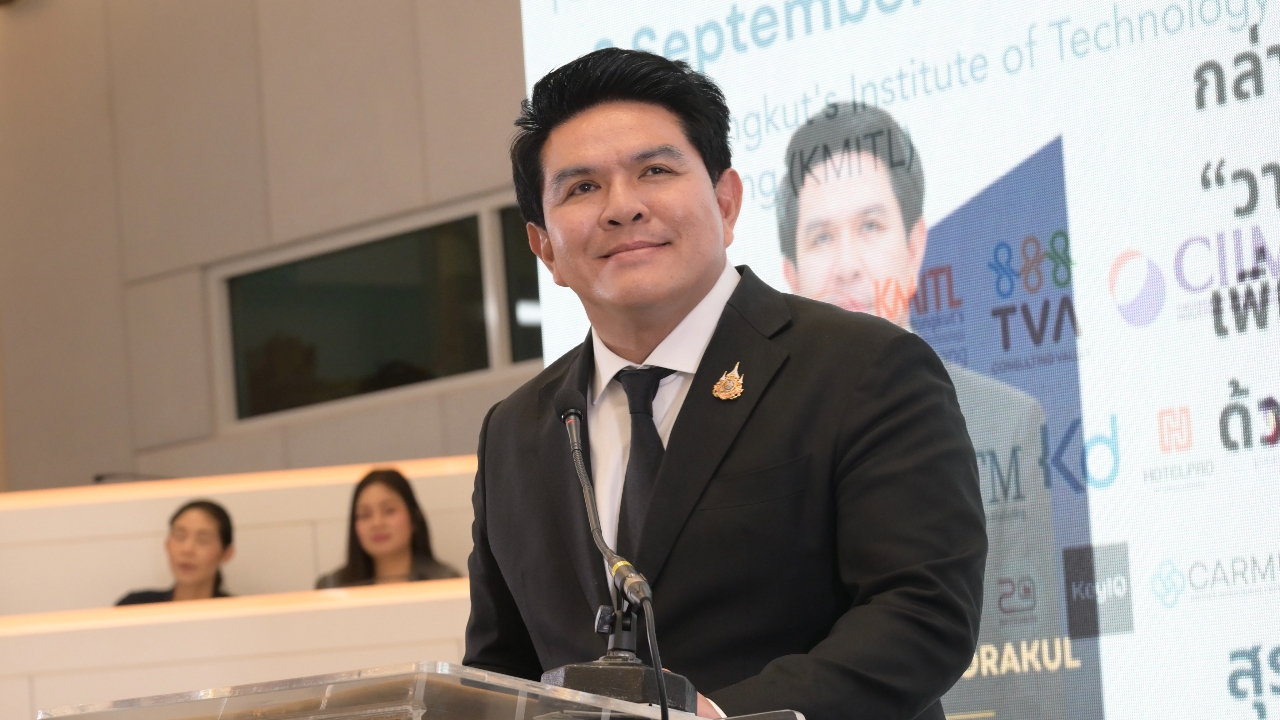
Surasak highlights a new tourism vision, urging hotel operators to upgrade their businesses with technology, promoting the strategy “Earn More – Work Smarter – Cost Less” to compete globally.
On 2 September 2026, Surasak Pancharoenworakul, Minister of Tourism and Sports, announced a new direction for Thailand’s tourism industry, emphasizing the need to focus on “value” rather than “volume.” He advised hotel operators to quickly adopt Hotel Economics management, leveraging technology as a key tool to increase revenue and reduce costs, thereby enhancing the country’s global competitiveness.
In a special keynote titled “Thai Tourism Agenda: A New Vision to Boost Income, Efficiency, and Reduce Costs in Thai Hotels Using Technology” at the Hotel Economic Forum 2026 held at King Mongkut's Institute of Technology Ladkrabang,
Surasak revealed interesting data showing that although Thailand welcomed nearly 33 million international tourists in 2025 generating 2.7 trillion baht in revenue, the market structure is rapidly shifting (with declines in the Chinese market while India and Russia markets grow).
A key challenge for operators is that despite an average occupancy rate of 71%, average daily room rates (ADR) and revenue per available room (RevPAR) have fallen by about 3%, while the number of hotels increased nearly 30% compared to pre-COVID times. This clearly shows that “full rooms do not necessarily mean maximum profit.”
To address this, the Minister proposed that operators focus on net profit and reducing customer acquisition costs by driving technology through three main goals: Earn More (increase revenue): applying Big Data, AI, and Revenue Management systems to analyze data for selling rooms to the right customers at the right time and optimal price.
Work Smarter (improve efficiency): implementing automation to handle repetitive tasks, reducing staff burden and allowing employees to focus on hospitality—the unique charm of Thai service that technology cannot replace.
Cost Less (reduce costs): seriously managing energy and food waste, emphasizing that the Green Hotel concept is not just about image (CSR) but an economic strategy that lowers costs and strengthens business sustainability over the long term.
In closing, Surasak stressed that Thai hotels’ competitors are not just local hotels but global tourist options. Adapting to “Earn More, Work Smarter, Cost Less, and Compete Better” will strengthen the entire Thai economy. He expressed confidence that today’s collaboration forum marks an important starting point for the Thai hotel industry to grow steadily and rise sustainably on the world stage.