

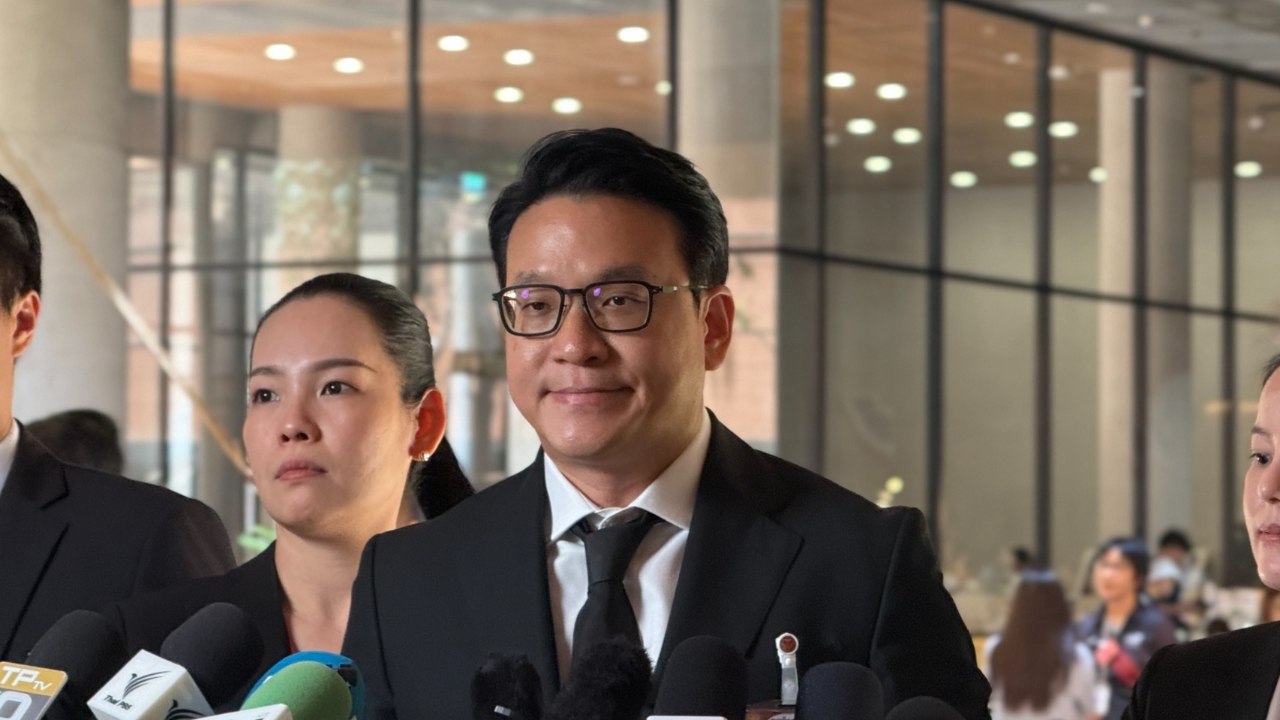
Sakoltee revealed that over 10,000 foreign children have been fraudulently registered as Thai nationals. He called on the Ministry of Public Health and the Royal Thai Police to aggressively dismantle the 'fake fathers' network. He emphasized that in six years, the first batch of these suspect children will turn 20 years old, and in the future, Thailand could have a foreign-born Prime Minister or Members of Parliament who obtained rights fraudulently.
On 3 Sep 2026 GMT+7, Sakoltee Pattiyakul, party-list MP and Deputy Leader of the Democrat Party, serving as Chairman of the Public Health Commission of the House of Representatives, said after a commission meeting on the 'fake fathers' case that the Bangkok Metropolitan Administration (BMA), Department of Provincial Administration, Royal Thai Police, Department of Health Service Support, and Ministry of Public Health were invited. On 23 Jul, BMA reported a review of the past five years found around 500 suspect cases. Extending the review from 2017 to 2026 found 879 cases across 29 districts, with 27 birth certificates revoked and 810 cases still under investigation. DNA tests are underway, and some have confessed. About 3-4 districts had government officials involved, with Thonburi district officials dismissed and investigations sent to local police stations.


Sakoltee stated that the Department of Provincial Administration found even more alarming numbers, dating back to 2012 through 2026, identifying over 10,000 suspicious individuals likely born to Thai fathers and foreign mothers, mostly Chinese. Documents have been requested but not yet fully examined. He noted the current discretionary power of officials regarding DNA testing of parents is problematic. The commission recommended clear regulations mandating testing because if parents refuse, the child's registration remains pending in the civil registry. Meanwhile, children born during this period can still conduct transactions. According to Ministry of Interior data since 2012, within 5-6 years, these children will reach legal adulthood, able to own assets. If parents refuse DNA tests, the registration remains unresolved, but children can still engage in transactions.

Sakoltee further noted that 10 private hospitals have been clearly identified by the Ministry of Public Health, including 164 suspect cases in Thonburi district hospitals still under investigation. He criticized the Ministry's approach as reactive rather than proactive, since police provided documents and evidence for inspection, but many hospitals remain unchecked. He called on the Minister of Public Health to order agencies to act proactively, emphasizing the issue's importance for national security.
“Looking back, over 10,000 suspect cases exist, and we do not know if in the future or previously, children reaching adulthood and able to transact might include foreign-born MPs or even a future Prime Minister obtained through fraudulent means. This possibility exists. I urge the Ministry of Public Health to be more proactive as they already have authority to inspect,” Sakoltee said.

Sakoltee said that police investigations are led by Police General Samran Nualma, Deputy Commissioner of the Royal Thai Police, but so far have only arrested hospital staff. The money has not reached the masterminds. He urged more detailed investigation, believing the syndicate involves agents or Chinese nationals operating behind the scenes. So far, investigations have not reached hospitals fully because the financial trails are limited to hospital and district officials. Police must expand the probe further, and the commission has requested additional information.
Sakoltee added that in some hospitals, nearly 200 suspicious 'fake father' cases have occurred in recent years, which is abnormal. The Department of Provincial Administration provided data showing that current figures involve only Thai fathers and Chinese mothers, but other nationalities like Indian or Burmese may be involved and remain unexamined. He called for a larger task force to expand the investigation. Currently, it is unclear whether this is for holding rights or obtaining Thai nationality in the future, which requires ongoing monitoring.

When asked whether the use of electronic data systems in public hospitals compared to handwritten records in private hospitals creates vulnerabilities for fraud, Sakoltee said there is such a risk. Most public hospitals have electronic birth registration systems, whereas private hospitals still rely on handwriting. The Department of Provincial Administration has recommended that the Ministry of Public Health implement systems similar to public hospitals. However, he clarified that this does not mean public hospitals are free from such incidents, but they have not yet been investigated.
Sakoltee said that if a full investigation is conducted, almost every hospital might be involved because current government efforts are reactive. He is confident that more than 10 private hospitals are implicated, posing a genuine national security threat.