

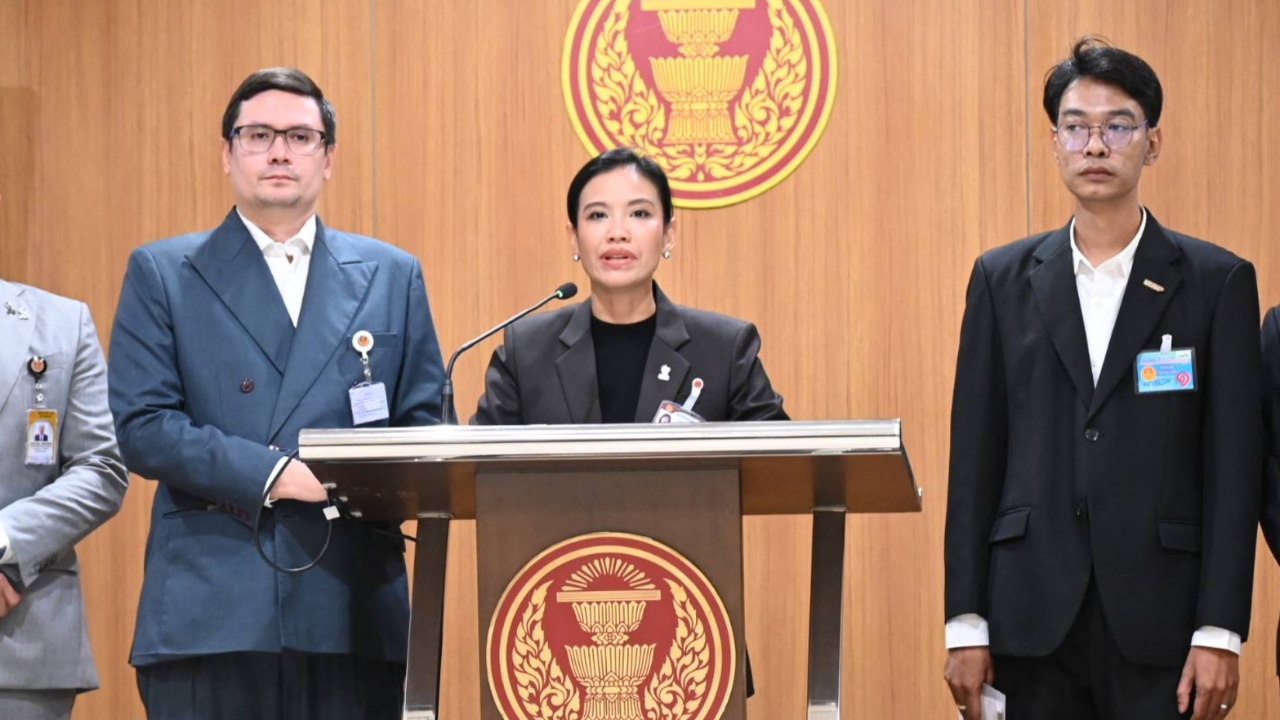
Radklao, a member of the Parliamentary Committee on Law, Justice, and Human Rights, is advancing efforts to secure the rights of the Mani ethnic group. She revealed that the Mani people do not want to be called "Sakai" or "wild monkeys," pointing out that these terms hurt their feelings and dignity and urging that such labels not be used.
On 3 Sep 2026 GMT+7, Ms. Radklao Intharawong Suwankhiri, Vice Chair of the Parliamentary Committee on Law, Justice, and Human Rights, held a press conference on the rights and quality of life issues facing the Mani ethnic group. She was joined by Mr. Rangsiman Rome, Committee Chair, and Mr. Sarathool Wuttisaksin, Committee Secretary. Academics and those working closely with the Mani community, including Dr. Pipat Jarasphet, Mr. Natchakorn Cherdchukijkul, and Ms. Naorn Jikarpirum, also shared facts and problems experienced by the Mani people.

Ms. Radklao stated that issues concerning the Mani ethnic group are not just about "differences" but about basic rights and human dignity that everyone should equally receive, especially the rights to live, access land for livelihood, and have their identity recognized.
"What we must ask is whether the Mani people truly enjoy the rights guaranteed by law today, because having rights on paper is not enough if in reality they cannot access those rights."
Another key issue the committee received information on is the use of the terms "Sakai" or "wild monkeys" to refer to the Mani ethnic group. Although these terms have been used in society for a long time and some may not intend to insult, for the Mani people, such words deeply affect their feelings and dignity.
"When the bearers of the identity tell us they want to be called 'Mani,' society should not respond by saying the old terms have been used for a long time. Instead, we should listen and respect the names they choose for themselves, because respecting a person's name is respecting their identity and dignity."
Ms. Radklao added that this naming issue is not limited to personal communication but is also found in public areas such as signposts and textbooks. This reflects the need to reconsider society’s understanding of ethnic groups, including language, education, and government agency communications.
At the same time, the rights to live and use land for livelihood are critical issues requiring serious resolution, as land use is directly linked to the Mani community’s way of life, security, and survival. Solutions should not focus solely on state land management but must also consider the people’s rights and the ethnic group's lifestyle.
"We should not see the Mani people merely as a different group but as citizens who have rights, dignity, and their own voice just like all of us."
Ms. Radklao emphasized that both the land use issues and the lack of respect for identity reflect the same problem: inequality in accessing rights and receiving equal recognition. Therefore, solutions must go beyond acknowledging the problem to achieving practical change.
The Parliamentary Committee on Law, Justice, and Human Rights is ready to monitor and coordinate with relevant agencies to ensure that legally guaranteed rights are effectively realized, to foster proper understanding of the ethnic group's identity, and to promote that the Mani people are treated with respect and equality as members of Thai society.
"Justice does not mean making everyone the same, but means that everyone can be themselves and receive equal rights."
