

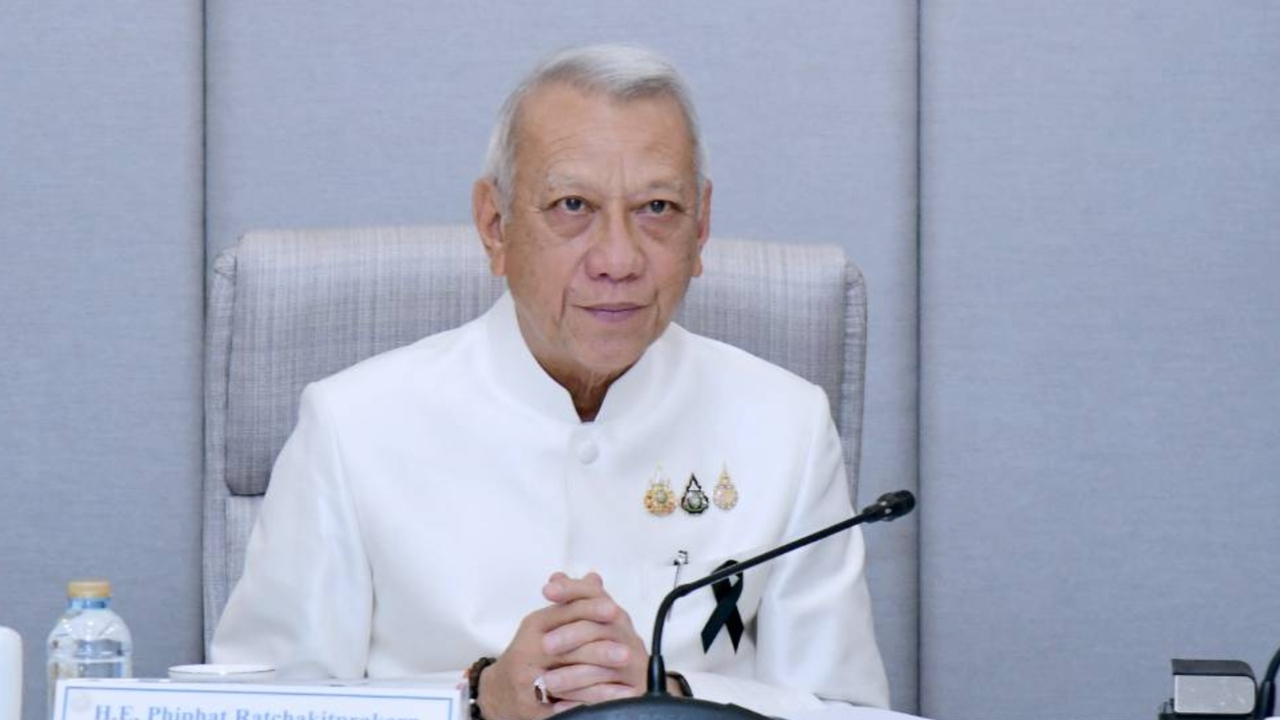
Phiphat held talks with JETRO and the Japanese Chamber of Commerce to listen to private sector feedback, accelerating solutions to congestion at Laem Chabang Port by integrating land, rail, water, and air transport through the Transport Data Center. This aims to boost confidence among Japanese investors and maintain Thailand's automotive production base.
On 3 September 2026, Mr. Phiphat Ratchakitprakarn, Deputy Prime Minister and Minister of Transport, announced after welcoming Mr. ABE Ichiro, Chairman of the Japan External Trade Organization (JETRO) Bangkok, along with executives from the Japanese Chamber of Commerce Bangkok (JCC Bangkok), that they discussed ways to support Japanese private sector business operations in Thailand and the development of transport and logistics infrastructure to enhance competitiveness in Thai investment. He emphasized that Japan has long been an important economic and investment partner for Thailand, and the Ministry of Transport prioritizes hearing the views of Japanese businesses, especially on transport systems, freight logistics, and infrastructure, which directly affect costs and investment decisions.
In the discussions, JETRO Bangkok presented survey results on the economic outlook of Japanese companies in Thailand for the first half of 2026, covering over 500 firms. The business outlook index (DI) stood at -6 and is expected to decline to -7 in the second half. Businesses continue to face challenges from raw material and logistics costs, although some industries benefit from increased demand for semiconductors, machinery investments, and AI technology. Japanese businesses recommended that Thailand urgently enhance infrastructure and logistics efficiency, especially linking Laem Chabang Port, Lat Krabang ICD, and rail systems, as well as upgrading Suvarnabhumi Airport's cargo capacity to reduce costs, shorten transport times, and increase supply chain reliability.

Mr. Phiphat added that the Ministry of Transport is swiftly addressing logistics bottlenecks. Laem Chabang Port is tackling congestion and truck traffic issues through better space allocation, improvements to main port roads, and more efficient empty container management. Simultaneously, efforts are underway to increase rail freight share between Lat Krabang ICD and Laem Chabang Port to reduce truck dependency, lower costs, ease traffic, and cut carbon emissions. The State Railway of Thailand has allocated approximately 55 million baht to upgrade the area around Lat Krabang ICD and is expediting procurement processes under a public-private partnership (PPP) model to enhance long-term management efficiency.
Regarding Suvarnabhumi Airport, plans are in place to boost cargo and free zone capacity by developing the third cargo handling building, expanding space for operators, and introducing an Electronic Delivery Order (EDO) system as a one-stop digital service. Additionally, digital warehouse systems and automation will be implemented to reduce procedures and speed up goods transportation.
Mr. Phiphat further stated that infrastructure development must integrate land, rail, water, and air transport into a unified system. Consequently, the Ministry of Transport is developing the Transport Data Center (TDC) to consolidate transport and logistics data, supporting more efficient network management, reducing costs, and enhancing the country’s competitiveness. The meeting also exchanged views on the automotive industry's transition. Mr. Phiphat believes that advancing clean energy vehicles should be pursued alongside maintaining the strength of Thailand’s automotive and parts manufacturing base. He supports technologies that reduce pollution emissions so businesses can adapt while Thailand retains its competitive position as a key automotive production hub in the region.
