

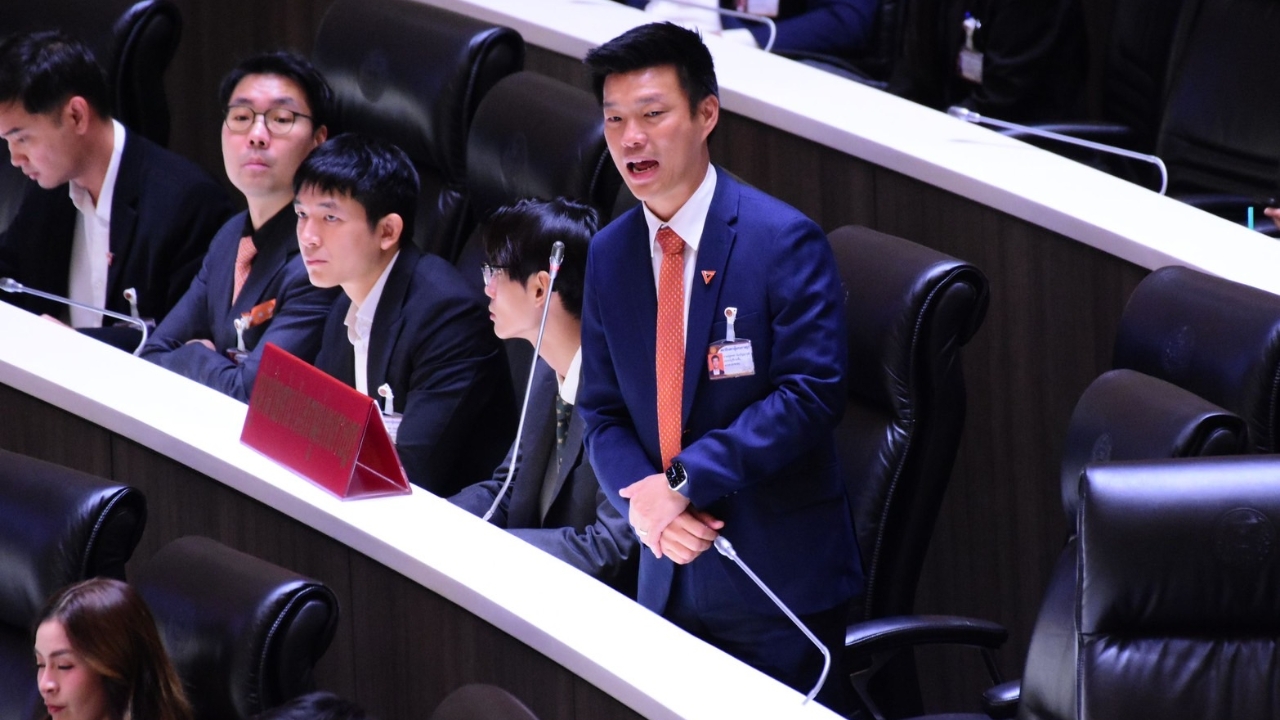
Nattapong urged the government to use political courage to quell the southern insurgency and to review the 20-year strategy, emphasizing that hundreds of billions in budget and special powers have not solved the problem.
On 3 September 2026, during a parliamentary session, Nattapong Ruangpanyawut, leader of the People's Party and opposition leader in the House of Representatives, delivered an urgent verbal motion calling for the parliament to review the approach to solving unrest in the southern border provinces. He emphasized that military measures and security powers cannot lead to sustainable peace; the most important factor is the "political courage and will" of the government leadership.
Nattapong outlined the history of conflict over the past 20 years, noting that the situation in 2026 has taken a worrying turn. For example, the attack on a checkpoint in Narathiwat province on 22 July resulted in the deaths of five rangers, and there were 75 violent incidents between 22–23 August. These events signal that the state's strategy is misguided and unlikely to achieve the 20-year national strategy goal of zero conflict by fiscal year 2027.
He also questioned the intelligence system, noting that security forces claimed to have had two months' advance notice but failed to prevent the attacks. Effective intelligence requires trust between citizens and state officials. Despite over 500 billion baht spent and the use of special legal powers covering all aspects over 20 years, the problem persists because the strategy wrongly views the area solely as a "security zone" rather than the "home and way of life" of the people.
"From a security perspective, the answer is to 'manage' the area through checkpoints or expanding special powers. But if the government sees it from the people's perspective—as their home—the government must shift to 'problem-solving.' Excessive use of special powers or detaining youth is completely undermining trust," said Nattapong.
Nattapong called on government cabinet representatives to clearly affirm two main points to parliament: a commitment to peace talks with a clear political will for continuous long-term dialogue beyond military measures, and a commitment to developing intelligence work and building trust between the state and the people, as well as among people of different religions, to reduce suspicion and restore genuine peace.