

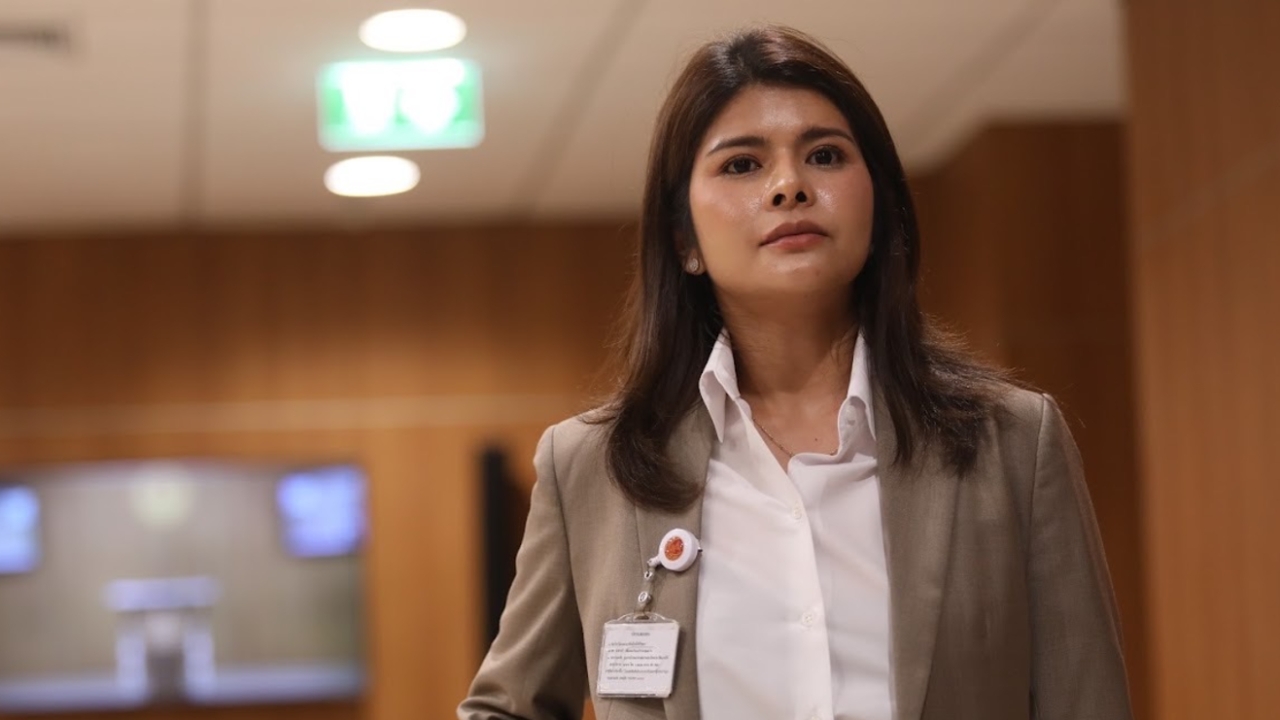
Phakmon criticized Anutin for avoiding the issues in the three southern border provinces, saying that if he does not want to argue through the media, he should come to parliament and listen to the opposition leader directly. She emphasized that the public wants clear answers from the Prime Minister’s own mouth, not evasive responses to shirk responsibility.
4 Sep 2026 GMT+7 Ms. Phakmon Nun-anun a party-list Member of Parliament and spokesperson for the People’s Party, commented on the case where Prime Minister and Minister of Interior Anutin Charnvirakul gave an interview to the media regarding Mr. Natthapong Ruangpanyawut a party-list MP and leader of the People’s Party, serving as the opposition leader in the House of Representatives, who had called for the government to show political courage in solving the southern border provinces' problems. The Prime Minister laughed off the issue and refused media questions to avoid back-and-forth exchanges, suggesting that if there were doubts, the parliamentary system should be used to investigate.
Ms. Phakmon said the Prime Minister might misunderstand, as the opposition leader did use legislative mechanisms to debate in parliament as he suggested. The problem is that the Prime Minister himself refuses to attend and listen, so the media have to seek his views elsewhere.
“If he took the time to attend and listen to important matters in parliament, as he does for festival events, all the issues would be resolved without media exchanges. He says to use parliamentary mechanisms, but the person who should provide the clearest answers never appears in parliament, only showing up mainly for budget sessions.”
She added that the Prime Minister’s usual behavior, when pressed by the media on substantive issues, is to cut off questions and forbid back-and-forth debate. Instead of using the opportunity to clarify his vision and solutions directly to the public, he avoids details. She suggested that if he does not want the media to ask the opposition leader’s views, he should personally attend the urgent parliamentary debate on the southern border issue. Since the opposition leader’s questions are meant for him, the public also wants to hear clear answers from the Prime Minister himself, not evasive replies.
She concluded by saying the southern border problem concerns the very lives of suffering local residents. Yet the nationwide public sees a stark contradiction: while officials claim to prioritize solving the issue, during the southern cabinet tours, officials and authorities appear joyful and sing happily.
“I cannot help but wonder how they can be so happy at all times, even though the people are severely suffering. Such carefree attitudes should be tempered with sensitivity and respect for the feelings of those enduring hardship.”