

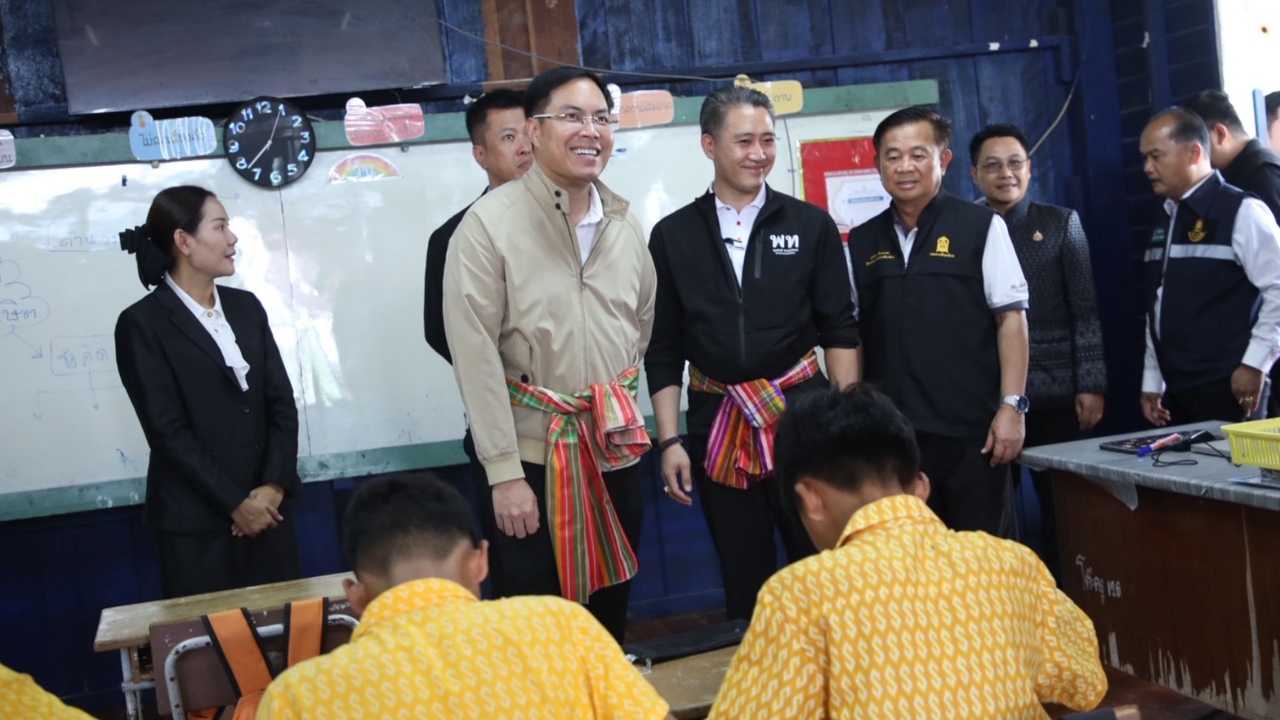
Deputy Minister of Education Akkranun launched a visit to Khon Kaen to deeply investigate problems faced by remote schools down to the classroom. He pointed out that inspections should focus on "going to help, not just to inspect," aiming to quickly remove barriers to teaching and learning.
4 Sep 2026 GMT+7 Mr. Akkranun Kan-kittinan, Deputy Minister of Education, visited Khon Kaen Province to monitor education management in remote schools. He toured Ban Sawong Nong Phai Lom School, Phon School, and Kham Khaen Witthayakhom School, meeting with administrators, teachers, educational staff, and students. He also inspected school conditions and teaching activities on-site to identify issues affecting student learning and teachers’ work.
During the visit, Akkranun discussed daily challenges with teachers and school leaders, including infrastructure readiness, personnel, budgets, and resources for teaching. He listened to suggestions from students and teachers about the support they need from the Ministry of Education, emphasizing that each school's problems differ and solutions must be tailored to the local context based on firsthand understanding.
Akkranun stated that the Ministry of Education's inspections must shift from merely auditing schools to actively helping them. The purpose of field visits is not to check documents or add workload for teachers but to identify which problems can be solved immediately, which require coordination with other agencies, and which need policy-level action.
"When we visit schools, we do not add burdens; we relieve them. Inspections should minimize formalities, reduce steps, and ease complications, returning time and resources to teachers so they can fully focus on teaching. Inspections must change from 'checking schools' to 'helping schools'—addressing problems as quickly as possible," he said.

The Deputy Minister added that findings from the visits will be categorized for prompt action, especially issues affecting teaching and students' quality of life, as well as factors that force teachers to spend time on tasks beyond teaching. This will help the Ministry provide more precise support to schools.
"What we observe in schools must not end with reports sent to central offices; it must lead to problem-solving. Issues that can be addressed should be tackled promptly; those requiring coordination must be followed up. Ultimately, the system affects children, and the closest people to children are their teachers," he said.
The Ministry of Education continues to push for reducing teachers’ burdens alongside promoting educational opportunities and equity. Special emphasis is placed on remote schools, which require support appropriate to their contexts, allowing teachers more classroom time and enabling students to fully access learning and develop their potential.