

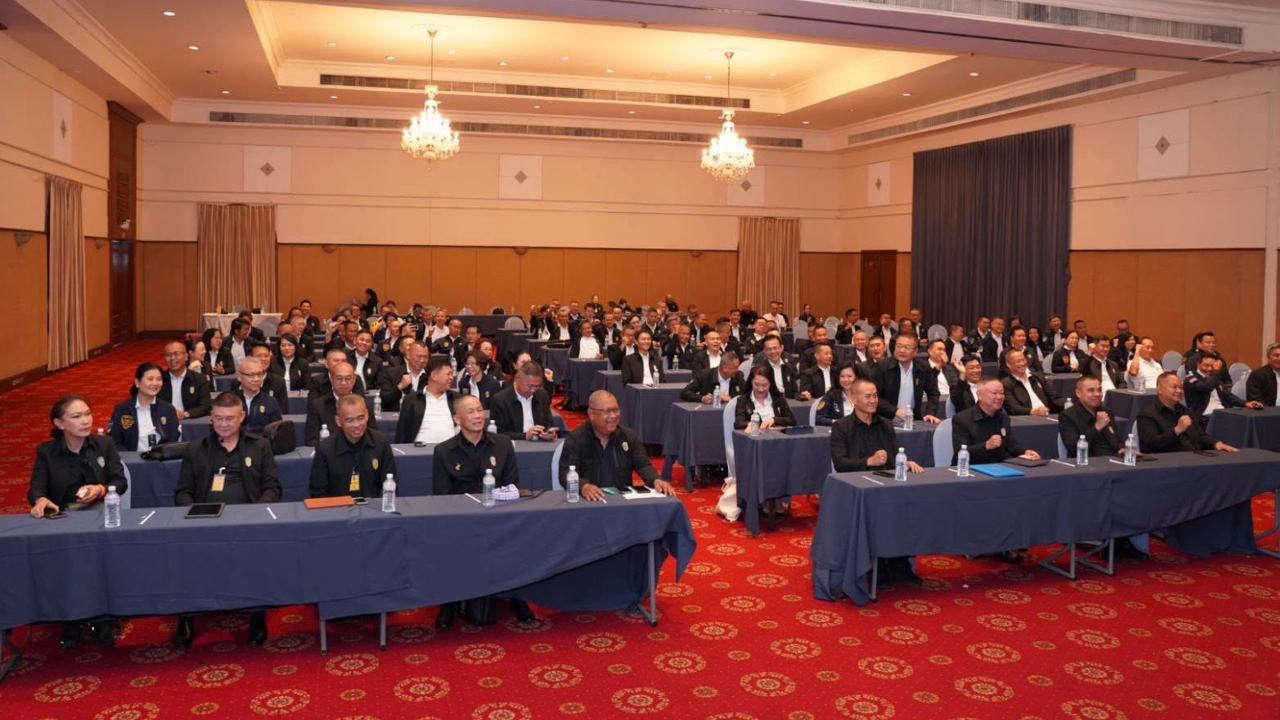
NDC Class 68 proposes a plan to restructure the political system supporting a Quick Big Win approach including drafting a new constitution, direct Senate elections, abolishing Provincial Administrative Organizations, and decentralizing power to municipalities and subdistrict administrative organizations.
On 6 Sep 2026, reporters from the National Defence College (NDC) reported that the 68th class of the National Defence Course, chaired by Major General Anuwat Luangwilai, Director of the Office Supporting the Royal Thai Armed Forces Development Command, presented political policy proposals under the concept “Creating Politics of Freedom, Negotiation, and Accountability to Everyone’s Will,” or Resilient Institutionalization of Political Power. This is part of the “Resilient Thailand” framework. The study results are scheduled to be announced on 8 Sep 2026 to be presented to Prime Minister and Minister of Interior Anutin Charnvirakul, who will attend a policy hearing on 7 Sep to advance the national strategy. However, the Prime Minister has a key engagement on 8 Sep and has assigned Defence Minister General Adul Boonthamcharoen to receive the proposals.
The proposals analyze that Thailand’s political problems are not only conflicts between parties or political groups but structural issues within the political rules and institutions. These favor centralized power retention rather than creating equal negotiation spaces. This has contributed to multiple political crises since the 1997 constitution. Therefore, four key solutions are proposed: 1. Draft a new constitution, 2. Amend Article 107 to allow direct election of senators by the people, 3. Abolish Provincial Administrative Organizations and decentralize power to municipalities and subdistrict administrative organizations, and 4. Restore citizens’ power to remove key officeholders and elevate citizens’ rights to veto legally binding state projects.
NDC Class 68 further states that the most politically significant proposal is the “Quick Big Win” measure, which should begin immediately. This involves pushing for a new constitution alongside amending Article 107 to have senators directly elected by the people instead of the current self-selection system. The justification is that the Senate’s composition changed from direct elections to a mixed system in the 2007 constitution and to self-selection in the 2017 constitution, leading to severe legitimacy issues. Thus, the proposal aims not just to adjust Senate selection details but to restore the principle of direct public election to enhance political legitimacy and enable senators to perform independently. Another key point is empowering citizens to oversee and remove political officeholders, independent organizations, and senior state officials, as currently citizens lack removal authority.
Additionally, NDC Class 68 proposes increasing citizens’ power to oppose state projects—from nonbinding community consultation processes to binding veto power over approving agencies. It suggests drafting Prime Minister’s Office regulations to make such opposition legally binding on project owners or approving authorities. The major local government restructuring proposal includes abolishing Provincial Administrative Organizations since their overlapping tasks with municipalities and subdistrict administrative organizations reduce responsiveness to public needs. The transfer of central government tasks to local levels remains unclear. This restructuring aims to drive decentralization of power, budget, and personnel directly to municipalities and subdistrict administrative organizations. These proposals fall under the concept “Institutional Reboot & Decentralization,” classified as a Quick Big Win with a roadmap for transferring tasks, budgets, and personnel while enhancing citizen participation.