

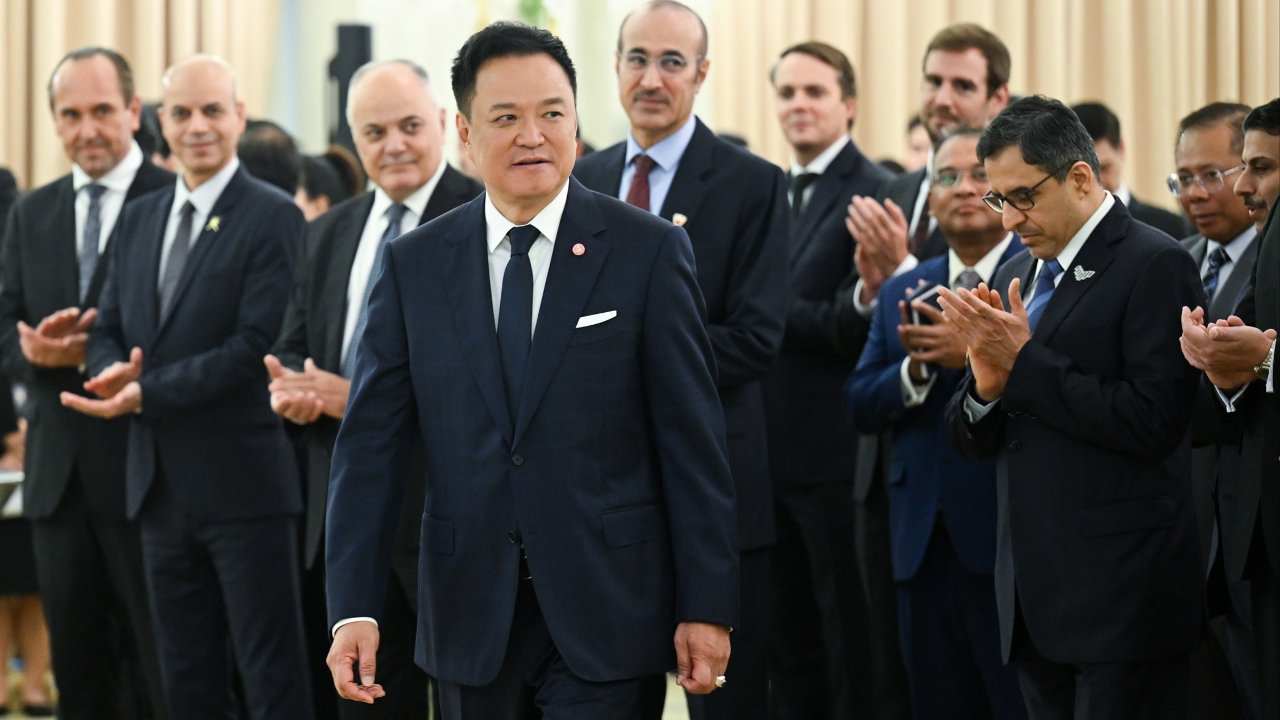
Behind the scenes meeting with 76 ambassadors from 9 regions: the "Anutin Government" organizes economic diplomacy to restore Thailand’s role in ASEAN and Asia, accelerates FTAs to open new markets, and attracts quality investments back onto the global radar.
On 6 Sep 2026 GMT+7, reporters from the Government House reported that the meeting with 76 foreign ambassadors, consuls, and heads of international organizations in Thailand, led by Prime Minister and Minister of Interior Anutin Charnvirakul at the Government House on 4 Sep 2026 GMT+7, was not merely a formal diplomatic ceremony but part of the government's proactive diplomacy policy announced earlier, and a new plan for Thailand's economic diplomacy.
Prime Minister Anutin emphasized using foreign affairs as a tool to open doors to the economy, technology, markets, and investment, leading to dividing discussions with diplomats into 9 regional groups to ensure each relationship yields tangible benefits.
"The government's core mission is to bring Thailand back into the global spotlight as an open, reliable country and ASEAN connectivity hub amid volatile geopolitics, energy and food crises, and the restructuring of global supply chains," he said. A source said,
ASEAN is the first region where Thailand must regain a strong role. Prime Minister Anutin has officially visited five countries: Laos, Singapore, Vietnam, Malaysia, and Indonesia. He plans to continue visits to the Philippines, Brunei, and Timor-Leste.
Currently, the government views the Middle East crisis as a warning signal prompting ASEAN to accelerate economic, energy, food, and supply chain integration. Thailand is also working closely with Singapore to ensure continuity for ASEAN’s chairmanship during 2027–2028.
The source also stated that the Anutin government is using FTAs as a tool to bring Thailand back onto investors' radar. They are fast-tracking free trade agreements with the European Union, Canada, and South Korea, promoting the concluded Thailand-EFTA agreement, and opening new markets through Peru, Sri Lanka, BIMSTEC, and ASEAN-Canada. Accelerating FTAs is not just about expanding export markets but also about enhancing Thailand’s position as a production and business hub in the region. Investors see Thailand as a gateway connecting ASEAN, Asia, and developed markets.
At the same time, there is a need to diversify risk toward new markets such as Africa, the Middle East, Latin America, South Asia, and Central Asia, leveraging Thailand’s strengths in food, processed agriculture, halal products, clean energy, medical, wellness, and logistics sectors as bridges for cooperation.
In the Middle East, Thailand aims to establish itself as a long-term food security partner while expanding cooperation in energy, tourism, medical services, and Thai labor. For Africa, the Thailand-Africa Initiative (TAI) will be pursued to connect political, economic, development, and strategic cooperation between countries.
Regarding China, Japan, South Korea, and East Asian countries, the focus is on strategic cooperation in technology, innovation, AI, new industries, and combating online crime. Emphasis is placed on attracting quality investments that add value and avoid leaving issues of illicit capital within the country.
The source added that to promote Thailand’s role on the global stage going forward, the government will participate in various forums including the United Nations General Assembly, Pre-COP meetings, visits to Fiji, hosting the IMF–World Bank meetings in Bangkok, and the ASEAN Summit. These will be key opportunities for the government to communicate Thailand’s potential to the international community.
"Prime Minister Anutin’s government does not merely seek good international relations but aims to transform those relationships into new markets, new investments, new technologies, and a new role for Thailand within ASEAN," the source concluded.
