

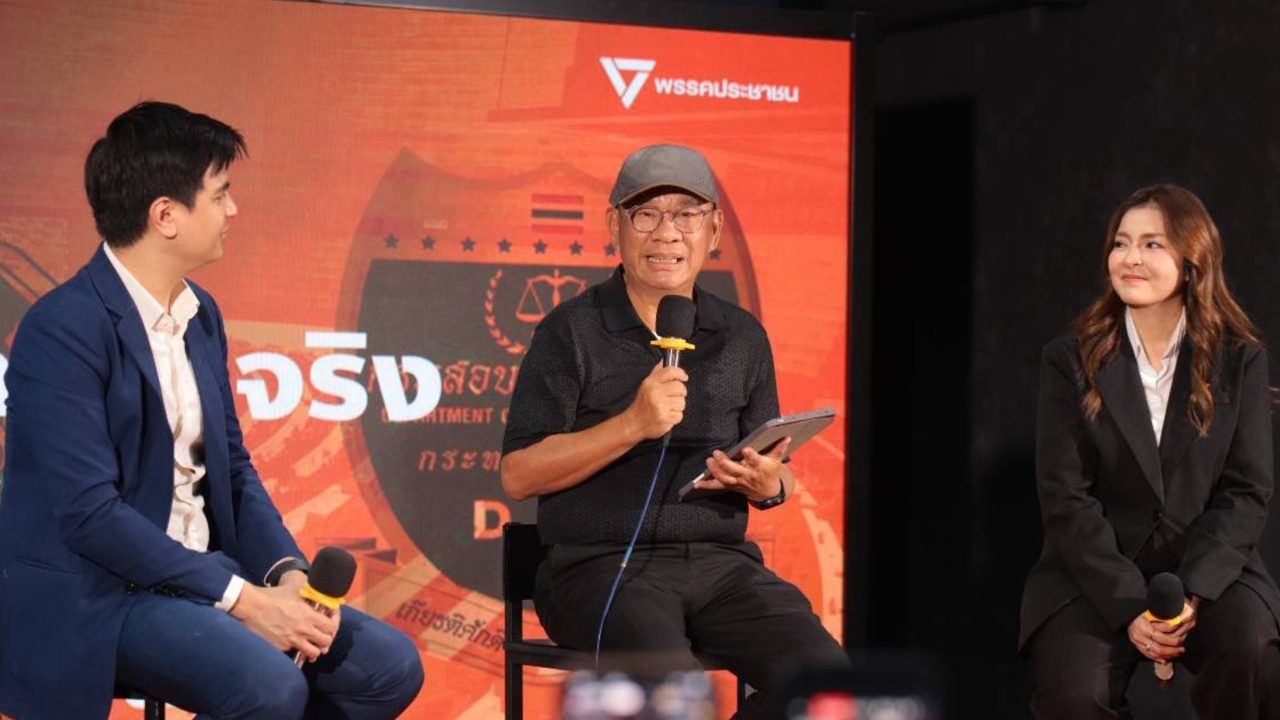
Somchai Srisutthiyakorn probes suspicious behavior of Subcommittee 36 investigating the rigging of Senate elections, noting they barely questioned or expressed doubt and appeared to defend a powerful figure in Buriram. Meanwhile, Parit Watcharasindhu exposes four suspicious points indicating political protection, condemning Subcommittee 36 for working against public scrutiny.
On 6 Sep 2026 at the Future Forward building, Somchai Srisutthiyakorn, former Election Commissioner, commented on the work of Subcommittee 36 tasked with resolving disputes in the Senate rigging case. He said the Election Commission formed Subcommittee 36 because Subcommittee 35 was overloaded and lacked sufficient expertise. However, many members of Subcommittee 36 were from the previous team and showed little questioning during work, undermining their legitimacy. Subcommittee 36 met twice weekly on Tuesdays and Thursdays, where the Election Commission secretariat summarized investigation reports from Central Investigation Subcommittee 26, including accused parties’ information and that subcommittee’s opinions. Early meetings included some questioning, but later, the secretariat largely presented the information, such as at meeting 13/2569 with 39 pages of documents, 38.5 read aloud, and committee members scarcely questioned or doubted, merely acknowledging explanations. There was no indication they summoned Subcommittee 26 for further information or examined original documents; they only reviewed Subcommittee 26’s investigation summaries.
Somchai added that although Chaowana Traimat was chair of Subcommittee 36, Anucha Jansuriya, a member, played a leading role in meetings by raising issues and setting review boundaries. At meeting 4/2569, they mentioned an influential figure outside the party in Buriram province, but one member objected, saying the individual was unrelated to any candidate or party and should not be involved, describing him as just a football player in shorts. The secretariat responded that even if not a candidate or party member, if the person committed wrongdoing, they could be included in the case file. Anucha’s attempt to set boundaries could be to clarify rulings or possibly to exclude someone from liability. Oddly, at meeting 3, the subcommittee framed that politicians could not assist or interfere in Senate rigging and candidates could not seek such help, effectively excluding any candidate’s involvement or political party corruption. Somchai suggested petitioners seek court authority to review Subcommittee 36’s final meeting report on 24 Feb 2026 and each member’s individual rulings—five members dismissed all complaints, two did not fully dismiss—to determine whether rulings derived from distorted frameworks. If so, Subcommittee 36 could be held accountable for interpreting law improperly in dismissing complaints.

Subsequently, Parit Watcharasindhu, list MP of the People’s Party, stated that his party questions Subcommittee 36’s work based on four suspicious points: 1. The origin and necessity of establishing Subcommittee 36 remain unclear. Although both Subcommittees 26 and 36 are special teams, their purposes and significance differ. Subcommittee 26 included officers from the Department of Special Investigation (DSI), which was reasonable, but Subcommittee 36’s Election Commission representatives explained it was formed because Subcommittee 35 was already heavily burdened, and this case was complex. They appointed seven members, but the Election Commission has not clarified whether these seven overlap with the previous 35 committees or if they possess relevant expertise or experience. 2. Subcommittee 36 held approximately 20-30 meetings from Nov 2025 to Mar 2026, but outcomes remain unknown—number of pages of evidence and nature of proof remain a black box. 3. The subcommittee’s legal interpretations often coincidentally align with political agendas. According to procedure, the Election Commission should assess whether evidence is reasonably credible and file charges; it is not required to prove evidence beyond doubt. Yet Subcommittee 36 repeatedly questioned evidence to dismiss anything not conclusively proven, even when reasonable doubt would suffice to prosecute, thereby protecting politicians and preventing investigations reaching senior blue-shirt politicians, ministers, MPs, and party executives, denying the existence of a Senate rigging conspiracy.
Parit added that 4. So far, Subcommittee 36 has concluded that no one is guilty, contradicting publicly available evidence. Previously, the Election Commission filed at least two cases in court based on minimal evidence from LINE chat messages: one in Nakhon Ratchasima involved a chat where an individual sought vote exchange unrelated to money or positions, yet the Election Commission prosecuted and the court ruled guilty; another in Chonburi involved chat instructing to pair candidates, also prosecuted by the Election Commission. He questioned why the Election Commission previously accepted minimal LINE chat as sufficient evidence to prosecute, but Subcommittee 36 now claims evidence of money trails in Surat Thani is not credible proof of fraud.
