

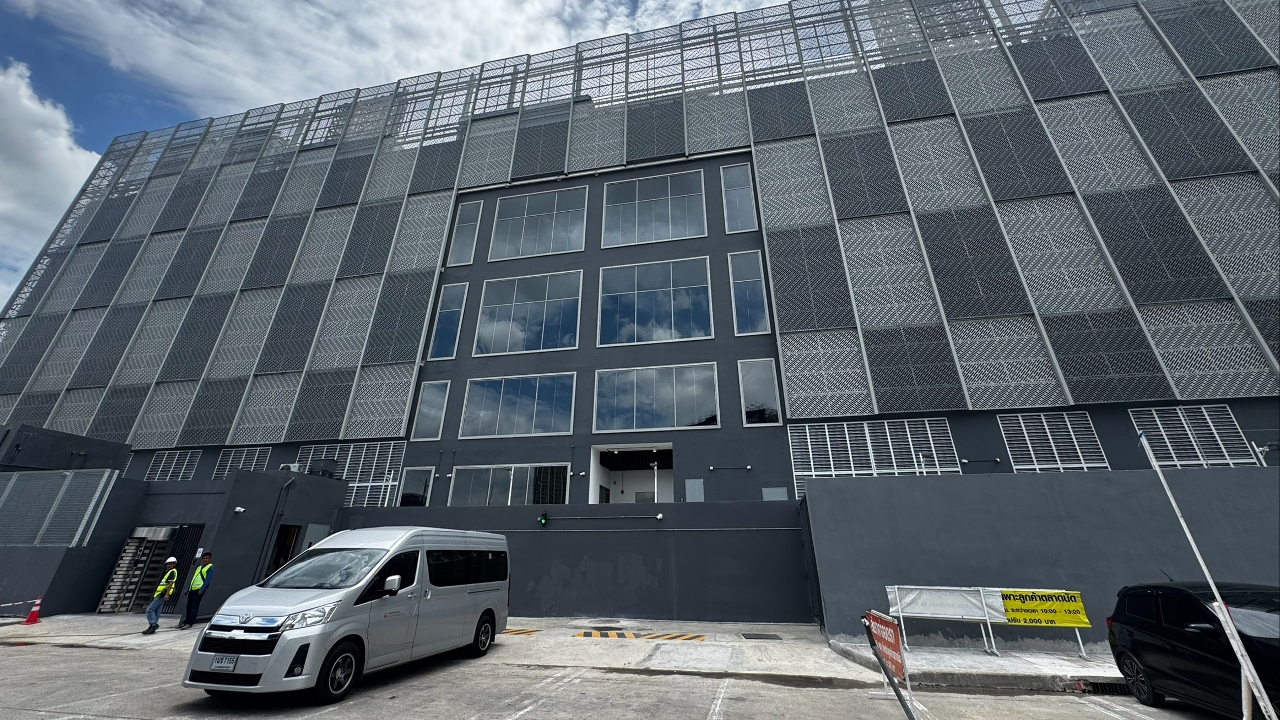
The Ministry of Interior clarified that the Department of Public Works and Town & Country Planning has replied to Suphanat's letter, giving the green light to urban planning guidelines accommodating Data Centers with clearly defined size categories and strict safety controls.
On 7 Sep 2026, the Ministry of Interior issued a statement regarding a letter from Suphanat Meenachainan, a Member of Parliament from the People's Party, who wrote to the Minister of Interior on 3 Oct 2024. The letter requested consideration to revise laws related to Data Center building regulations in urban planning, seeking clear opinions from relevant agencies on urban planning and building control laws to designate appropriate zones to prevent future problems.
The Ministry of Interior stated that in handling complaints from the public, the Ministry, through its Office of the Permanent Secretary, was instructed by Prime Minister and Minister of Interior Anutin Charnvirakul to screen and assign the matter to relevant agencies. The Prime Minister and Minister of Interior cannot be aware of every step or detail of the procedures in all cases.
The Permanent Secretary of the Ministry of Interior ordered the Department of Public Works and Town & Country Planning to oversee and expedite reviewing and improving laws related to Data Center requirements in urban planning. A response letter was sent to Suphanat Meenachainan on 19 May 2025, as per Ministry of Interior letter No. M.T. 0706/9065 dated 19 May 2025.
Since receiving the matter, the Department of Public Works and Town & Country Planning has actively studied Data Center operations starting from fiscal year 2025. It invited related agencies such as the National Electronics and Computer Technology Center (NECTEC), the Chairman of the Thailand Data Center Standards Committee, and the Engineering Institute of Thailand to provide information to staff about the pros, cons, and suitability of urban planning and building regulations. This is because Data Centers vary in size and type, each with differing space requirements, plumbing, electrical, communication systems, permit processes, and public impact.
Currently, the Department has considered building permit approaches, recommending local officials to equate Data Center buildings with existing building types or businesses, depending on the applicant's intended use. Presently, Data Center construction permits are often applied for as office, commercial, or warehouse buildings. Local officials assess based on the purpose, shape, and proportion of the building from submitted plans. For buildings under 10,000 square meters or not classified as high-rise, fire safety features, open spaces, and building setbacks must comply with the law. For buildings 10,000 square meters or larger, stricter fire safety, open space, and building setback requirements apply, including the necessity for a building inspector. Additionally, if the building falls under controlled-use category, it must comply with ministerial regulations on construction materials for such buildings.
Based on studies and progress, the Department has established guidelines to regulate Data Center operations: 1. Urban planning measures define "Data Center" in land use categories in the master plan, covering both service providers and self-use types. Small to medium Data Centers, with low impact, can operate in residential, commercial, some rural and agricultural, and industrial zones under conditions regarding building coverage ratio (BCR), setbacks, and related requirements. Large Data Centers, with broader impacts, are restricted to specific designated zones only.
2. Building control measures involve appointing a subcommittee to draft a ministerial regulation on controlling buildings used as Data Centers. This includes defining building types, criteria, methods, and conditions for construction, setting fire safety and community order standards, and mandating that Data Centers must have building inspectors.
For currently operating Data Center buildings, the Department will coordinate with local governments to inspect building safety and community impact, including permit information. If any building is found to pose risks to health, life, property, or fire safety, or causes nuisance or environmental degradation, local officials will issue orders to owners or occupants to improve or prohibit use, as per the 2020 ministerial regulation on correcting hazardous or unsafe buildings. These inspections must be completed by 12 Sep 2026. The Department will present these urban planning and building control guidelines to the Data Center Business Policy Committee to inform policy, standards, approval, investment promotion, and public service frameworks for Data Centers going forward.