

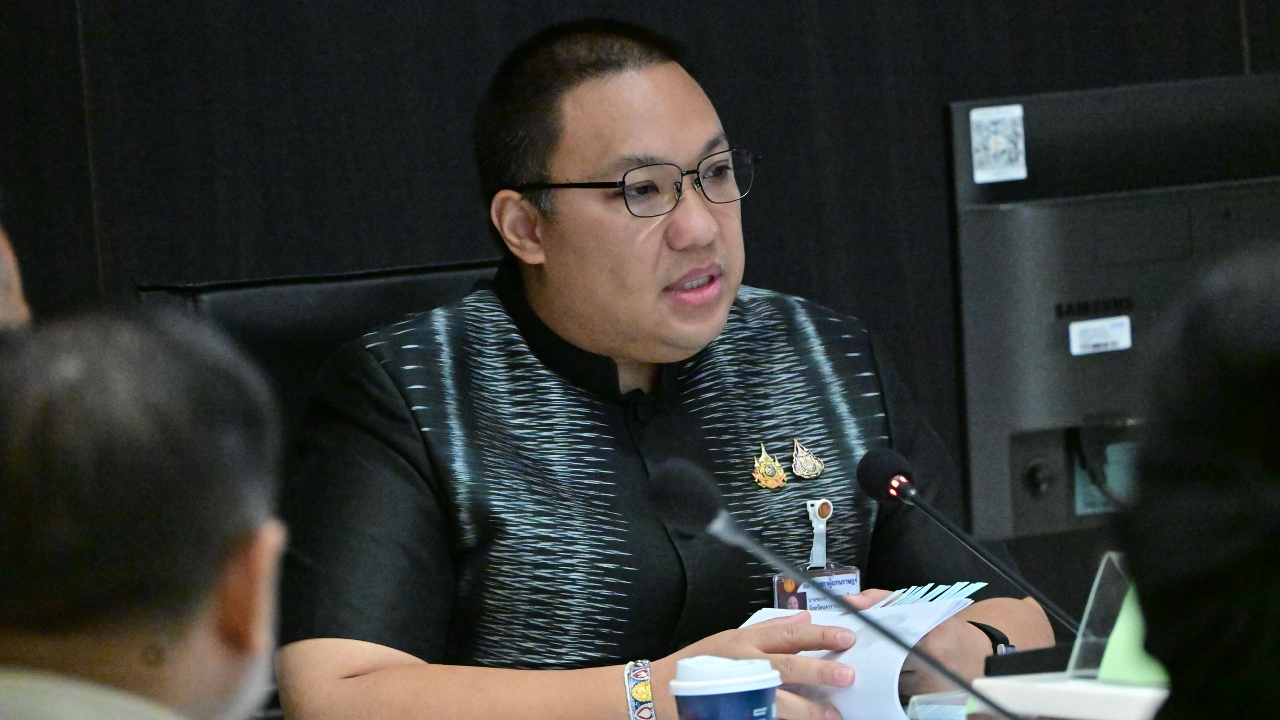
Phonphir revealed that the Jewish cemetery in Chachoengsao is unlicensed and plans are underway to relocate the deceased. Authorities are accelerating inspections of cemeteries in Charoen Krung, pointing out numerous issues involving foreigners in Thailand. A 15-day deadline has been set to investigate 14,000 suspected nominee companies.
On 7 Sep 2026, Mr. Phonphir Suwanchawi, Deputy Minister of the Interior, addressed the discovery of a foreign cemetery in Bang Khla District, Chachoengsao Province. He explained that permission was initially requested and granted in 2021. However, the license expired in 2023, and although the cemetery intended to renew it, local officials found the construction did not meet legal standards, such as required distances from roads and rivers. Consequently, the license renewal was denied. Even after appealing to the then Minister of Interior, the appeal was rejected and the matter is now before the administrative court. Nevertheless, at present, no legal authorization exists for the cemetery.
Phonphir further explained that regarding the four deceased bodies causing public concern, it is believed that one died between 2021 and 2023 when the license was valid. The other three were interred without permission or notification to local authorities. The district and provincial governors will issue orders to remove these three bodies. The body buried during the licensed period is considered lawful. He has instructed the district chief to review relevant laws and to remove any remains found to be illegally buried.
When asked about the Jewish cemetery in Charoen Krung, Bangkok, rumored to have lacked a license for 30 years, Phonphir said that after investigation, there appear to be four or five sites where members of this faith have interred the deceased. Authorities will thoroughly review regulations and legal compliance, including verifying whether licenses for cemeteries across Thailand are valid. Any unlicensed sites will face legal action. Officials have already been dispatched for detailed inspections and expect to have findings within one to two days.
Regarding the issue involving Israelis spreading nationwide, Phonphir acknowledged that the presence of Israeli nationals has been a longstanding concern in Thailand. He emphasized that he has not been passive and cited field operations in Phuket, Koh Samui, and Koh Phangan where some arrests involved Israelis, though he was unsure if this was coincidental. He has reported the matter to the Minister of Justice. The Department of Special Investigation (DSI) is considering classifying this as a special case due to damages exceeding 300 million baht. The Ministry of Interior and the Department of Provincial Administration have already expanded investigations into these groups’ businesses. Investigations are ongoing in cooperation with the Anti-Money Laundering Office and DSI. In some areas, the National Anti-Corruption Commission will also join if government officials are implicated.
When asked if foreigner-related problems in Thailand are widespread, Phonphir confirmed that many foreigners are currently violating the law. There are over 1,500 companies illegally holding land, and approximately 14,000 suspected foreign companies holding about 5,800 land plots valued at over 60 billion baht. He has urged the Department of Land and the Ministry of Commerce to collaborate, instructing provincial governors to immediately deregister the 1,500 illegal companies. The suspected companies will undergo a 15-day review, and if found guilty, will face prosecution as well.
Asked how he would address laxity among officials, Phonphir said that all foreigners in Thailand must comply with Thai law. Regarding officials’ leniency during inspections or license issuance, the licenses’ terms must be strictly followed. However, in cases like cemeteries, officials acted correctly. Concerning changes in company shareholders, the Department of Business Development under the Ministry of Commerce noted that the initial registrant was fully Thai.
Later, changes were made online that officials could not detect. Therefore, Phonphir instructed the Department of Provincial Administration, the Department of Land, and the Ministry of Commerce to discuss establishing a backend system allowing the Ministry of Interior to access deeper information. They are exploring whether the Ministry of Commerce can implement additional systems to alert authorities if foreigners hold illegal land or companies. Discussions are ongoing. He reassures the public that they now have the full list of companies and names. They are also investigating Thai nationals involved in company formations, checking whether these individuals have sufficient means to establish such companies. About 50,000 names have been reviewed; some holders of state welfare cards are listed as shareholders, which is concerning as it is unclear whether they are aware or were hired to do so. These individuals will be summoned for questioning, which will take time. He emphasized that investigations will continue thoroughly since this is a public concern, and the Prime Minister is serious about tackling grey capital, nominee companies, scammers, and illegal businesses. He is committed to resolving these issues and prosecuting violations where confirmed.