

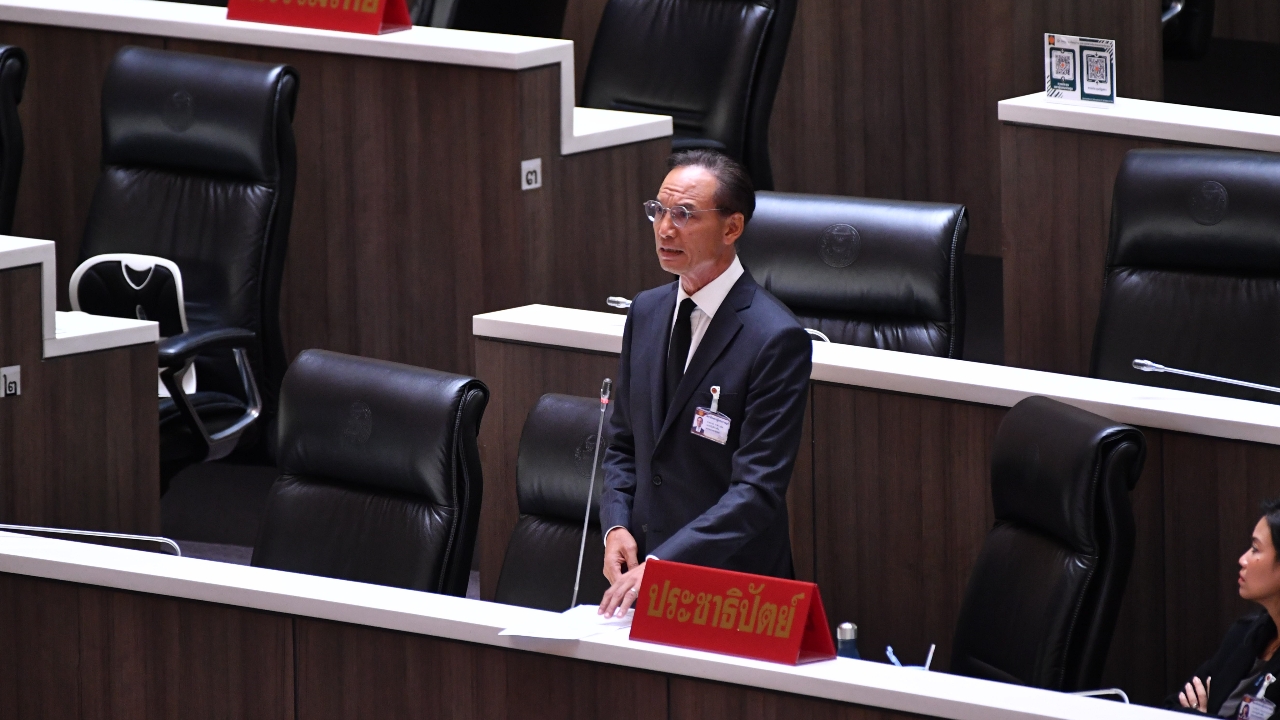
“Korn” proposes a 10% overall cut in the 2027 budget to enable the Cabinet to reallocate funds. He warns the government of making a budget without strategic direction, risking a budget trap, and reveals three fiscal crisis figures, urging urgent tax structure reform and an end to cash handouts.
On 7 Sep 2026 GMT+7, at the parliament during the second reading of the 2027 budget bill, Korn Chatikavanij, a party-list MP from the Democrat Party, proposed a 10% overall reduction in the budget, about 300 billion baht. He emphasized this cut is not to reduce government spending but to allow the Cabinet to reallocate funds to better address the country's real needs. He stressed that the budget reflects government commitment, unlike policy speeches, and pointed out five major challenges the 2027 draft budget fails to address.
1. Education: Current education standards and many students still lack access to government student loans (Gor Yor Sor) due to insufficient budget.
2. Aging society: The proportion of elderly people continues to rise, yet they still await promised welfare payments from political parties.
3. Household debt: A real drag on economic growth that cash handouts cannot structurally solve; financial innovation and commercial banking are needed to help restructure debt.
4. Production efficiency, especially in agriculture, which faces rising costs without sufficient upgrading of processing or market access.
5. Technological adaptation risks economic sovereignty loss, shifting from dependency on foreign platforms to becoming dependent on AI platforms in the near future.
Mr. Korn added that the budget problem has two parts: allocation, which is the government's direct responsibility, and revenue issues. He argued the government should not just claim insufficient funds because, despite increasing cash by issuing a 400 billion baht loan decree, these funds have been used on old projects lacking clarity, ending in conventional purchases like equipment or solar panels rather than structural fixes. He revealed three figures reflecting the fiscal structural crisis requiring joint government and parliamentary review: First, government revenue-to-GDP ratio dropped from 17% over a decade ago to 14%, with every 1% drop equating to about 200 billion baht in lost revenue.
Second, tax structure: 99% of government revenue comes from taxing workers and salaried employees, with only 1% collected from the assets of the super-rich who do not work.
Third, economic growth rate: GDP growth is very low at 2%, and slow growth means reduced revenue collection, forcing workers and the middle class to bear the main tax burden.
“If we do not think and find answers, the country will surely fall into a budget trap. Actual investment spending today is only 13-14%, below the legal requirement of 20%. In a budget crisis, the poorest, the elderly, and salaried workers carrying the tax burden will suffer most. Therefore, I urge the government to 'think again, act anew' across the system, especially reforming tax structures, reviewing the role of foreign capital, defining positions on state enterprises and state-held shares, and improving regulations to avoid future budget crises,” Mr. Korn said.
Democrat Party intercepts excessive investment spending claims.
Meanwhile, Abhisit Vejjajiva, party-list MP and Democrat Party leader, proposed cutting 1.2 billion baht related to expenses for economic and social recovery and addressing energy price volatility that overlap with the 400 billion baht loan, especially clearly overlapping with the latter 200 billion baht. He assessed that some of the 200 billion baht loan funds will remain unused, so there is no reason to add another 12 billion baht from the central budget. He also raised concerns that the government might try to circumvent rather than comply with laws. He cited that in the central emergency budget of 100 billion baht, 60 billion baht was claimed as investment spending, but based on last year's expenditures, most were transfers or emergency aid rather than investments. He said he will verify whether the Prime Minister and Cabinet’s approval of central budget spending aligns with their explanations to the committee. If confirmed as genuine investment, he will be satisfied; if not, he will insist on amending the bill to cut this part of the central budget.