

"Madam Dear" proposes cutting the 12 billion baht central budget claimed for energy transition, warning that "clean energy" could become "corrupt energy" amid overlapping details with the loan decree.
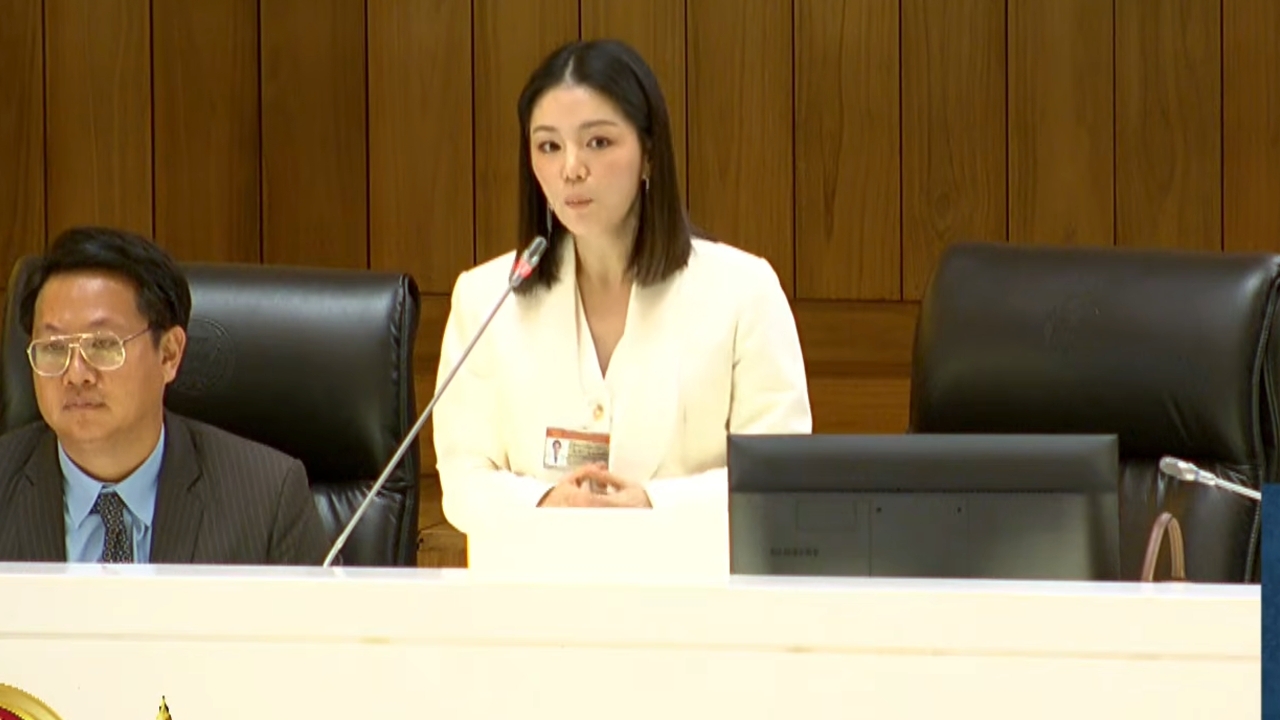
At 11:41 a.m. on 7 Sep 2026 GMT+7 at the Parliament, Ms. Watanya Bunnag, as a member of the special budget committee for fiscal year 2027, spoke during the budget discussion on Section 6, central budget. She noted that the government concealed 12 billion baht in the central budget with the stated purpose of energy transition and clean energy. While agreeing that clean energy is necessary to reduce fossil fuel reliance, she warned this budget could turn "clean energy" into "corrupt energy" and raised three concerns.
First, the budget use is redundant both in mission and timing. There is the 200 billion baht loan decree for energy transition, yet an additional 12 billion baht in the central budget with the same objective: clean energy projects.
Second, the government's rationale conflicts between the 400 billion baht loan decree and the additional 12 billion baht in the central budget. When issuing the loan decree, the government cited urgent financial discipline and inability to use the regular annual budget. Yet, less than a month later, the 2027 budget bill includes 12 billion baht for the same mission hidden in the central budget. The government must clarify this, as ultimately taxpayers will bear the debt and repay it through taxes.
Third, although both funds share the same purpose, their oversight standards differ. The loan decree funds are scrutinized by a screening committee and the Parliament. The 12 billion baht in the central budget, however, is under the Prime Minister and Cabinet's authority, effectively a blank check to use funds for any project. The government must clarify safeguards to prevent this flexibility from becoming a loophole that escapes parliamentary oversight, leaving Parliament unaware of how taxpayers' money will be spent in the future.
Ms. Watanya added that the 12 billion baht is separate from the contingency reserve, meaning the government has a total of 112 billion baht in flexible spending. Parliament must be cautious of budget lines named by situation but with spending details determined later. For example, previous economic stimulus funds were gradually cut to zero, only to reappear under new titles such as energy. This means Parliament is approving projects or blank checks for the government to decide later, without public scrutiny. She supports lowering energy costs to enhance national security and competitiveness.
Ms. Watanya also stated that when the government requests budgets through multiple channels simultaneously, transparency and oversight standards must increase, not decrease. If the government insists the 12 billion baht is not redundant with the 200 billion baht loan, it should disclose project names, responsible agencies, cost-effectiveness indicators, and approval principles. If it cannot provide these details, Parliament should not approve this blank check for the Cabinet and Prime Minister to use. The public has the right to question why they must pay twice for the same mission without seeing receipts or having spending transparency.