

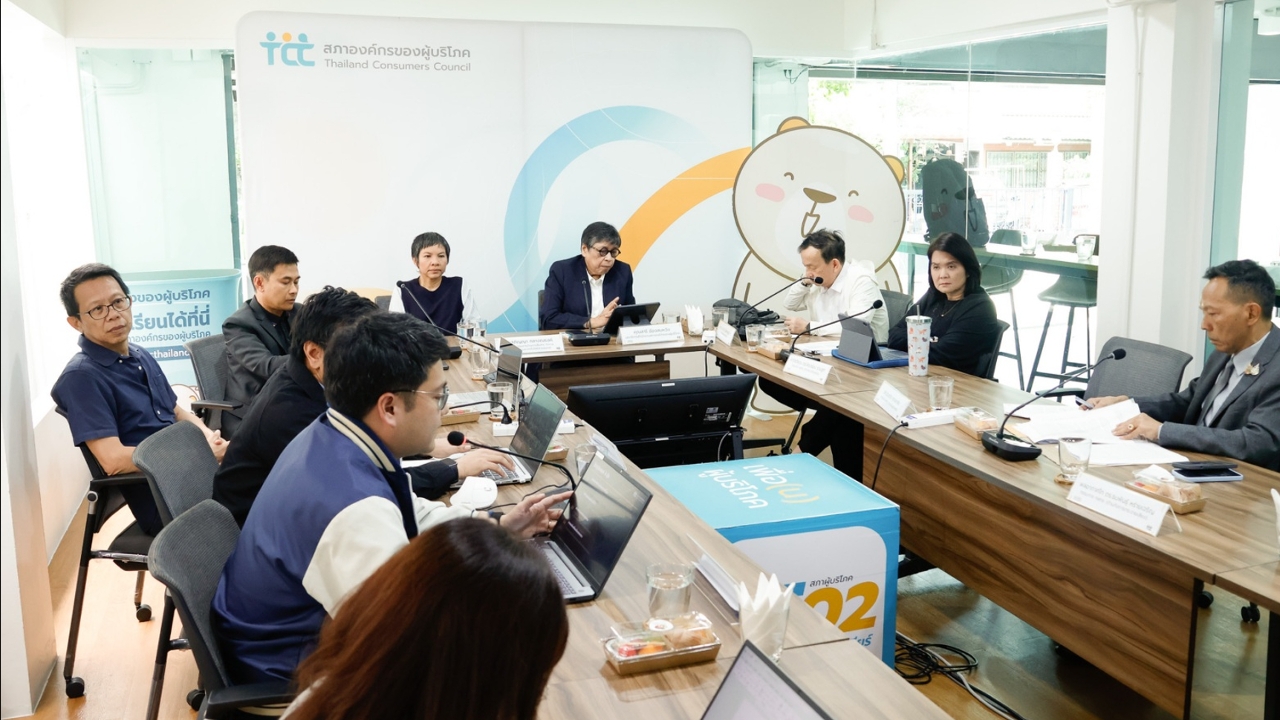
The Consumer Council convened with three NBTC commissioners and the Digital TV Association to closely watch the "impact of the mobile merger and the future of television" after 148 agenda items remained pending. They proposed that all six NBTC commissioners move forward with meetings and that the NBTC office support organizing these sessions to avoid consumer delays.
On 7 Sep 2026 GMT+7, the Consumer Council held talks with NBTC commissioners and representatives from the Digital Television Association (Thailand) to follow up on issues affecting consumers in the television and telecommunications sectors. All six NBTC commissioners were invited; three attended: Air Marshal Dr. Thanapan Raichaerng, Professor Emeritus Dr. Pirongrong Ramsut, and Associate Professor Dr. Suphach Supachalasai. Associate Professor Dr. Sompop Purivikvayapong reported a scheduling conflict, while Mr. Torpong Selanont and Police General Natthatorn Preasuntorn accepted the invitation but did not attend.
During the discussion, Ms. Saree Ongsomwang, Secretary-General of the Consumer Council Office, stated that the NBTC's continued inability to hold meetings to consider various agenda items not only affects internal operations but also impacts pending decisions related to telecommunications, television, investment, and consumer protection.
Ms. Saree noted that regarding post-merger telecommunications measures, it remains to be seen how effectively the stipulated measures address pricing, competition, and opportunities for smaller operators to enter the market. Meanwhile, consumers continue to face daily issues ranging from telecom service fees to threats from fraudsters, such as SMS messages containing malicious links. The Consumer Council has previously proposed measures to manage and prevent such harm.
“We cannot wait for court case outcomes. What we want to see is the NBTC advancing its consumer protection duties because there are still complaints and many issues awaiting decisions,” Ms. Saree said, urging the remaining six NBTC commissioners to find ways to convene meetings and for the NBTC office to support the facilitation of such meetings.
Associate Professor Ruj Komolbutr, Subcommittee Member on Communications, Telecommunications, and Information Technology of the Consumer Council, stated that 148 agenda items are awaiting NBTC consideration, including issues related to merger impacts, digital television, and other complaints. Without meetings, these items cannot progress.
Associate Professor Ruj emphasized that facilitating meetings is urgent. Besides the NBTC office needing to establish meeting procedures, the six commissioners who remain in office should collaborate to find solutions so that conflicts over the chairperson's status do not halt the organization's operations.
Meanwhile, Mr. Diao Worattantakun, Secretary of the Digital Television Association (Thailand), said the uncertainty surrounding the future of digital TV affects not only operators but also viewers' rights to equitable and comprehensive access to information. Viewing via OTT requires equipment, internet access, and costs, unlike free-to-air TV.
Mr. Diao noted that the industry awaits clarity on the path digital TV will take as April 2029 approaches. Signs show some operators reducing investments in drama production, variety shows, and news, fearing that prolonged uncertainty will not only affect TV stations but also the quality and diversity of information available to the public.
“TV is not just about operators; it concerns consumers and viewers who should have broad access to information. Today, we need clarity on the future direction of digital TV because the country cannot afford to waste more time waiting,” Mr. Diao said.
Ms. Supinya Klangnarong, Chairperson of the Consumer Council's Subcommittee on Communications, Telecommunications, and Information Technology, said the current issues require intervention to “unlock” the situation because the impact extends beyond television and telecommunications to national confidence and the digital economy.
Ms. Supinya believes the NBTC office should support the remaining commissioners in resuming meetings and addressing pending agendas. If internal NBTC mechanisms cannot resolve the situation, management should help coordinate or find solutions without infringing on the regulatory agency's independence.
“We cannot let everyone carry on as usual without meetings or decisions. There must be an end point. If the NBTC cannot move forward, it will affect not only television and telecommunications but also the nation's confidence and digital economy,” Ms. Supinya said.
The overall discussion focused on two key areas: television and telecommunications. The Consumer Council proposed that the NBTC expedite creating a digital TV roadmap before licenses expire in 2029, establish regulatory frameworks for OTT platforms, and implement consumer protection measures. In telecommunications, they recommended monitoring post-merger impacts on pricing, service quality, package transparency, and usage alert systems to enable consumers to compare and select services fairly.
The NBTC expressed support for continuing work within legal and rule-of-law frameworks, emphasizing that meetings and decisions on critical issues should not be stalled. They stressed that the NBTC office must impartially support operations to ensure agenda items affecting consumers, operators, and the public proceed without interruption.
The Consumer Council confirmed that if official NBTC meetings cannot be held, they will continue coordinating with all six commissioners to open discussions on consumer-impacting issues, especially monitoring post-merger telecommunications measures and resolving digital TV's future to prevent indefinite delays in pending decisions.