

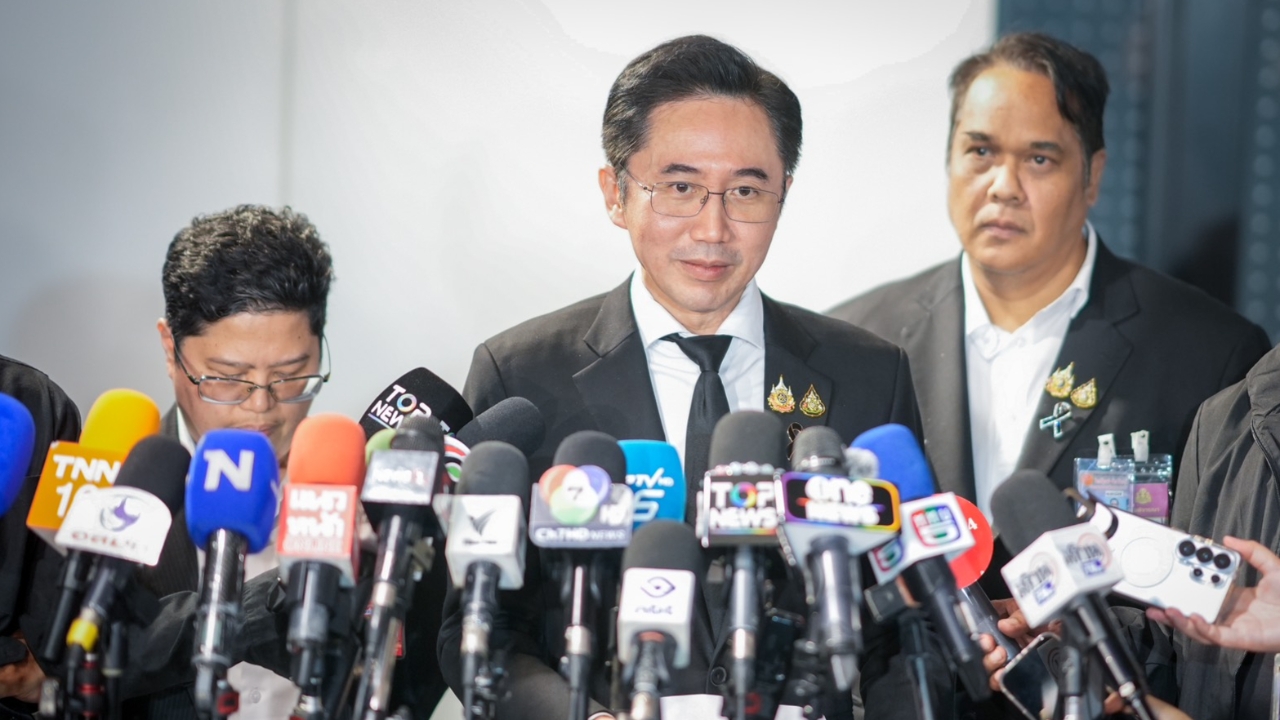
“Yotsanan” proposes the Startup Act draft to the Cabinet to break fundraising barriers and unlock convertible bonds, promoting financial flexibility, retaining investment capital within Thailand, and creating jobs and new opportunities to drive the country's economy.
On 8 Sep 2026 GMT+7, Mr. Yotsanan Wongsawat, Deputy Prime Minister and Minister of Higher Education, Science, Research and Innovation, announced that today the ministry will present the Startup Promotion Act (STARTUP ACT) draft to the Cabinet for approval. The aim is to advance the innovation ecosystem by removing legal constraints, empowering Thai startups to grow sustainably, with plans to submit the bill for parliamentary consideration thereafter.
This Startup Promotion Act draft, prepared by the Office of the Council of State, addresses limitations in the existing Civil and Commercial Code that hinder startup business models. It seeks to reduce longstanding legal obstacles affecting fundraising, aligning with current conditions where the private sector has highlighted financial gaps and the outflow of Thai capital to foreign markets.
The draft assigns the National Innovation Agency (NIA) as the lead agency, serving as a One-Stop Service Center for certification, support, and coordination. A Startup Promotion Committee of experts will set strategic policies and plans to develop startups and their ecosystem in line with national science, research, and innovation strategies. This ensures regulatory agencies coordinate efficiently to reduce bureaucratic hurdles and expand support channels for startups and investors. Certified startups receive rights and benefits for five years, with possible extension up to ten years for Deep Tech firms.
Dr. Kritphaka Boonfuang, NIA Director, stated that once the law is effective, NIA is prepared to elevate its role as the main agency integrating and linking startup businesses with public and private sector bodies involved in startup development and promotion. It will serve as a central hub for information on programs and funding sources, as well as certify and announce startup businesses eligible for benefits under the Act. This represents a significant challenge and opportunity, as Thai startups will gain centralized access to support projects and funding data, fostering investment and growth aligned with government policies to create unicorn-level startups and enhance competitiveness.
Another key point is that doing business will reach a turning point, as the draft law pushes legal changes including allowing the issuance of convertible bonds, a popular global startup fundraising tool; permitting limited companies to hold treasury stock to allocate as employee or director incentives to attract talent; and enabling debt-to-equity conversions to increase flexibility in financial structure management.
Furthermore, the government will accelerate support measures for continuous startup growth, such as tax deductions and incentives tailored to startup development; strengthening foreign expert and high-skilled personnel recruitment under immigration and foreign worker management laws; protecting intellectual property and utilizing research and innovation outputs; and ensuring access to government procurement markets and benefits under public purchasing and asset management regulations.