

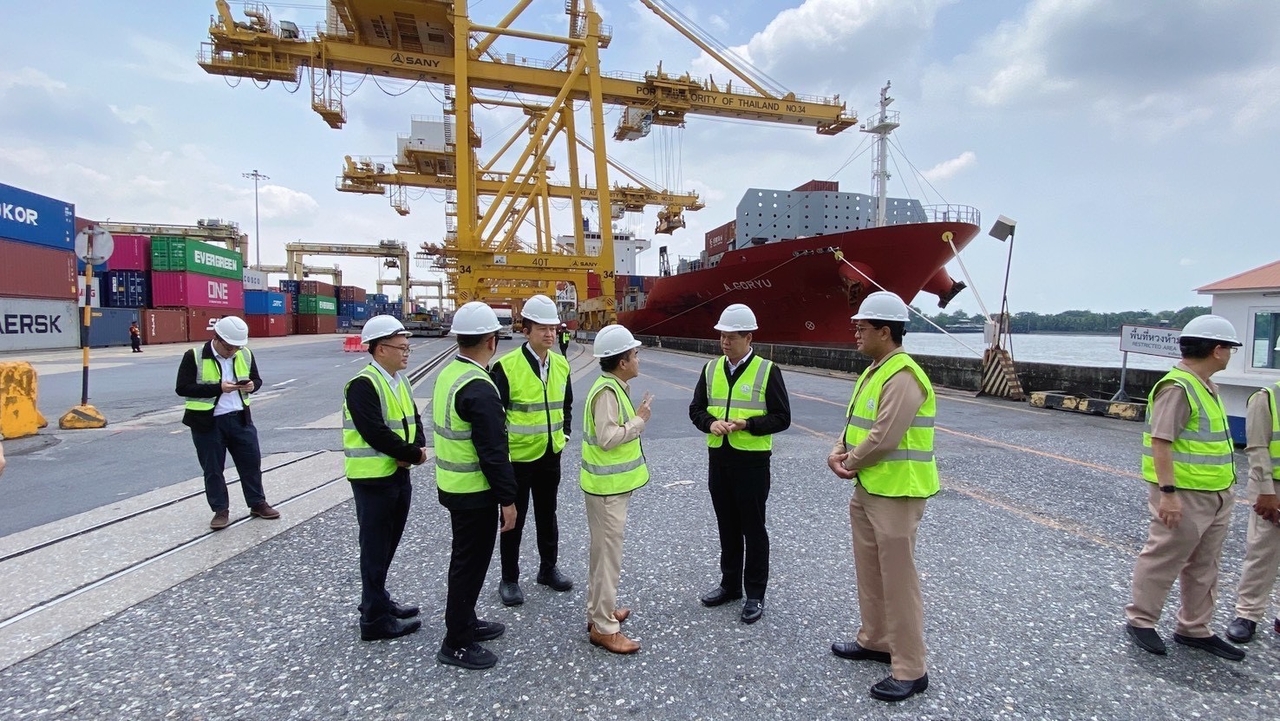
Sanphet revealed that the Port Authority earned 12.649 billion baht in revenue during the first 9 months and expects full-year 2026 revenue to near 16.7 billion baht.
On 8 September 2026, Sanphet Boonyamanee, Deputy Minister of Transport, disclosed the operational results of the Port Authority of Thailand under its supervision for the first 9 months of fiscal year 2026 (October 2025 – June 2026). The Authority recorded total revenue of 12.649 billion baht, up 2.38%, and a net profit of 5.397 billion baht, reflecting its ability to generate income and the strength of this state enterprise in supporting international trade.
During the first 9 months, there were 11,591 vessel calls, an increase of 2.76%. Cargo throughput totaled 97.61 million tons, up 4.44%, and container throughput was 9.06 million TEUs, a 6.63% rise compared to the same period last year. Laem Chabang Port was the main driver with 8.10 million TEUs handled. Regional ports showed significant growth, particularly Chiang Saen Commercial Port, which saw container throughput rise by 165.59%, and Ranong Port, which increased by 81.08%.
Sanphet stated that the financial forecast for fiscal year 2026 projects total revenue of approximately 16.797 billion baht and earnings before special items of 7.087 billion baht. However, after deducting one-time expenses of around 563 million baht incurred in February, net profit is expected to adjust down to about 6.524 billion baht. These figures remain financial estimates.
Looking ahead, the Port Authority's revenue is expected to grow steadily, with projections of 17.145 billion baht in 2027, gradually increasing to 26.178 billion baht in 2035 with a profit of 12.766 billion baht. Key growth drivers include the development of Laem Chabang Port Phase 3 and increased concession fees. By 2037, revenue is forecast to reach 28.019 billion baht, a growth of over 66% compared to 2026.
The Deputy Minister of Transport affirmed plans to continue supervising and accelerating improvements in the Port Authority’s service efficiency to resolve transport bottlenecks, reduce waiting times, and help Thai exporters manage costs effectively. This will enhance the competitiveness of Thai products in the global market, benefiting the entire economy through budget allocation for public service development and sustainable income distribution to entrepreneurs, farmers, laborers, and communities surrounding the ports.