

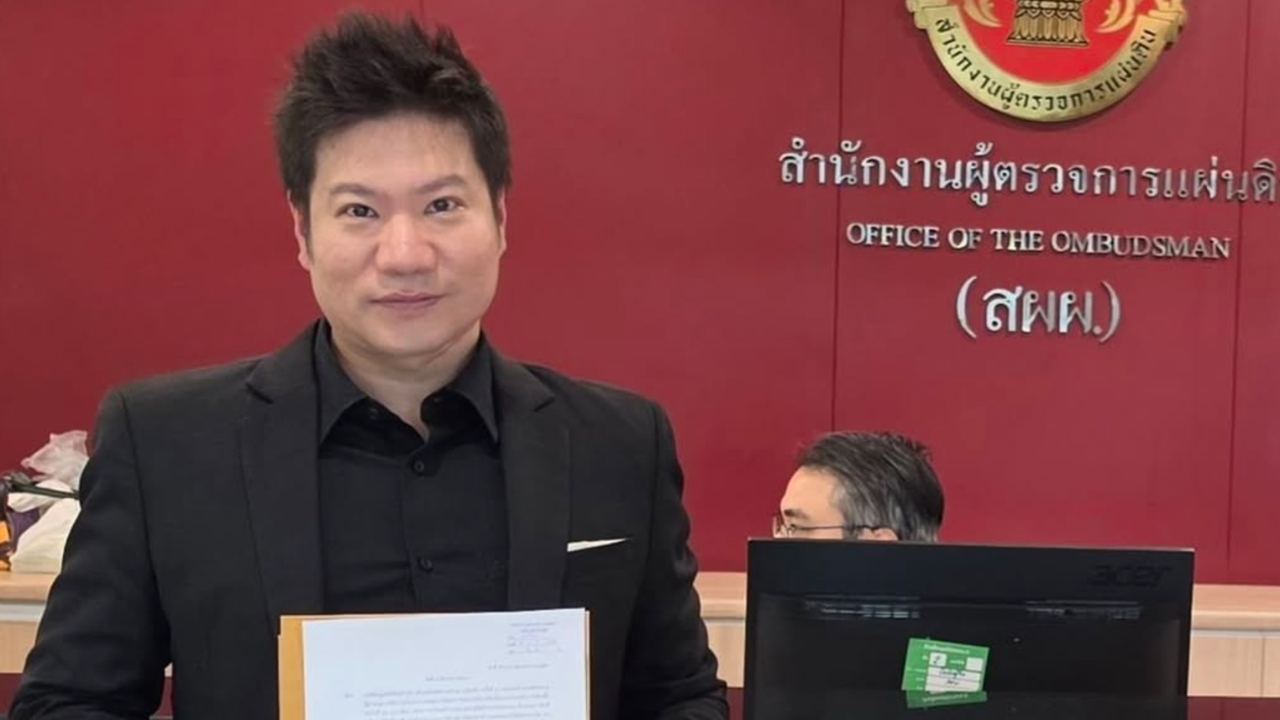
Thamthee posted an image submitting his final evidence proving that both ballots in the election were not secret to the Ombudsman before the Constitutional Court's ruling on 28 September 2026. He pointed out that from booklet-style codes, if 20 voters receive ballots from the same booklet, one can already know how the entire group voted.
On 9 September 2026, Mr. Thamthee Sukchotirat, also known as Dr. Ruabin, posted on his personal Facebook that the final raw data proving that both ballots were not secret had been submitted to the Ombudsman. "Today, I hurriedly submitted the third factual report on the barcode case on election ballots (case T.30/2569 at the Constitutional Court) to the Ombudsman, since the Constitutional Court set the deadline for closing statements by this Friday. Therefore, the Ombudsman must receive the information beforehand."
In the first two submissions (made on 25 March and 9 April), and the team sent scanned barcode data matching the ballot stub numbers along with leaked "order in the register" information, plus raw files I personally collected on the new election day, 22 February (video clips of voters casting ballots and photos of pink and green ballots during the count of all 308 ballots taken from media camera areas, etc.). However, I did not submit the final raw data that shows even the booklet-style code (20 ballots share the same code) can reveal the voting secrecy of the group of 20 people, along with analysis results of the green ballot voting order.
That is the Exit Poll result. When analyzed together with the previously submitted raw data, it can reveal the voting order of voters even with QR Codes that appear unordered (scanned and found no sequential relationship) in booklet form, with improved accuracy.
Since I ran a polling center on 22 February, I took the opportunity to conduct an Exit Poll as well, recording the voting of consenting voters who agreed to be interviewed and revealed their voting results, along with the time each voter exited the booth. The sample size was sufficient to test the direction of ballot picking and counting.
This gave us a "reference point" to correlate with the signing clips and the behavior of the ballot box during counting, with data indicating a "last in, first out" (LIFO) pattern at a ratio of about 93:1 compared to the opposite direction. Ballots issued from the same booklet still cluster together in piles, even if the box was shaken before counting.
Therefore, even with booklet-style codes, by using this openly and consensually collected data with written consent, it is enough to determine "how the group of 20 voters who received ballots from the same booklet voted as a whole" (the total of the booklet can be read directly from the image; as for which group of 20 people the booklet belongs to, this is based on the assumption of sequential ballot issuance, which the Election Commission can verify). If people are lined up consecutively to receive ballots until a booklet is full, simply knowing the first person's time allows verification of that booklet's voting direction. The order of votes on the green ballot, along with confidence levels, has been submitted to the Ombudsman. For confidentiality, this information is not posted publicly to protect voter secrecy.
Any polling center conducting Exit Polls in units where vote counting photos are taken can do the same. This is the meaning of "verifiably within reach" that the Constitutional Court previously established. Those holding the ballot stubs and knowing which code belongs to which booklet need not estimate anything; just photographing the ballots during counting immediately reveals that the ballot belongs to one of the 20 individuals, without needing clips or polls like this.
"With all the data I have collected and analyzed over the past seven months, my opinion as a factual provider is that this election’s voting is verifiably traceable regarding who voted for whom, thus the election is not secret for both the pink and green ballots. The weight of this evidence in the case is at the discretion of the Ombudsman and the Constitutional Court, to whom I have already submitted all the information through the Ombudsman. I now await and respectfully accept the Court's ruling along with all Thai citizens on 28 September," said Mr. Thamthee.