

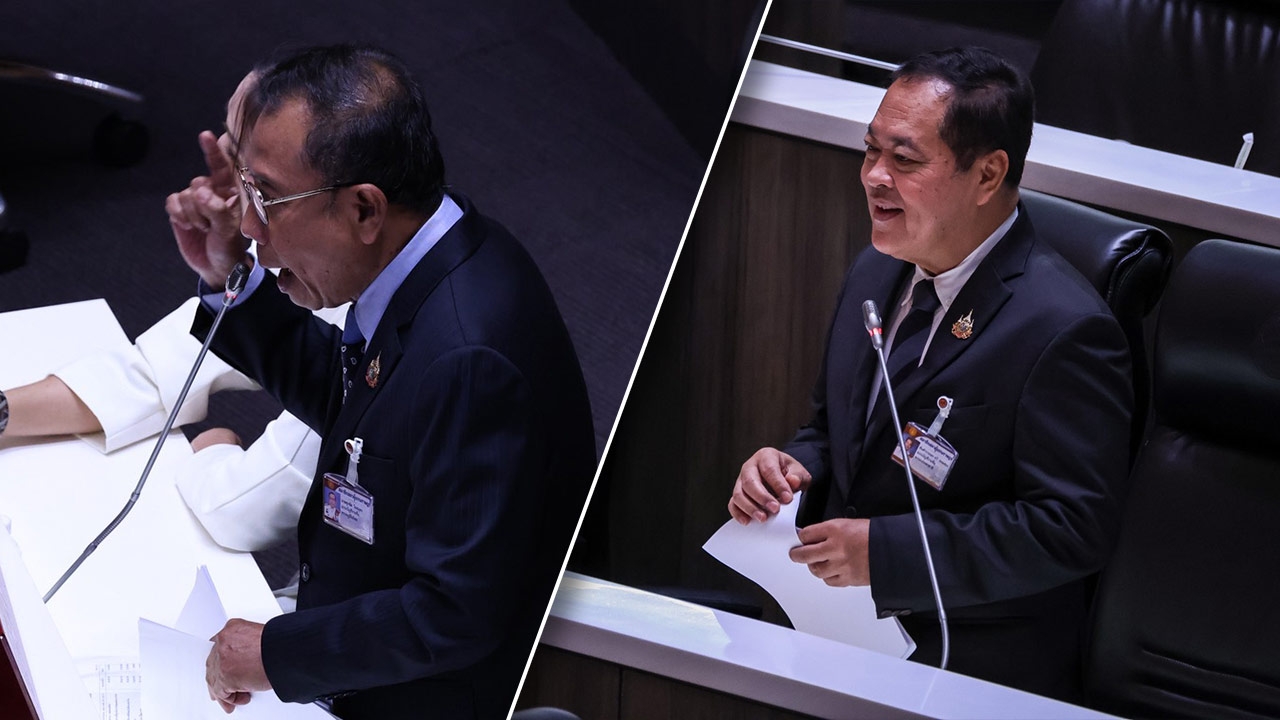
Supachai recounted that political interference in the senator vote-rigging case began under previous governments. Tawee retorted that the interference was the transfer of officers handling the case to avoid accountability.
On 9 Sep 2026 GMT+7, during the House of Representatives meeting to consider the 2027 fiscal year budget bill totaling 3.78 trillion baht, chaired by Sopon Sarum, the debate focused on Section 21 concerning the Ministry of Justice.
MP Supachai Jaisamut of the Bhumjaithai Party, elected via party list, participated in the debate. Initially intending to discuss another agency, he shifted to address the DSI. He noted that the DSI wields special powers, possesses specialized personnel, and receives public funds to tackle complex crimes. Given the DSI’s authority, exercising it cautiously, impartially, and within legal limits is crucial.
Supachai expressed support for the opposition’s viewpoint, emphasizing that performance indicators for the Ministry of Justice and DSI should demonstrate how these agencies deliver justice to the public. He recalled hearing the opposition question whether the DSI serves as a political tool. He agreed, acknowledging that at times the DSI has faced such accusations because political interference affects those harmed by such events. Specifically, the senator vote-rigging case began under a previous government, not Anutin Charnvirakul’s administration. Prior secret investigations aimed to classify it as a special case, proposing it multiple times to special committees. However, prosecutors disagreed with some charges. The keywords presented did not align with the prosecutors’ view that the case involved a national criminal conspiracy; instead, it was a singular case beyond the DSI’s inherent authority. Supachai cautioned against overstating the case and stressed that public funding requires accountability to the people.
“Today, do not claim that the DSI is being interfered with only at low levels or cannot fulfill political agendas. The facts involve Committee 26 and Committee 36, which some try to equate. The truth is Committee 26, responsible for inquiry, faces questions about its conduct. Three members from Committee 26 also serve on Committee 36, accompanied by the investigation files, which remain under suspicion of political interference,” Supachai said. Supachai stated.
He added that to strengthen the DSI, he agrees no political interference should occur. Yet, regarding Committee 26, he insisted that political interference at the time caused the investigation to deviate and distort, leading many to believe it as truth. Ultimately, it reached a point requiring verification, as the true authority—the Election Commission—exercised power per law and constitution. He believes the DSI can operate without issue today and cautions against creating misleading impressions about its current status.
Supachai concluded that even if investigators are transferred elsewhere, if summoned by court order to testify, they must comply. Resignation does not prevent one from testifying; transfer does not exclude their witness role.
Pol. Col. Tawee Sodsong, party-list MP of the Prachachart Party, requested to continue debating, referencing the Constitutional Court’s ruling on the senator vote-rigging case, which led Supachai to protest to the session chair, saying, “It seems the former Minister of Justice is explaining something unrelated to him. I have not implied anything about you.”
Tawee further stated he supports budget cuts and wants the DSI to retain investigative powers, especially amid interference likely occurring now, such as transferring officers investigating the senator vote-rigging case out of the agency—an unacceptable act requiring prosecution under existing DSI protection laws.