

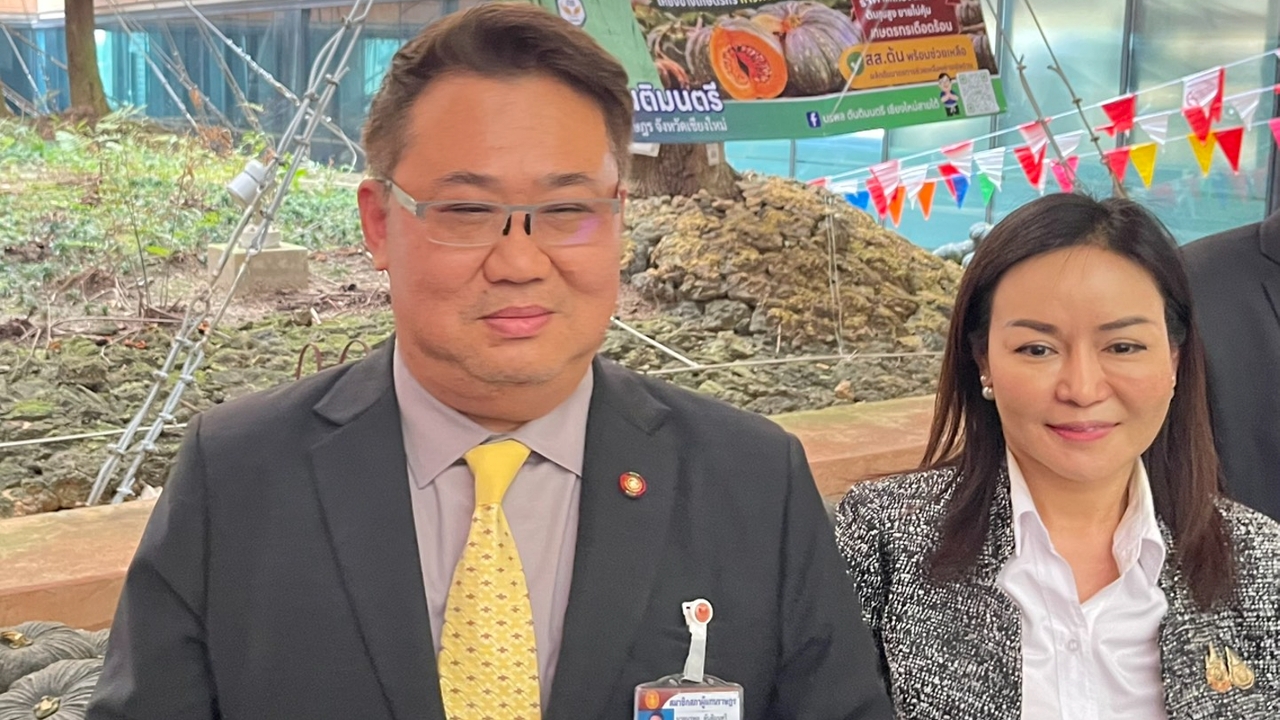
Naraphol Tantimontri from the Kla Tham Party brought 2 tons of Mae Chaem pumpkins to distribute free at the Parliament after prices plunged to only 3 baht per kilogram. He urged the government to assist farmers through the crisis of rising costs while produce prices remain rock-bottom.
At 12:00 on 10 Sep 2026 GMT+7 at the Parliament, Mr. Naraphol Tantimontri, Chiang Mai MP from the Kla Tham Party, brought a total of 2 tons of pumpkins from farmers in Mae Chaem District, Chiang Mai Province, to distribute to officials, media, and the public at the Parliament. This followed farmers facing a severe drop in pumpkin prices. The plan is to distribute a total of 4 tons, initially bringing 2 tons to Parliament to help distribute the products and alleviate farmers' distress. Mr. Naraphol revealed that pumpkin prices have fallen drastically to just 3 baht per kilogram, but with transportation costs included, the total cost reaches 5 baht per kilogram, causing farmers to suffer heavy losses. Production costs including fuel, fertilizer, and other inputs exceed the selling price. Farmers asked for assistance, so he volunteered to help distribute the products. Simply putting up a 'free distribution' sign attracted people waiting since 11:00, reflecting public readiness to support Thai farmers if distribution channels exist.
Mr. Naraphol added that he urges the government and Ministry of Commerce to urgently find ways to distribute agricultural products to stabilize prices, such as reinstating agricultural price insurance programs, which directly support farmers—especially when farmers cannot control market prices. Currently, fuel and fertilizer prices are high, but farmers cannot influence selling prices, which remain low. He called on the government to prepare measures to address crises including fuel prices, weather conditions, and other factors affecting production, so farmers do not bear all risks alone. He also proposed that MPs from various provinces bring low-priced agricultural products to Parliament to help distribute them, opening marketing channels and promoting public consumption of seasonal produce. This would assist farmers and provide consumers with quality goods at reasonable prices.
