

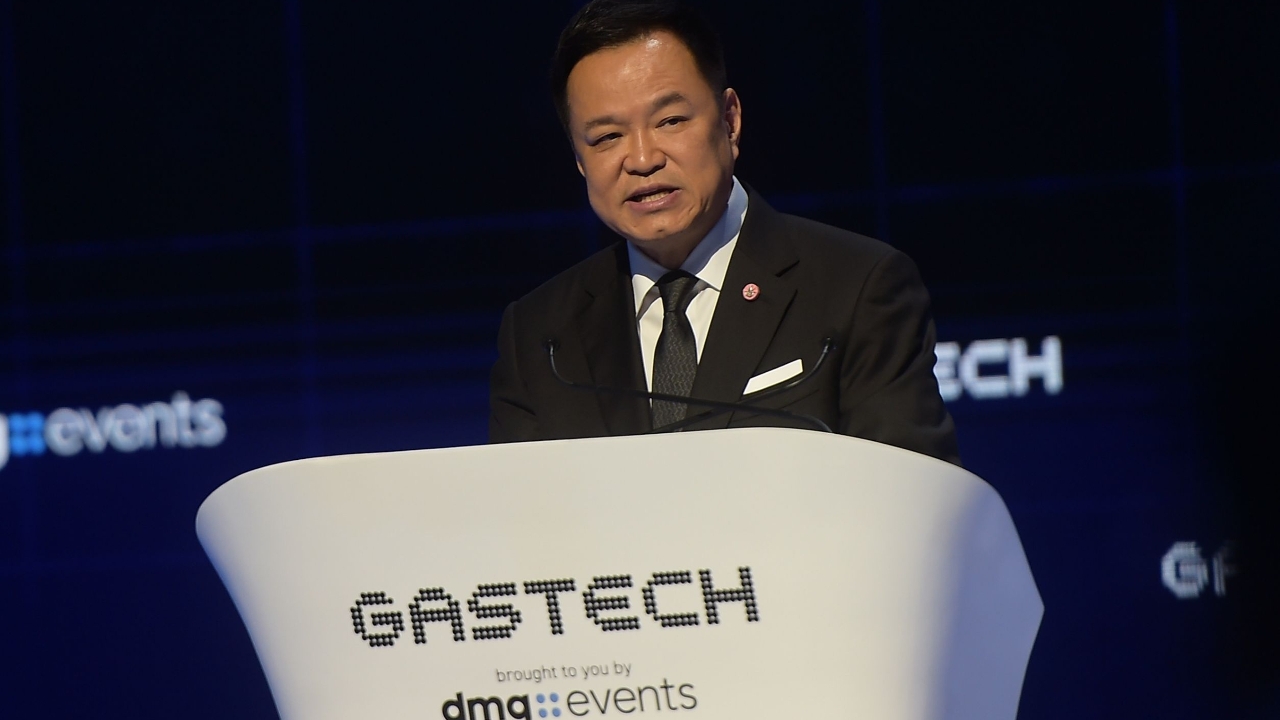
At Gastech 2026, the Prime Minister announced a 50 billion baht funding package to support rooftop solar panel installation. Meanwhile, the Energy Minister highlighted policies to establish Thailand as a regional energy hub, accelerating LNG expansion and petroleum concession round 26, targeting Net Zero.
On 14 Sep 2026 GMT+7, Prime Minister Anutin Charnvirakul opened the global Gastech 2026 event, declaring Thailand’s readiness to become ASEAN’s energy center. He outlined three key energy strategies the government is driving to ensure sufficient energy supply for the modern world while reducing living costs. A major highlight is the upcoming launch of a 50 billion baht project in mid-October to support households nationwide in installing rooftop solar panels, coupled with import tax exemptions on certain related equipment. This aims to help citizens cut electricity bills and access clean energy tangibly.
The Prime Minister emphasized that amid soaring electricity demand from AI growth, cloud services, and data centers, Thailand’s energy policy must be practical without having to choose between security and sustainability. The government is advancing three main agendas: 1. Ensuring security and affordable prices, with natural gas and LNG remaining vital transitional fuels to maintain system stability and control electricity costs for the public; 2. A feasible energy transition by accelerating grid development, energy storage systems, rooftop solar projects, and leveraging agricultural strengths to promote a bioeconomy that converts agricultural materials into low-carbon fuels; 3. Linking energy policy with investment by building infrastructure and clear regulations to give investors confidence for long-term planning.
“The clear policies have resulted in investment promotion (BOI) applications soaring to 1.43 trillion baht in the first half of the year, a 37% increase from last year. This substantial capital has the potential to create over 82,000 new jobs for Thai people,” he said. The Prime Minister also reiterated that
Thailand is ready to leverage its strategic location in the heart of ASEAN and its strong business networks to welcome global partners in renewable energy, natural gas, hydrogen, and carbon management. This will drive Thailand to become a trusted global energy investment platform and jointly build a secure, clean energy future to support the growth of future generations.

Positioning Thailand as a regional energy hub
Energy Minister Eknat Promphan welcomed global leaders and senior executives from the energy sector at the Gastech 2026 opening ceremony, co-hosted by the Ministry of Energy. He noted that bringing one of the world’s most influential energy forums back to Thailand for the first time since 2008 comes amid a global focus on energy transition and energy security as key shared priorities.
Eknat stated that Thailand is well-prepared to be the Southeast Asian regional energy connection hub, with advantages in location, advanced industrial base, leading energy companies, and skilled personnel. He affirmed that natural gas remains a crucial pillar for energy transition and infrastructure, aligning with the International Energy Agency’s (IEA) report which indicates global natural gas demand remains around 4,800 billion cubic meters annually and will continue into the next decade.
To meet these trends, Thailand has opened investment opportunities for international partners through petroleum exploration and production concession round 26, covering over 60,200 square kilometers of high-potential offshore areas. The country is also accelerating LNG import capacity expansion from 19 million to 27 million tons and promoting cooperation along the value chain, from innovative sourcing and joint procurement to joint investment.
The Energy Minister emphasized the sustainability and Net Zero target requires renewable energy, electricity, hydrogen, ammonia, and low-carbon innovations. Thailand has designated carbon capture and storage (CCS) technology as a key pathway to the 2050 goal, with a pilot project reaching Final Investment Decision (FID), positioning Thailand as one of the region’s first CCS developers. Development of the Eastern Hub will proceed as shared CCS infrastructure to support future industry.
“Energy transition is not a destination but a journey requiring technology, innovation, investment, and international cooperation to turn challenges into opportunities,” Eknat concluded.

