

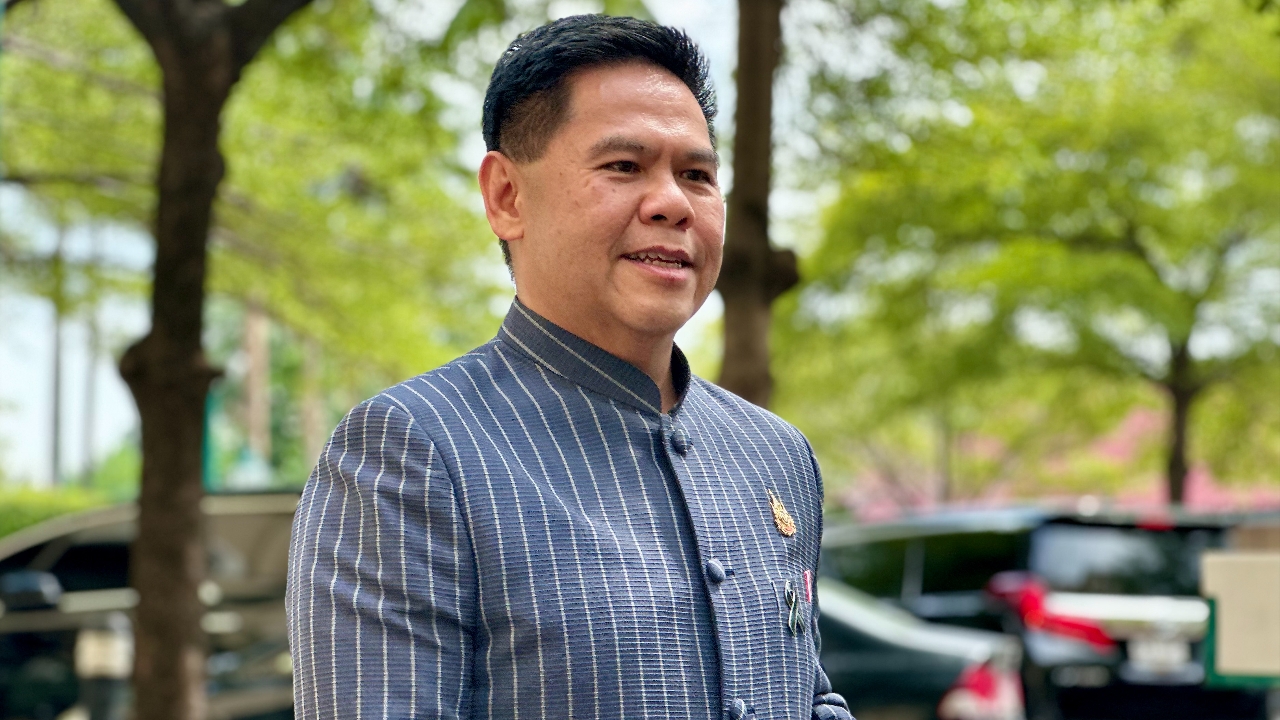
Warawut leads the industry in supporting the government's Solar Rooftop project for 1.5 million households, instructing the Thai Industrial Standards Institute (TISI) to regulate system-wide standards. The initiative highlights the supply chain to promote SME production and employment of Thai workers.
On 15 September 2026 at the Government House, Warawut Silpa-archa, Minister of Industry, announced that the Solar Rooftop project for 1.5 million households, with a government subsidy of 50,000 baht per household, is expected to open for registration in mid-October. Known as the solar panel installation support program for the public, it is a key government policy aimed at reducing citizens' electricity costs. The Ministry of Industry views it as more than just panel installation; ensuring that the systems citizens invest in meet safety and quality standards is essential, while leveraging the project's large-scale demand to benefit Thai industry.
"I have instructed the Thai Industrial Standards Institute (TISI) to expedite oversight of standards covering everything from solar panels, inverters, wiring, batteries, circuit breakers, fuses, to connectors and control devices, so that citizens can be confident their investment results in a quality and safe system." Warawut said.
The standards related to the Solar Rooftop system cover solar panels under TIS 61730 Part 2-2024, DC circuit breakers under TIS 60947 Part 2-2026, fuses for solar energy systems under TIS 60269 Part 6-2024, wiring for solar energy systems under TIS 62930-2021, lithium batteries for energy storage under TIS 63056-2024, and inverters under TIS 2603 Part 2-2013, as well as DC connectors and solar panel junction boxes.
Warawut stated that the Ministry of Industry also aims to use the market demand from the 1.5 million household project to build a domestic supply chain, including panel assembly, panel frames, glass, wiring, junction boxes, mounting structures, electrical cabinets, and related equipment. This approach keeps investment circulating within the country, drives production and employment, and provides opportunities for Thai SMEs. The Ministry's goal is to ensure that solar rooftops installed on Thai homes meet standards, are safe, and contribute to job creation and industrial growth in Thailand.