

The Permanent Secretary of the Interior has ordered three proactive measures to suppress all types of crime, enforce social regulation, investigate nominee arrangements, and prosecute implicated officials, while extending investigations from individual cases to entire networks and integrating all agencies for strict law enforcement.
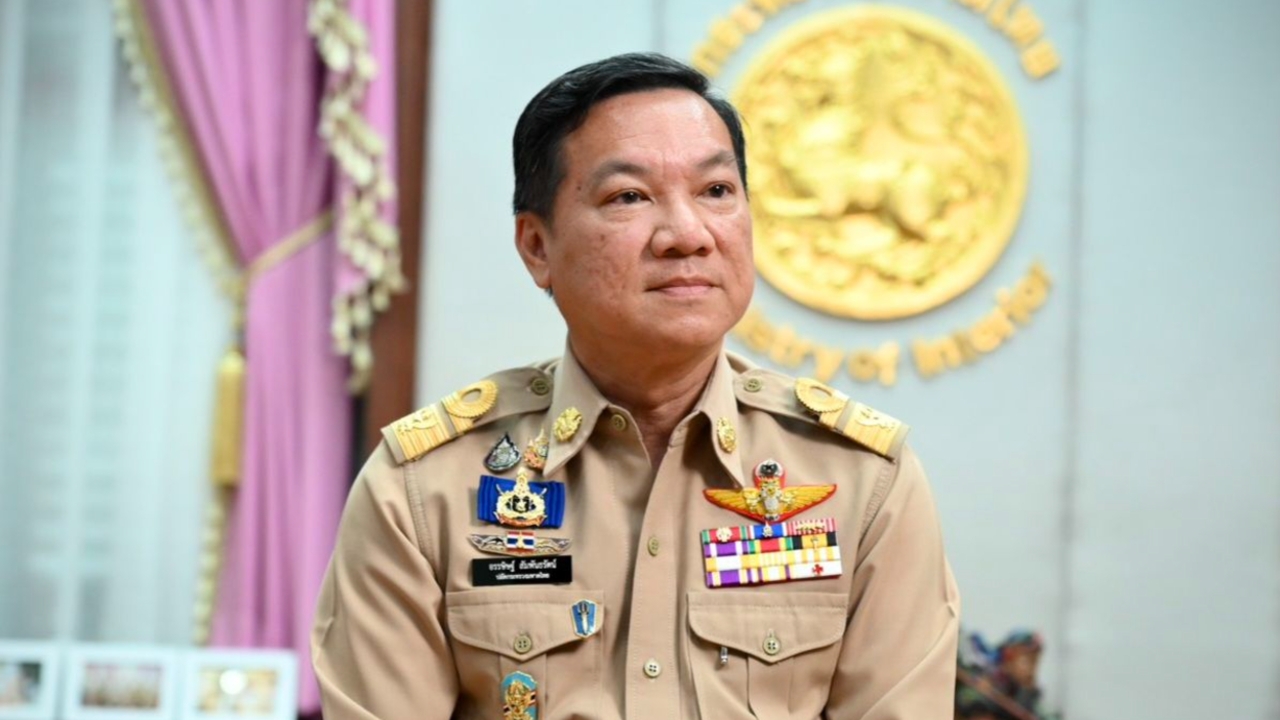
At 13:30 on 15 Sep 2026 GMT+7, Mr. Assisit Sampanrat, Permanent Secretary of the Interior Ministry, revealed at the Interior Ministry the implementation of proactive measures following directives from Prime Minister and Interior Minister Anutin Charnvirakul and Deputy Interior Minister Pol. Lt. Gen. Peer Suwannachavee. These aim to identify, assess, and pinpoint risks in the complex and interconnected current security and public order situation, including transnational crime, businesses using Thai nominees, entertainment venues, hotels and tourism businesses, firearms, drugs, human trafficking, and influential figures. The strategy utilizes mechanisms at all levels as initial tools to achieve tangible and sustainable problem-solving, prevent repeat offenses, and effectively dismantle criminal networks.
Mr. Assisit stated that the Interior Ministry has instructed all provincial governors to strictly, earnestly, and continuously enforce the law alongside social regulation efforts to prevent and suppress threats to local security. This directive is a critical immediate order, with close supervision to ensure tangible local results and ongoing performance evaluation, encompassing three approaches:
1. Accelerate “proactive social regulation” by surveying and compiling registries of areas and establishments—both service venues and hotel businesses—that fail to comply with legal requirements, including thorough checks on licenses, operations, safety, and any behavior potentially linked to other offenses.
2. Accelerate “inspection of businesses and individuals exhibiting irregular behavior,” especially those involving foreigners or suspected of using Thai nominees. This includes scrutinizing operators, shareholders, managers, controllers, funding sources, and true beneficiaries, based strictly on facts and evidence—“without judging solely by nationality or personal names”—ensuring equal and non-discriminatory legal enforcement. If credible information or behavior is found, agencies with legal authority should be immediately coordinated for further action.
3. “Take action against officials or government employees involved in or supporting illegal acts,” including decisive measures against offenses, particularly suspending use of buildings or related assets tied to establishments violating the law, and extending investigations from individual cases to entire networks.
“All operations must not end with searches or arrests but must gather information to extend investigations to controllers, commanders, beneficiaries, business networks, funding sources, and related assets. Coordination and integration among legally empowered agencies must ensure strict, intense, and continuous enforcement to sustainably enhance the well-being of Thai society.”