

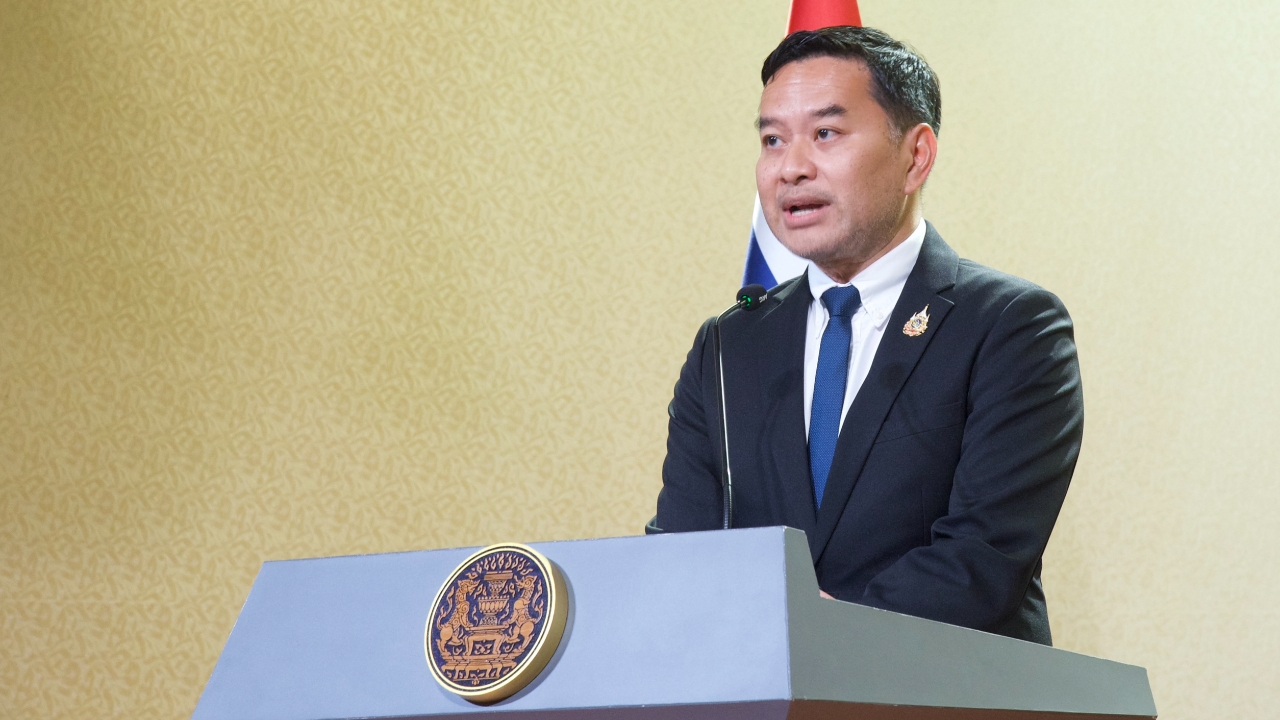
Ekapop, the government spokesperson, revealed that the Cabinet approved the principle of the "One Department, One Transparency" project, aiming to tackle corruption risks from the outset by designating 24 pilot agencies to deliver results within six months.
On 15 Sep 2026 GMT+7, Ekapop Pienpiset, spokesperson for the Office of the Prime Minister, stated that the government has taken on the critical task of combating corruption. Thailand's Corruption Perceptions Index (CPI) score for 2025 was 33. Meanwhile, a private sector survey found that 89.1% consider corruption a moderate to major obstacle to business. The government is intensifying systematic anti-corruption prevention and enforcement by establishing the Anti-Corruption Coordination Committee (ACC), chaired by the Prime Minister, along with subcommittees to monitor, prevent, and suppress bribery.
Recently, the Cabinet approved the principle of the "One Department, One Transparency" project as proposed by the Public Sector Development Commission (PDC). The project targets corruption risks from the start by having government agencies select high-risk services or processes for concrete improvements. The Office of the PDC is assigned as the lead agency to drive and monitor implementation.
In the initial phase, 24 pilot agencies will each select 1 to 5 tasks with high corruption risk, such as approvals, permits, inspections, procurement, tax collection, and license renewals. They will analyze risk points, set prevention measures, and gather feedback from the private sector and stakeholders, completing these steps within six months from the Cabinet's resolution date.
The core of the project is to close gaps before corruption occurs by having agencies streamline workflows, reduce officials' discretion, implement digital systems to minimize in-person interactions between staff and service users, and enable online tracking of task status. It also involves revising overlapping regulations and procedures, disclosing information for public scrutiny, and developing accessible, effective complaint systems. The approach encourages participation from government, private sector, and civil society in designing solutions.
"The government is tackling corruption from the start by aiming to make approvals, permits, and public services more streamlined, less discretionary, transparent, and verifiable, so citizens receive quality, fast, and fair service. This will build business confidence, improve the CPI score, and enhance Thailand's competitiveness," said Ekapop.