

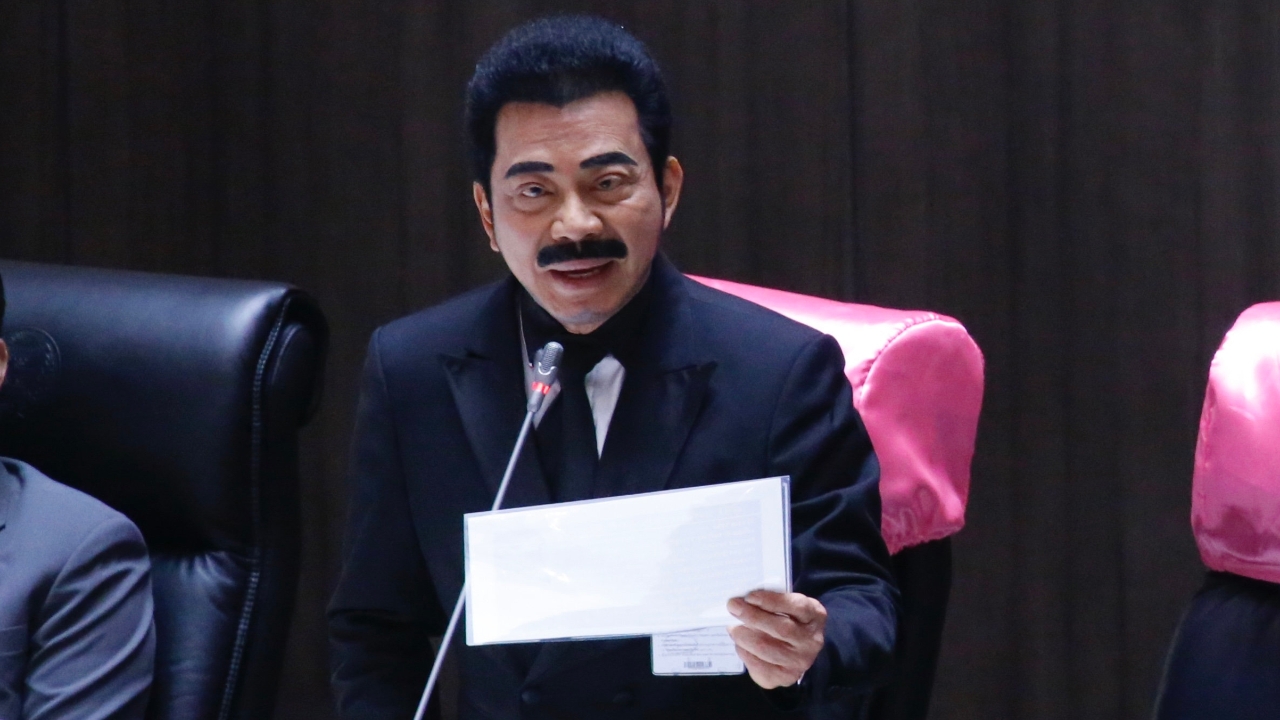
The Supreme Court's Political Division sentenced Saranwut Saranaket, then a Pheu Thai MP, to eight months imprisonment in the proxy voting case. However, the defendant filed a petition for temporary release.
On 16 Sep 2026 GMT+7, reporters reported that on 14 Sep, the Supreme Court’s Criminal Division for Political Office Holders delivered judgment in case number Am 14/2568. The Attorney General had prosecuted Mr. Saranwut Saranaket, then a former Pheu Thai MP, on charges related to proxy voting.
On 20 Sep 2013, the House of Representatives held a special session to consider the draft bill granting the Ministry of Finance authority to borrow funds for developing the country’s transport infrastructure. The defendant traveled to Sukhothai Province and was absent from the parliamentary session. He entrusted his electronic voting card to another MP, who used it to register and vote on his behalf during the bill's consideration and vote. This act caused the parliamentary vote to be fraudulent and distorted, violating the 2007 Constitution and the House of Representatives' regulations of 2008. The prosecution sought punishment under the Anti-Corruption Act of 1999 section 123/1, and the 2018 Anti-Corruption Act sections 172 and 192.
The Supreme Court’s Political Division examined evidence from the investigation and the National Anti-Corruption Commission’s inquiry and found that the defendant consented to let another MP use his electronic voting card to register and vote on his behalf for the bill granting the Ministry of Finance borrowing authority. This proxy voting violated the constitutional provisions, specifically section 126 paragraph three, contradicted the fundamental principles for MPs, breached the oath of integrity under section 123, thus constituting misconduct and corruption in office.
The defendant’s actions constituted misconduct in his position as an MP, a political office holder and state official, unlawfully causing harm to the public or performing duties corruptly, violating section 123/1 of the 1999 Anti-Corruption Act. This caused serious damage and undermined public confidence in the legislative branch. The case's circumstances are therefore considered severe.
The court ruled that the defendant was guilty under section 123/1 of the 1999 Anti-Corruption Act and sentenced him to one year imprisonment. Due to the defendant’s partly beneficial testimony during evidence review, the court mitigated the sentence by one-third under Criminal Code section 78, reducing it to eight months imprisonment.
Following the verdict, the defendant filed a petition for temporary release. After consideration, the court granted bail during the appeal process.