

Nattacha urges the government to promptly address the black beard catfish problem, pointing out that citizens should not have to sue the state to fulfill its responsibilities. She recommends managing water sources and breeding areas together while involving the public in a problem-solving center.
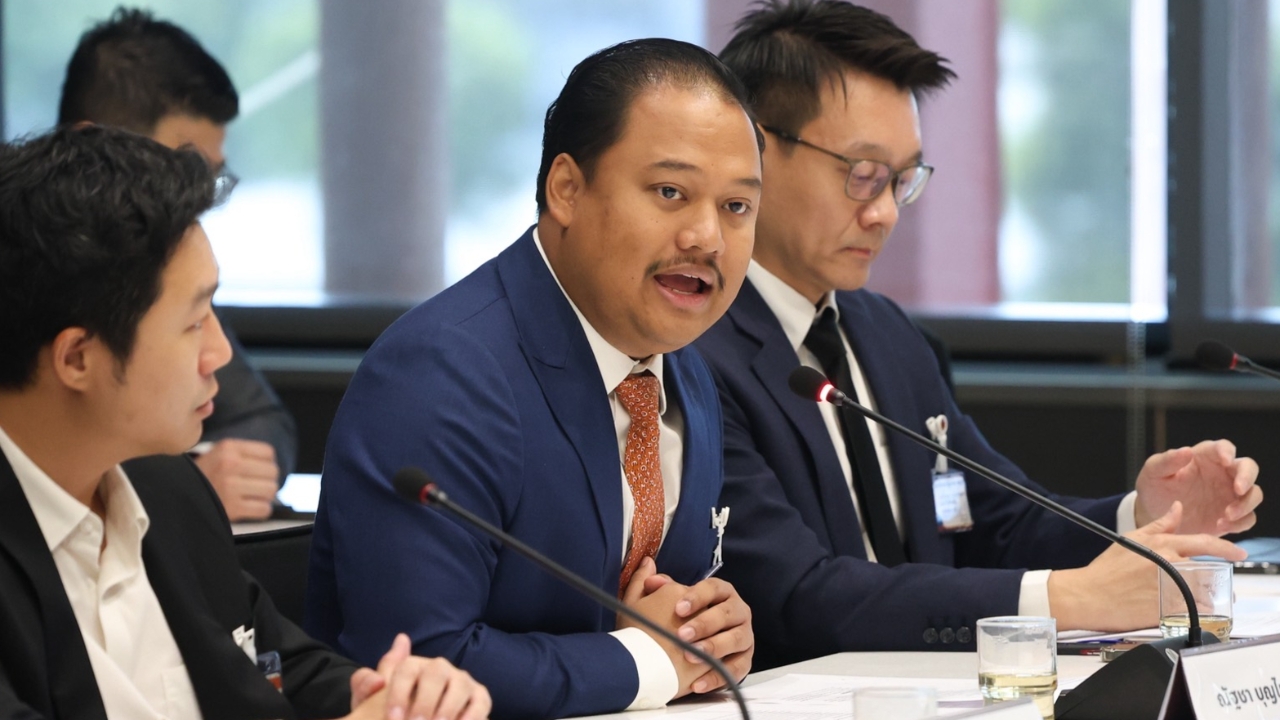
On 16 September 2026 at the Parliament building, the People’s Party held a press briefing on the 12th Shadow Cabinet meeting. Nattapong Ruangpanyawut, leader of the People’s Party and opposition leader in the House of Representatives, Nattacha Boonchai-insawat, party list MP of the People’s Party, and representatives of farmers affected by the black beard catfish outbreak jointly addressed the media to follow up on government efforts and called for concrete measures to solve the problem and provide relief to the public.
Nattapong stated that the People’s Party has been continuously monitoring the black beard catfish outbreak, which has severely impacted farmers and fishery workers’ livelihoods. Recently, the Central Administrative Court ruled that the Department of Fisheries and Ministry of Interior must urgently address the issue. Meanwhile, a class-action lawsuit filed by citizens seeking damages from private companies is progressing. It is now time for the government to demonstrate how it will solve the problem.
A representative of affected farmers at the press conference said the Bang Khun Thian area has been heavily impacted since 2022. Although farmers have received some relief, the number of black beard catfish has not decreased. Aquaculture farmers continue to suffer, and there is still no clear government policy to tackle the problem. In Samut Songkhram province, the problem has been longstanding and has recently worsened. Although the Ministry of Interior has declared it a disaster area, why have other severely affected provinces not been declared similarly?
Nattacha said the reason citizens must still demand action today results from negligence by responsible agencies, especially the Department of Fisheries under the Ministry of Agriculture and Cooperatives. If the Department of Fisheries had fulfilled its duties properly, citizens would not need to resort to lawsuits to compel the state to act. People have faced many obstacles in pursuing legal action, including raising court fees and opposition to class actions, even though government agencies should play the key role in protecting national interests, the environment, and ecosystems rather than leaving citizens to fight powerful businesses alone.
Regarding the outbreak situation, the Department of Fisheries initially declared 19 provinces affected. Citizens monitoring the situation now identify 22 provinces. Worryingly, black beard catfish have been found in Lam Pao Dam in Kalasin province, which signals danger to native aquatic species in natural water sources and may affect the cost of living if serious action is not taken.
Nattacha reiterated her previous proposal to the government to classify areas by severity level. In heavily affected areas, measures must address both natural water sources and aquaculture breeding sites simultaneously. Focusing on only one aspect will allow the problem to recur.
Regarding the Minister of Agriculture and Cooperatives’ plan to establish a command center to monitor and resolve the outbreak, aiming for visible improvements within three months, she said she will closely follow the details. However, it is disappointing that the Department of Fisheries’ 2027 budget of 4.8 billion baht does not directly allocate funds to solve the black beard catfish problem, even though the government plans to use a 350 million baht contingency fund after the court ruling.
Nattacha added that the government must clearly specify problems in each area and set management methods for both natural water bodies and breeding sites simultaneously. Representatives from each province’s public should participate in the command center because aquaculture practices and issues differ by location. She expressed doubt that the current approach will produce noticeable changes within three months.