

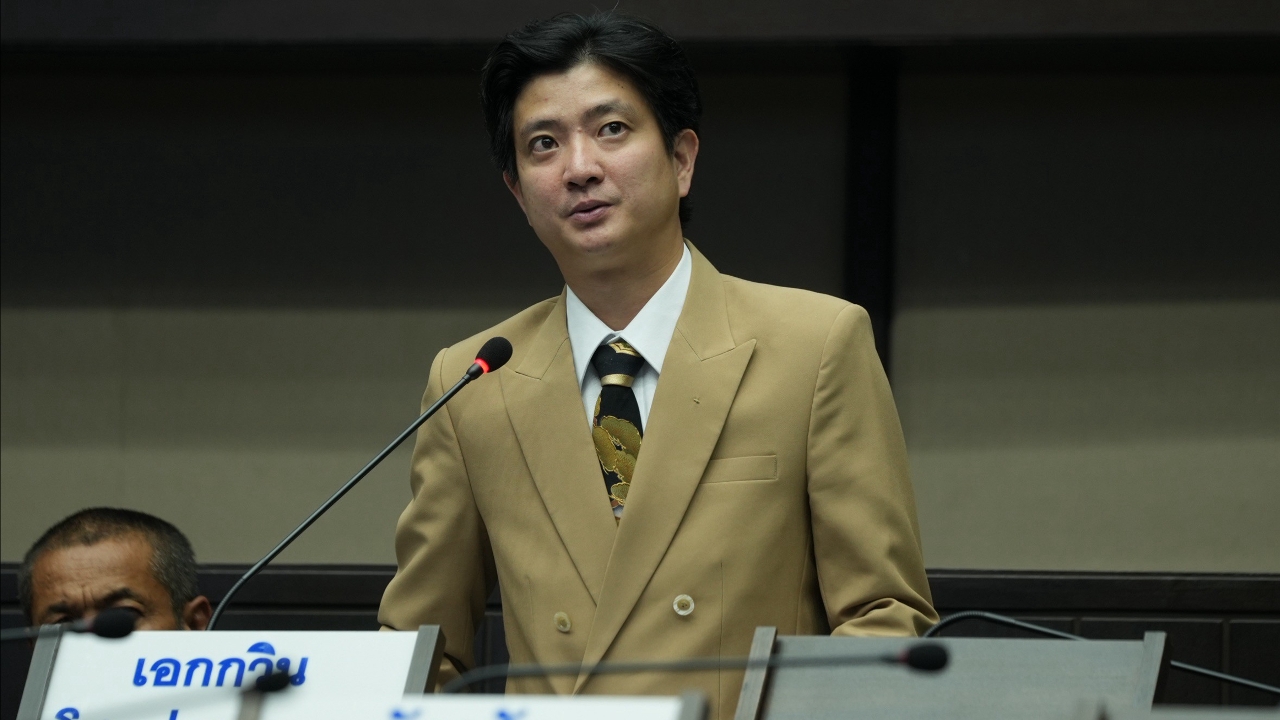
"MP Akkawin" affirmed that the Prachachon Party supports the transition to clean energy but rejects the EV garbage truck project due to suspected concealments and numerous allegations. He exposed that the Terms of Reference (TOR) lack charging stations and have never tested the vehicles in operation, shifting the charging cost burden and risk onto Bangkok Metropolitan Administration (BMA). It questioned why BMA must bear this risk alone.
On 15 Sep 2026 GMT+7, during the Bangkok Metropolitan Council meeting to consider the 2027 fiscal year budget (Agenda 2-3), Mr. Akkawin Chokprasopruay, Prachachon Party MP for Ratchathewi district, reserved his opinion on the over 6 billion baht electric waste collection vehicle lease project with a 7-8 year contract, raising concerns about unpreparedness and risks in three key areas.
First, Akkawin noted the project’s TOR does not include electric charging stations, which should normally be the lessor's responsibility. Separating charging stations is thus a "hidden budget" burdening BMA with additional costs. Moreover, BMA’s MOU with the Electricity Authority to build charging stations has no budget allocated for utility fees, and it is unlikely the Electricity Authority will invest without usage commitments. Also, future responsibility for station malfunctions is unclear. The key question is why BMA does not assign the risk and responsibility for charging stations and parking areas to the lessor but instead assumes it itself.
The second issue concerns the TOR specifications potentially resulting in lower quality vehicles. Akkawin pointed out that previous specifications for combustion engine garbage trucks required SS490 steel with a thickness of at least 3-4 millimeters and clearly defined reinforcing beams. However, the EV garbage truck project’s specs mostly state "according to manufacturer standards," without specifying steel thickness or the diameter and quality of hydraulic shocks. This could weaken the vehicle’s body, reduce compaction force, and diminish garbage collection efficiency, problematic given BMA’s existing struggles with overflowing waste and collection delays.
Third, Akkawin criticized the lack of real-world operational testing. He said BMA should allow operators to trial EV garbage trucks in actual service areas before drafting the TOR, to verify if they can truly run 200 kilometers daily and handle the weight and compaction pressures. Each district has different geography, distances, and traffic conditions. For a 6 billion baht project, private firms would be willing to invest in trial runs if allowed. So why must BMA rush to take on the risk without prior testing?
"Today, we are not debating whether to use EVs or combustion engines—everyone wants clean energy. The debate is about this specific project, with a budget over 6 billion baht, a 7-8 year binding contract, and many controversies. The administration should go back and revise the project; submitting it next year would not be a problem," he said. Mr. Akkawin concluded his remarks.