

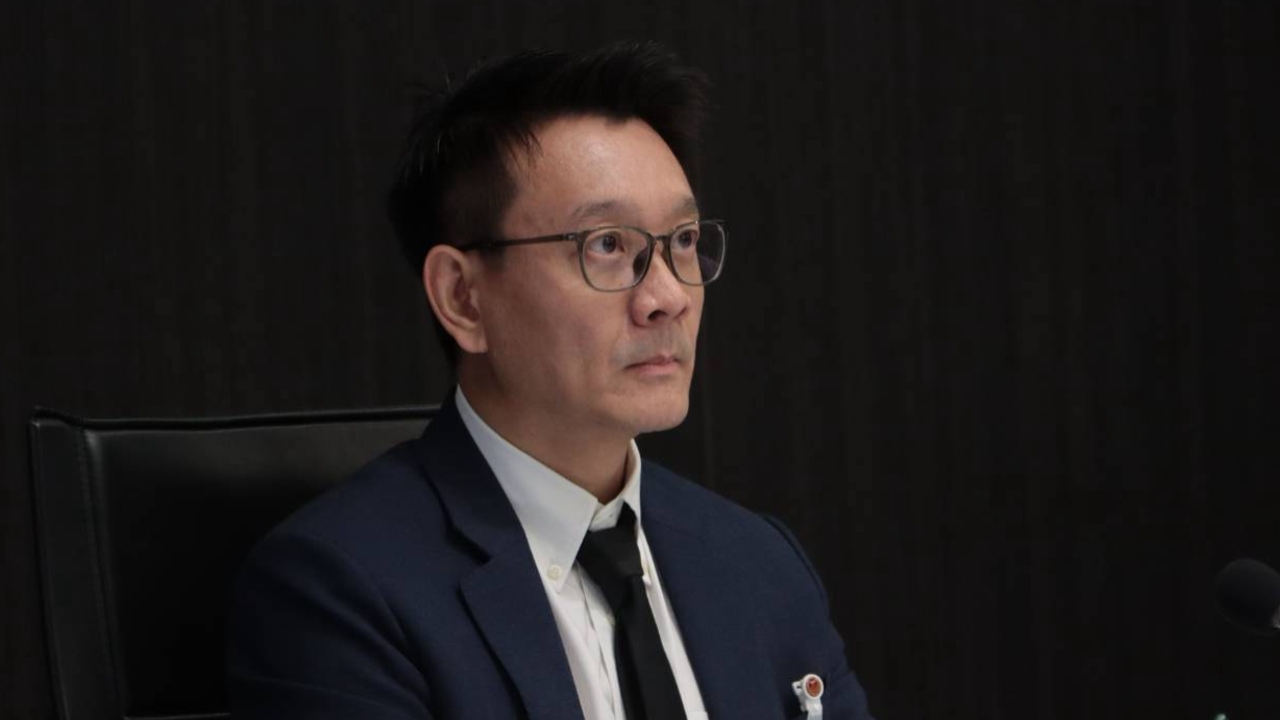
Veerayuth discussed with Malaysia's Deputy Finance Minister ways to elevate regional economies, proposing to link the economies of Songkhla, Sadao, and Kedah. They aim to unite Middle Powers to face great powers and support adopting a global minimum corporate tax to avoid tax competition for multinational firms.
On 17 Sep 2026 GMT+7 at the parliament, Veerayuth Kanchoochat, Chairman of the Economic Development Committee of the House of Representatives and Deputy Leader of the People's Party, held talks with Liew Chin Tong, Malaysia's Deputy Finance Minister. They exchanged ideas to promote trade, economic cooperation, and supply chain development between the two countries to enhance the region's technological capabilities and ASEAN's bargaining power with global powers.
During the discussion, Liew Chin Tong shared his vision on global supply chain changes, shifting focus from solely cost efficiency to flexibility and risk diversification. He emphasized that both Thailand and Malaysia are key middle-power tech countries, especially in semiconductors. Close cooperation can elevate ASEAN as an indispensable gear in the global supply chain to counteract technological decoupling in international arenas.

Veerayuth then discussed collaboration on specific industrial policies in automotive, steel, and semiconductors to reduce redundancies, proposing connecting capital markets through dual listing mechanisms. This would open opportunities for regional private sectors to access funding and grow sustainably as technology owners.
Regarding border area development, Chaiwat Sataworawichit, Deputy Leader of the People's Party and former Finance Committee member, discussed utilizing special economic zones along the Thai-Malaysian border. Liew Chin Tong highlighted the importance and potential of linking logistics and trade networks between Sadao District, Songkhla Province, and industrial areas in Kedah and northern Malaysia.
Malaysia's Deputy Finance Minister proposed shifting from unnecessary competition in some areas to mutual promotion, creating a single, resilient supply chain facilitating cross-border transport and tourism. This would effectively manage volatility from global geopolitical situations.

Both sides agreed that regional countries should maintain labor standards to improve citizens' quality of life, avoid competing by reducing tax incentives to attract multinationals, and instead support enforcing the global minimum corporate tax, developing digital tax invoices, and electronic payment systems.
To address cross-border trade challenges, they discussed impacts from surging multinational e-commerce goods affecting local small businesses, and cooperation in preventing financial crime and transnational cyber threats. Veerayuth and Liew Chin Tong expressed commitment to advance cooperation at parliamentary levels through committee mechanisms, discussion forums, and brainstorming sessions to exchange policy insights and establish stable economic collaboration.


