

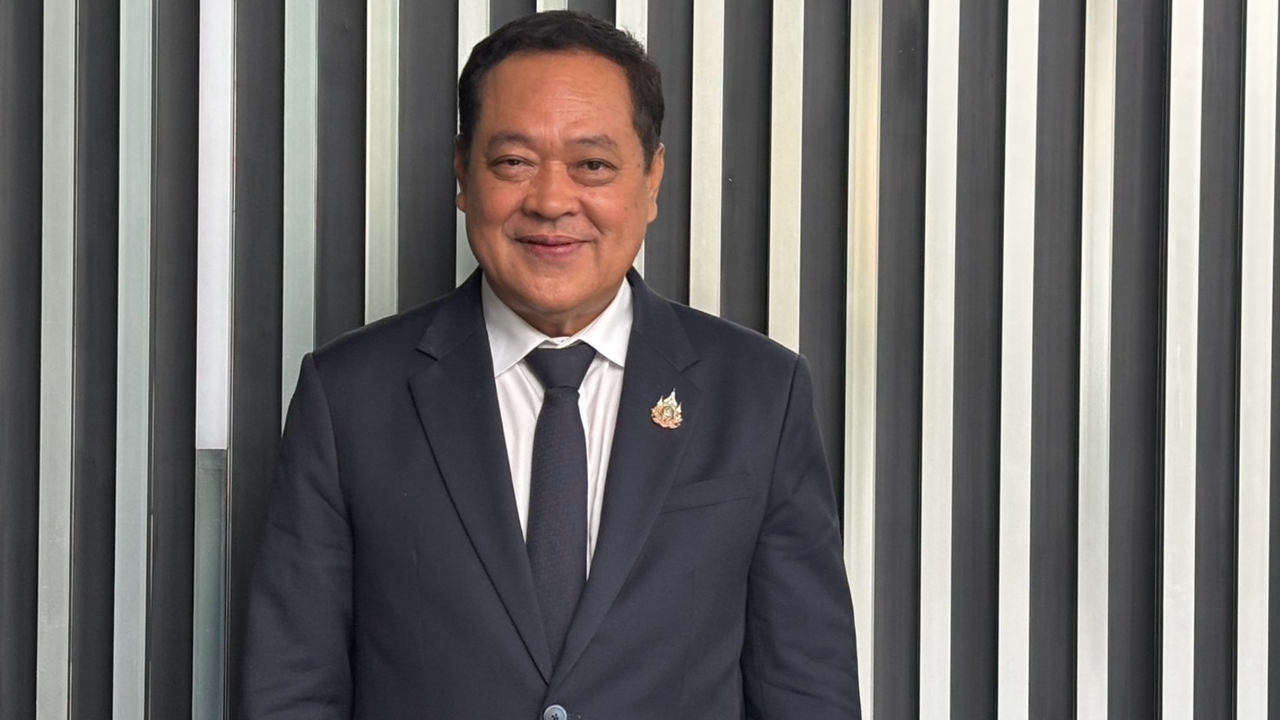
Tawee stresses that the Election Commission's resolution must not be greater than the constitution. While the resolution is concluded, the matter is not over. The EC can bar those involved in wrongdoing from serving as witnesses in criminal cases, but cannot exclude them from the Supreme Court's jurisdiction.
On 18 Sep 2026 GMT+7, Police Colonel Tawee Sodsong, leader of the Prachachat Party, posted on Facebook that after the EC voted 5 to 2 on 14 Sep 2026 to dismiss allegations in the so-called 'senator vote-rigging case,' although the EC's resolution is final, the issue remains unresolved.
Specifically, the first allegation was that party executives, party officeholders, members of parliament, or political officeholders acted in any way to help candidates be elected as senators or to prevent candidates from being elected. The second allegation was that candidates, who were later elected senators, agreed to accept assistance from such political figures to secure their election. The EC resolved to dismiss all allegations.
This raises the important question of whether the resolution upholds the supremacy of the constitution. A key example is the EC's decision to bar two senators—witness codes 21/26 and 22/26—as witnesses.
Witness 21/26 was a candidate in Group 3 (Education group), number 150, who received 30 votes in the intra-group round and 69 votes in the cross-group round, ranking first in the group.
Police Colonel Tawee also stated that the examination found 16 ballots with identical sets of 10 numbers in order, including number 150. According to the public hearing records, the witness testified that their number was included in the ballots for both intra-group and cross-group voting rounds and understood that the high number of votes received came from a coordinated 'ballot or number set' prepared at Rajamangala University of Technology Suvarnabhumi, Hantra Campus, Phra Nakhon Si Ayutthaya Province.
Witness 22/26 was a candidate in Group 19 (Independent professions group), number 5, who received 39 votes in the intra-group round and 70 votes in the cross-group round, ranking second in the group.
The examination found 19 ballots with identical sets of 10 numbers in order, including number 5.
It was further noted that according to documents released to the media, the witness testified that on 24 June 2024 GMT+7, they attended a meeting with about 30 national-level eligible voters at the Kantary Hotel in Phra Nakhon Si Ayutthaya Province, where voting methods were explained and pre-filled introduction documents for three senators were distributed.
Although the witness stated they did not help prepare the ballots, they admitted that their number was included in the number sets and understood that the large number of votes they received came from the coordinated 'ballot or number set' prepared.
Police Colonel Tawee said the witnesses’ statements thus link themselves to the ballots or number sets and directly explain the source of their votes. Combined with the matching vote counts and voting patterns, this is not mere speculation.
Section 65 of the Senate Election Act authorizes the EC to bar “persons involved or participating in wrongdoing” from serving as witnesses when their information, tips, or testimony is useful for proving the guilt of other main offenders and can serve as evidence in determining wrongdoing.
The resolution barring these two individuals as witnesses reflects the EC’s view that both were involved in wrongdoing and that other main offenders remain to be proven.
If allegations of organizing a scheme, preparing ballots or number sets, and pre-determining votes are proven, it is not merely fraud benefiting two individuals but an organized operation that may constitute a criminal organization aiming to seize and distort the process of selecting senators, affecting the legislative branch’s sovereignty—the core power in the democratic system under the monarchy.
The effect of barring witnesses under Section 65 is only to suspend criminal prosecution rights; it does not suspend the facts or evidence and does not exempt those individuals from examination regarding whether they were elected legitimately and fairly.
Police Colonel Tawee added that since the EC barred the two senators as witnesses, combined with their admissions linking themselves to the ballots or number sets (essentially confessing involvement in key facts) and the vote results matching the voting patterns, the overall evidence is at least sufficient to reasonably believe wrongdoing.
Therefore, the EC must file a petition with the Supreme Court concerning these two senators, because while the EC can bar individuals from criminal proceedings, it has no authority to bar the facts, evidence, or exclude them from the Supreme Court’s investigative powers.