

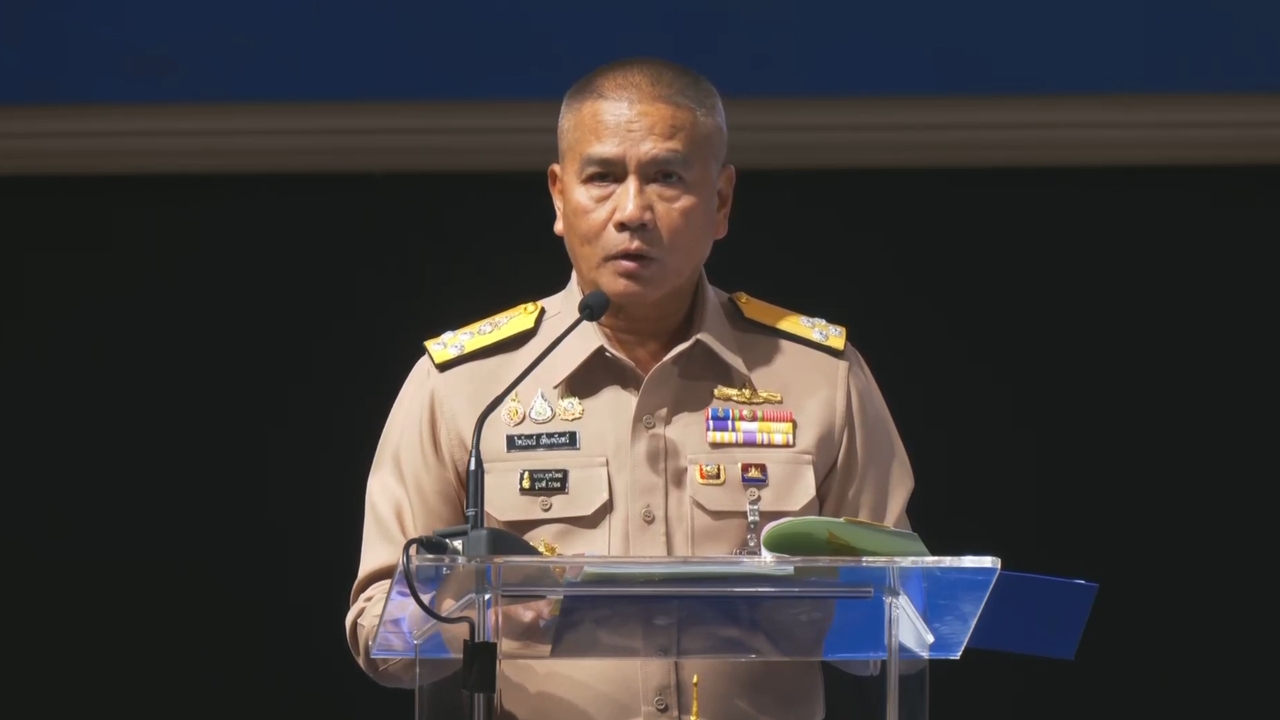
The Navy Commander explained the necessity of the "frigate" purchase, affirming there was no locked specification, no opportunity to amend documents after opening bids, and no interference. He stressed that everyone performed their duties with honor and legal responsibility, ensuring value for taxpayers.
At 11:00 a.m. on 18 Sep 2026 GMT+7. Admiral Phairoj Fuangchan, Commander-in-Chief of the Royal Thai Navy. He held a press briefing on the reasons and necessity for the purchase. Regarding the frigate ship. At the Navy Auditorium, Admiral Korawit Chayarote, Commander of the Fleet and Chair of the frigate procurement project board; Captain Chumphon Nakbua, Deputy Director of Naval Operations; Rear Admiral Wasan Traijit, Deputy Chief of Staff of the Fleet and Chair of the hiring committee; Rear Admiral Sansarin Sadood, Commander of the 1st Frigate Squadron and Chair of the TOR drafting committee; and Rear Admiral Sarawut Chiyangkabut, Director of the Logistics Management Office, Navy Logistics Department and Chair of the Offset Policy TOR committee, also attended.
Admiral Phairoj said the Navy intended to meet and communicate straightforwardly. This project is vital for national security and uses public tax funds of significant value, attracting public concern. Many questions have arisen from multiple perspectives. Previously, some media and social media presented information that sometimes deviated from facts and did not align with proposals submitted to the Navy, causing misunderstandings and confusion, leading to doubts about this project. Therefore, as Navy leader, this is an important opportunity to clarify all facts.
Thailand is a maritime nation; sea routes, energy, resources, and the people's livelihoods are all connected to the sea. Countries worldwide, including Thailand, face high-level conflicts. Over 90% of imports, energy, and international trade depend mainly on maritime transport. It is necessary to maintain sovereignty and secure maritime transportation. The frigate is not procured merely to have a new ship but serves as a core element to protect the nation's maritime interests. For this procurement, the Navy set stringent specifications far above general standards to ensure that whichever company wins, the ship will be high-performance in combat and genuinely protect the lives of our personnel.
The Navy Commander emphasized that in the selection process, he instructed all committees and officials to strictly adhere to five key principles:
1. Compliance with laws, regulations, and government procedures.
2. Transparency and verifiability at every step, with observers under an integrity agreement alongside anti-corruption organizations monitoring from start to finish.
3. Fairness and equality for all bidders according to the rule of law.
4. Cost-effectiveness over the entire service life, not just the lowest price at delivery.
5. Maximizing benefits for the nation and Navy, including technology transfer and promoting domestic industry, which he consistently stressed at all committee levels.

He addressed concerns about possible exclusion or locked specifications by stating: Today's explanation serves as proof of the most straightforward process. All companies received the same rules and conditions equally from the start, with opportunities to ask questions until understanding was clear and mutual. During evaluation, if a company could not meet essential specified conditions, the Navy and committees could not allow additional document submissions or proposal amendments after bid openings. Allowing such changes would undermine fairness and violate the rights of other companies that prepared thoroughly and correctly. Opening this door would set an illegal precedent, causing endless procurement problems. He affirmed this is not exclusion but maintaining rules and fairness for all parties.
He compared ship specifications to buying a car, where different people prioritize engine, luxury, convenience, safety, part durability, and after-sales service differently, reflecting personal preferences and expertise. "But for the Navy, we live with ships our entire lives and deeply understand that in maritime crises, key survival and victory factors are crucial. The Navy does not procure ships merely for the best radar, weapons, or fastest engine alone. Instead, we consider the entire system integration, high combat readiness, guaranteed long-term maintenance, and maximum economic and technological returns for the country."
At the end, the Navy Commander assured the public that all committee decisions are based on factual data and evidence without any interference. Everyone performed their duties with honor and legal responsibility to the nation. Credibility is not demanded but earned through correct, transparent, reasonable procedures open to scrutiny. The Navy has acquired ships that serve as vital assets, returning benefits to the country. The Navy obtained the best ships, and Thailand gains the highest and most cost-effective benefits.