

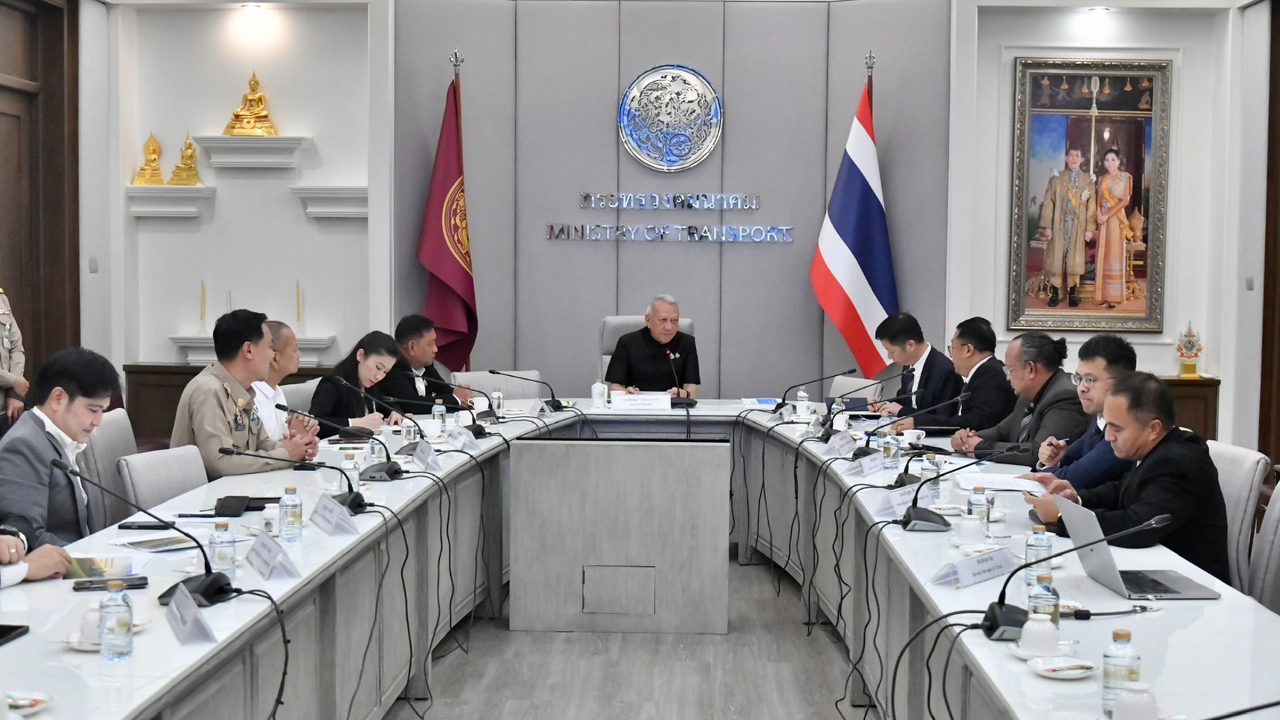
Phiphat promotes a green transportation vision, meeting with private investors to support converting agricultural waste into bioenergy and upgrading logistics in the southern border region of Thailand.
At 2:00 p.m. on 18 Sep 2026 GMT+7, Phiphat Ratchakitprakarn opened a meeting with executives from SINOMACH (China National Machinery Industry Corporation), a global Fortune 500 machinery industry giant, and CNEEC to discuss and present strategies to promote green energy industries in the three southern border provinces. The focus is on creating added value from agricultural and livestock waste. The meeting included the Deputy Prime Minister’s Advisor, the Deputy Secretary-General to the Prime Minister for Political Affairs, and Chanthan Saengphum, Deputy Secretary-General of the Southern Border Provinces Administrative Centre, held at the Ministry of Transport.
During the discussion, SINOMACH presented its readiness and comprehensive biogas and biomass energy projects, aiming to transform agricultural waste—previously burned by farmers—into liquefied bio-methane (LBM). This biofuel can replace LPG and LNG as fuel in industry and transportation sectors.
Regarding support, Phiphat emphasized the Ministry of Transport’s policy to fully back transportation infrastructure and logistics systems. This support will facilitate the entire supply chain, from managing routes to collect raw materials and waste from livestock farms for biomass processing to distributing LBM gas and byproducts such as organic fertilizer (urea), bio-char, and wood vinegar to markets. Developing a connected transport system aligned with the green industry will significantly reduce logistics costs.
Phiphat added that engaging with experienced private sector partners marks a key step in converting waste into energy. The Ministry of Transport is ready to facilitate transportation to ensure production and distribution processes are highly efficient. This project will protect the environment, create jobs, and provide stable income for people in the three southern border provinces. It also lays a solid foundation in energy and logistics to support the halal food industry's expansion into global markets.
This collaboration aligns with the goals of the Southern Border Provinces Administrative Centre (SBPAC), which aims to promote the southern region's transition to clean energy, reduce dependence on imported energy, and enhance the local economy’s security, prosperity, and sustainability.