

The State Railway of Thailand (SRT) promotes the “Open Access” model, advancing a prototype rail freight transport project that involves private sector participation to operate trains. This initiative collects real operational data to develop a logistics model connecting Laem Chabang and Nong Khai within the regional network.
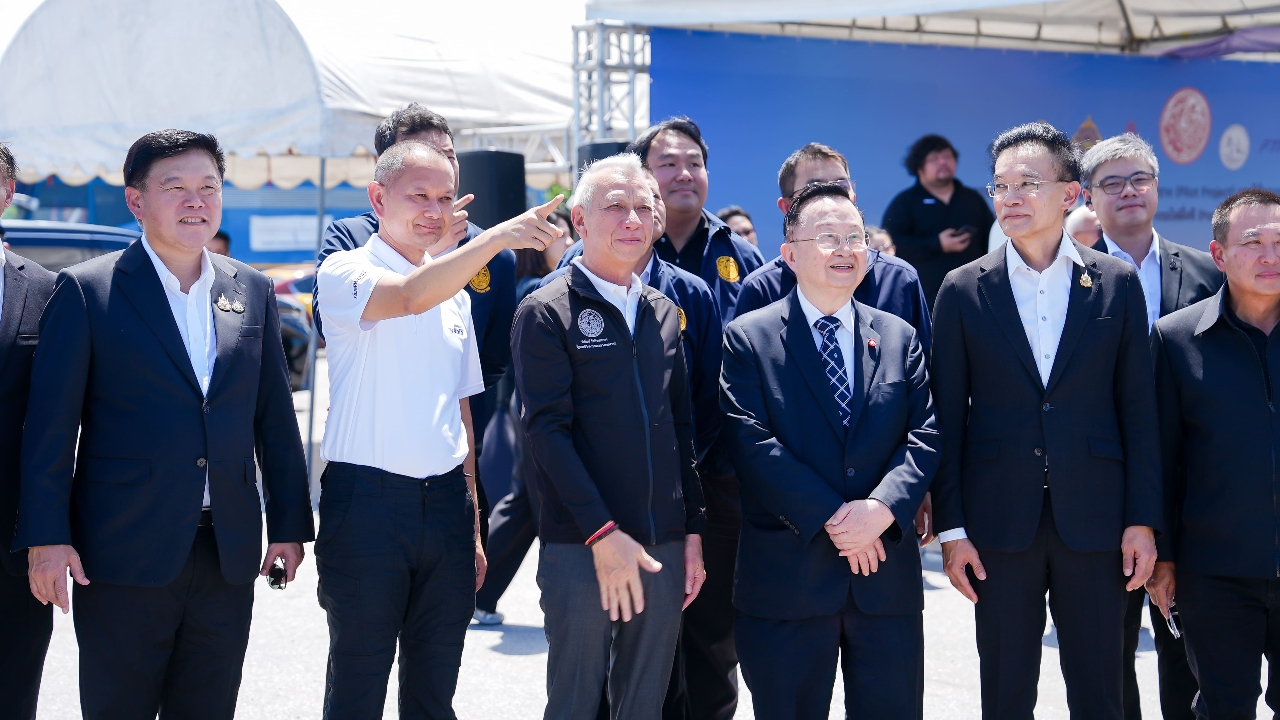
On 18 September 2026, Mr. Phiphat Ratchakitprakarn, Deputy Prime Minister and Minister of Transport, chaired the launch of the pilot rail freight transport project on the Laem Chabang–Nong Khai–Laem Chabang route. He assigned SRT, together with the Office of Transport and Traffic Policy and Planning (OTP) and relevant agencies, to closely monitor the operation to use the real travel data to develop a competitive rail freight service model that meets business sector needs.
Mr. Phiphat stated the project's importance lies in its test route connecting economically distinct areas. Laem Chabang port serves as a key maritime cargo gateway linked with production bases in the Eastern region, while Nong Khai is a crucial border area in the Northeast connecting Thailand with Laos. Currently, SRT already offers cross-border freight services via Nong Khai–Thanaleng. This route thus holds strategic potential for studying the integration of maritime trade gateways with domestic economic zones and border trade gates. Developing a service model that satisfies operators will provide businesses more transport options and improve connectivity between production bases, markets, and trade channels.
Mr. Anan Phonnimdaeng, Governor of the State Railway of Thailand, revealed that the trial involves SRT and OTP operating trains on the Laem Chabang Port C–Nong Khai–Laem Chabang Port C route using locomotives from TPI Polene Public Company Limited (TPIPL) pulling SRT flatcars loaded with 48 freight containers carrying agricultural products, consumer goods, and heavy industrial goods totaling 1,075 tons. The route covers about 718 kilometers with a travel time of approximately 18 hours. Data from all operational steps will be collected to analyze efficiency, costs, duration, constraints, and pain points of rail freight transport.
A key aspect of the project is using real train operations as a testing ground for policy and business models. OTP handles policy-making, study framework, and coordination among agencies, while SRT leverages its network and rail system management to support the trial. Private sector operators are invited to participate to reflect real demand and business conditions.
Furthermore, data from the trial will be used to study the break-even points of rail transport in terms of freight volume, distance, frequency, and total logistics costs. This will clarify which types and volumes of goods and which routes are suitable for modal shift from road to rail. It will also examine first-mile and last-mile connections, crucial factors for business decisions. Involving private operators ensures that system development considers not only infrastructure efficiency but also user needs and pain points in designing service models.
Currently, two operators have expressed interest, covering agricultural and heavy industrial goods. Should the trial demonstrate cost-effectiveness and sufficient business demand, SRT and OTP will use the data to consider developing service models further, including increasing frequency, freight volume, and expanding the model to other goods or routes with potential.
The project also aims to study factors supporting the modal shift from road to rail, especially for large volumes and long-distance transport, to reduce logistics costs, enhance transport network efficiency, and effectively integrate rail with other transport modes. Data from the pilot will be a crucial basis for future expansion to increase rail freight's role and enhance Thailand’s competitiveness, Mr. Anan concluded.

