

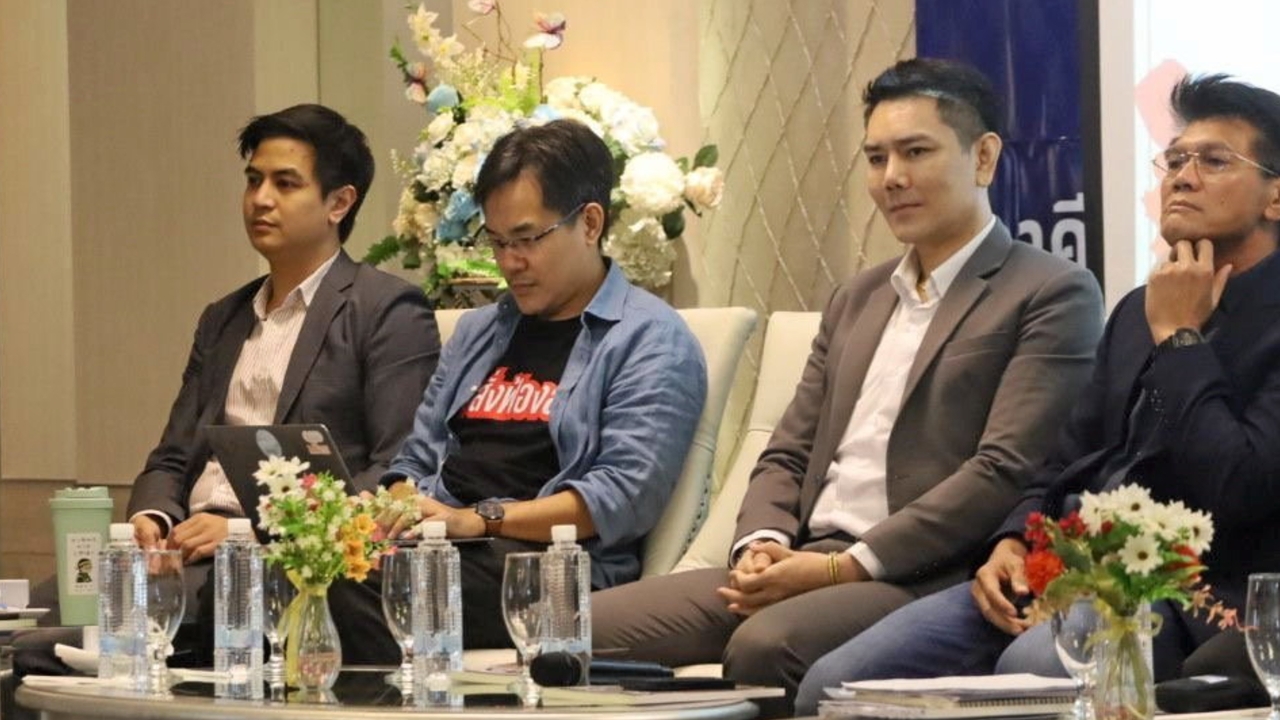
"Yingcheep" of iLaw points out irregularities in the EC’s selective prosecution involving Bhumjaithai Party. He stresses clear links via financial and phone records, reveals documents showing three witnesses reversed their testimonies in letters sent on the same day, and notes their claims of intimidation despite denying knowing the intimidators.
On 19 Sep 2026 at 15:10, an event was held titled “Senate Vote-Rigging: The Beginning of National Takeover” at Bangkok Midtown Hotel, Ratchathewi, Bangkok. During the event, Yingcheep Atchanont, Director of the Internet Law Project for the People or iLaw, said that out of 229 suspects, the Election Commission (EC) declined to prosecute many. Although the EC did not prosecute executives or management of Bhumjaithai Party, many prosecuted were linked to the party.
Yingcheep cited an example from the financial trail involving Senate candidates in Surat Thani, where a parliamentary assistant transferred money to a Senate candidate to influence voting. The money originated from someone within the party, with an MP transferring a total of 38,000 baht, which was then passed on to the assistant in two transfers totaling 38,000 baht. The EC considered this as fraudulent and prosecuted, but did not prosecute the MP.
He also mentioned testimony from another witness who said the parliamentary assistant asked to help the “boss,” questioning who the assistant's superior could be. Yingcheep said that by prosecuting only minor figures, the EC appears to be avoiding charges against Bhumjaithai Party leadership.
Yingcheep further said he heard Narong Klanwarin, Chair of the Election Commission, describe four witnesses linked to Bhumjaithai Party—witnesses 16/26, 21/26, 22/26, and 25/26—as unreliable and having reversed their statements. He then presented details of these four witnesses’ testimonies.
He outlined the timeline of the four witnesses’ testimonies, noting that on the day three witnesses reversed their statements, they did not appear in person but sent signed letters on the same day. He explained that when one witness testified before the 26th Investigation and Inquiry Committee of the EC in May 2025, Bhumjaithai, Kla, and Pheu Thai parties were in coalition government. Allegations of witness fabrication to frame Bhumjaithai are unclear, as the three witnesses later joined the Kla Party.
Therefore, the motive for witness intimidation is unclear. However, the witnesses reversed their statements on 29 Oct 2025, shortly after Anutin Charnvirakul became Prime Minister, when the Kla Party left Pheu Thai to join Anutin's faction. Soon after the 'blue party' rose to power, the three witnesses reversed their testimonies. He questioned whether political motives in May or October 2025 were more likely to cause false testimony.
Yingcheep explained that the reversed testimonies were submitted as printed letters claiming that an unknown man threatened them. Two other witnesses also claimed intimidation by unidentified individuals whose appearances they could not recall. He questioned why no one asked for the names, noting it is suspicious that unknown persons would threaten individuals who are MPs from prominent families and related to former party leaders, casting doubt on the credibility of the intimidation claims and reversals.
He emphasized that witness statements are supported by evidence, not mere claims. There is evidence that this scheme involved money received from someone alleged to be a Bhumjaithai party official, and phone records show contacts with at least 19 senators over 62 calls within 80 days. Yingcheep does not believe the witness accounts are baseless. Additionally, Ekkarat stated calls were made to a senior figure, with phone evidence in the case files. Therefore, if there was no powerful backing, such large vote counts would be unlikely. Thus, Narong’s assertion that the witness statements are unreliable contradicts the facts, evidence, and other witness testimonies.