

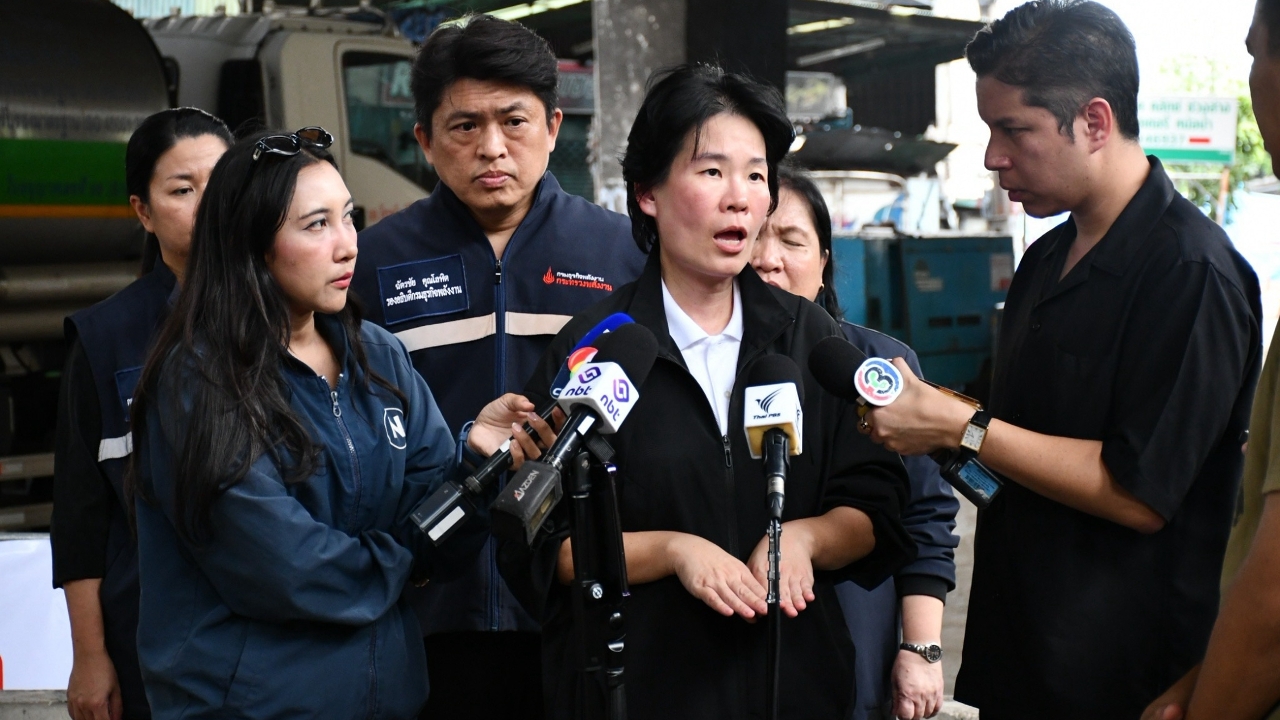
Thitiphas revealed that the leak in the Rama 3 oil pipeline was found under the pipe sleeve, with damage measuring 6.6 cm in length. She ordered an inspection of the entire 32-kilometer pipeline system and instructed the company to develop plans to replace risky sections, especially the pipeline areas near the pier supports.
On 20 Sep 2026 GMT+7, Ms. Thitiphas Chotidetchaichanan, Secretary to the Minister of Energy, visited the site to follow up on the investigation of the oil spill on Chuea Phloeng Road, Rama 3. She urged the relevant agencies to expedite the search for the cause and to inspect the safety of the oil transportation pipeline system after the leak occurred, noting the time taken to locate the leak under the pipe sleeve.
Ms. Thitiphas disclosed that the leak point has now been located beneath the sleeve, which is about 1.8 meters long and tightly fitted to the oil transportation pipe, preventing it from being slid off for inspection. The company therefore adapted its approach to remove the pipe sleeve in sections to open the area for detailed examination of the pipe condition.
“The Department of Energy Business has instructed Bangchak Group to engage a third party expert equipped with UT Scan or Ultrasonic Testing technology to assist in the inspection, as this tool can assess the material condition and detect internal cracks without damaging the item,” Ms. Thitiphas said.
Ms. Thitiphas stated that the UT Scan inspection conducted the previous evening identified the leakage point about 1.2 meters from the end of the pipe sleeve, revealing damage approximately 6.6 centimeters long and about 7 millimeters deep on the pipe.
Going forward, engineers and technicians will promptly repair the damage using the Wrap method. Once the repair material dries, they will re-inspect with the UT Scan and use at least two additional tools to confirm there is no leakage before proceeding to the Pressure Test.
“We will not stop at just repairing today’s damage. We must ensure the entire pipeline system is safe. After testing, an Intelligent Pigging Test will be conducted along the approximately 32-kilometer pipeline using a smart inspection device to assess pipe thickness and detect other high-risk areas. If risky points are found, the company must plan to replace those pipeline sections. The current damaged section must also be replaced following engineering principles, with Department of Energy Business officials closely supervising all operations and tests,” Ms. Thitiphas explained.
Ms. Thitiphas also revealed that the Department of Energy Business has ordered the company to submit maintenance records for the pipeline and all locations with pipe sleeves installed, so the department can verify if any areas have a history or risk of further leakage.
“In particular, all pipeline sections near the pier supports must be surveyed and a new pipeline layout planned to suit current conditions, to prevent future leaks,” Ms. Thitiphas said.
The Secretary to the Minister of Energy added that this incident requires a comprehensive system-wide inspection, not just fixing the leak point. The Ministry of Energy and Department of Energy Business will ensure the company adheres to engineering standards throughout repair, pressure testing, and full pipeline inspection to guarantee the safety of the oil transportation system and reduce the risk of recurrence.
