

The government explained that negotiations on the Thai-EU FTA have not yet reached a conclusion on UPOV 1991, emphasizing that current laws still protect farmers' rights to save seeds for replanting and urging people not to jump to conclusions.
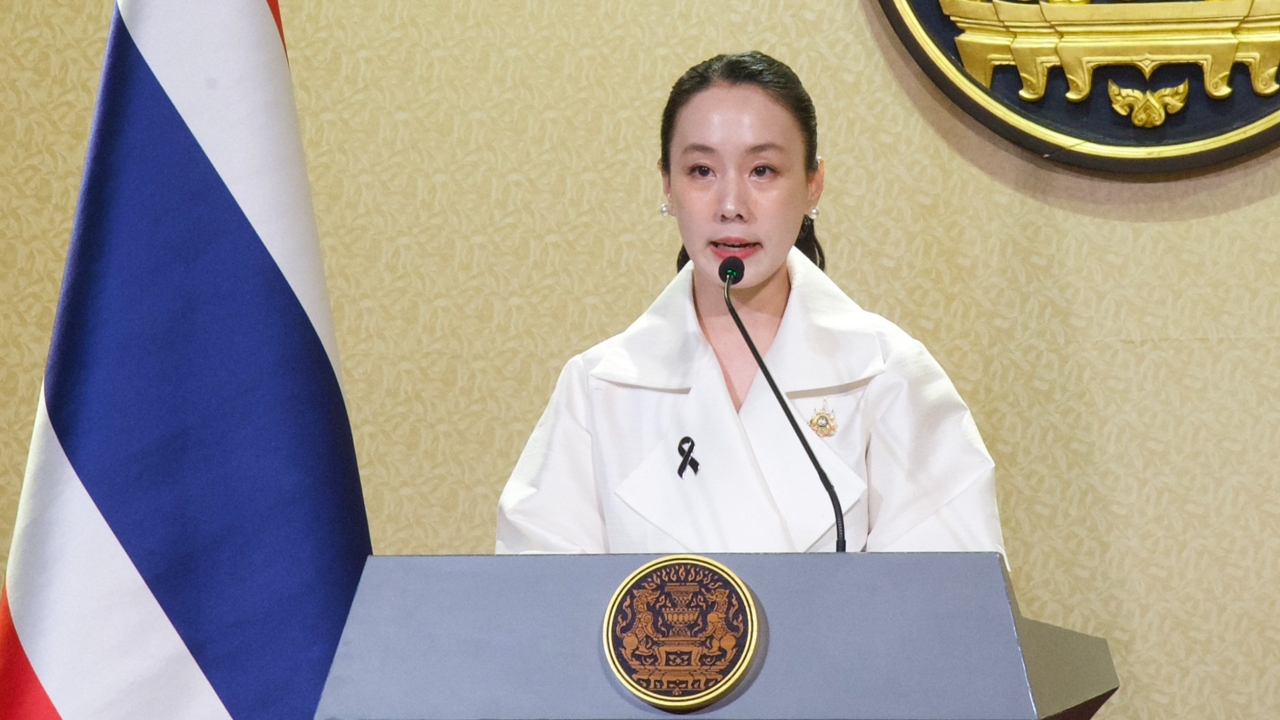
On 21 Sep 2026 GMT+7, Ms. Lalida Pertwiwatthana, Deputy Spokesperson of the Prime Minister’s Office, addressed concerns about the Thai-EU Free Trade Agreement (FTA) negotiations and the 1991 International Convention for the Protection of New Plant Varieties (UPOV 1991). She stated that the government and the Ministry of Commerce, under Deputy Prime Minister and Commerce Minister Supachai Sutthumpun, take farmers' concerns seriously. She requested clear distinction between "farmers' rights under current Thai law" and "proposals still under negotiation," noting that the Thai-EU FTA is not yet finalized, and proposals from either side are not yet accepted agreements by Thailand.
Ms. Lalida said that under Deputy Prime Minister Supachai’s oversight, the Ministry of Commerce has closely monitored the Thai-EU FTA negotiations, especially intellectual property and plant variety protection issues, where discussions continue. Although the EU proposed that parties protect plant variety rights under UPOV 1991, that document is merely the EU's proposal serving as a negotiation basis, not a finalized agreement between Thailand and the EU. Therefore, claims that "Thailand has agreed to join UPOV 1991" or "Thailand has amended its plant variety protection law" do not reflect the current negotiation status.
Regarding farmers' current rights, Thailand still enforces the Plant Variety Protection Act of 1999, whose Section 33 provides exceptions allowing farmers to use propagation material they have produced themselves for planting or propagation under legal conditions. It also includes exceptions for study, experimentation, breeding, and non-commercial acts as stipulated by law.
"Thus, saying that farmers saving seeds for replanting is entirely illegal is incorrect. It is important to distinguish between farmers saving propagation material they produced for replanting and the commercial production or sale of propagation material of new varieties protected under commercial rights without authorization, which are separate cases," Ms. Lalida explained.
The Deputy Spokesperson added that although UPOV 1991 grants plant breeders certain rights over propagation material of protected varieties, Article 15(2) allows member countries to legislate exceptions permitting farmers to use the harvested material from protected varieties grown on their own farms as propagation material within set limits and conditions.
Therefore, claiming that "UPOV 1991 completely prohibits farmers from saving seeds for replanting" is an overly broad summary of the provisions. Meanwhile, the government and Ministry of Commerce will not preemptively conclude that farmers' rights will remain unchanged should future negotiations involve UPOV 1991, as details depend on final negotiation outcomes and related domestic laws.
Ms. Lalida stated that Deputy Prime Minister Supachai emphasizes that negotiations must carefully consider Thailand’s overall interests. The Ministry of Commerce listens to concerns from farmers, civil society, academics, and consumers, recognizing that this issue involves not only trade but also farmers' rights, breeders' rights, production costs, biodiversity, indigenous plant varieties, and national food security.
"Deputy Prime Minister Supachai and the Ministry of Commerce affirm that proposals from either side are not final negotiation results and will not be prematurely concluded. The Thai team is working with the Department of Agriculture, Department of Intellectual Property, Ministry of Public Health, Food and Drug Administration, and related agencies to comprehensively assess impacts. They must find a balance between promoting innovation and international trade, protecting farmers' rights, biodiversity, and national food security," Ms. Lalida said.
Ms. Lalida emphasized that the FTA negotiations do not automatically change Thai laws. If the final agreement contains obligations under Section 178 of the Constitution, processes prescribed by the Constitution must be followed. Any necessary domestic law amendments must proceed through the relevant legislative process; laws will not change immediately as a result of negotiations alone.
"The government and Deputy Prime Minister Supachai prioritize communicating the facts without causing undue concern, while also respecting farmers' worries. Currently, the fact is that the Thai-EU FTA negotiations are ongoing, UPOV 1991 is not yet agreed upon, and existing Thai laws still include exceptions allowing farmers to save propagation material for replanting under legal conditions. Any proposals potentially affecting farmers and the country’s food security will be carefully considered," Ms. Lalida concluded.