

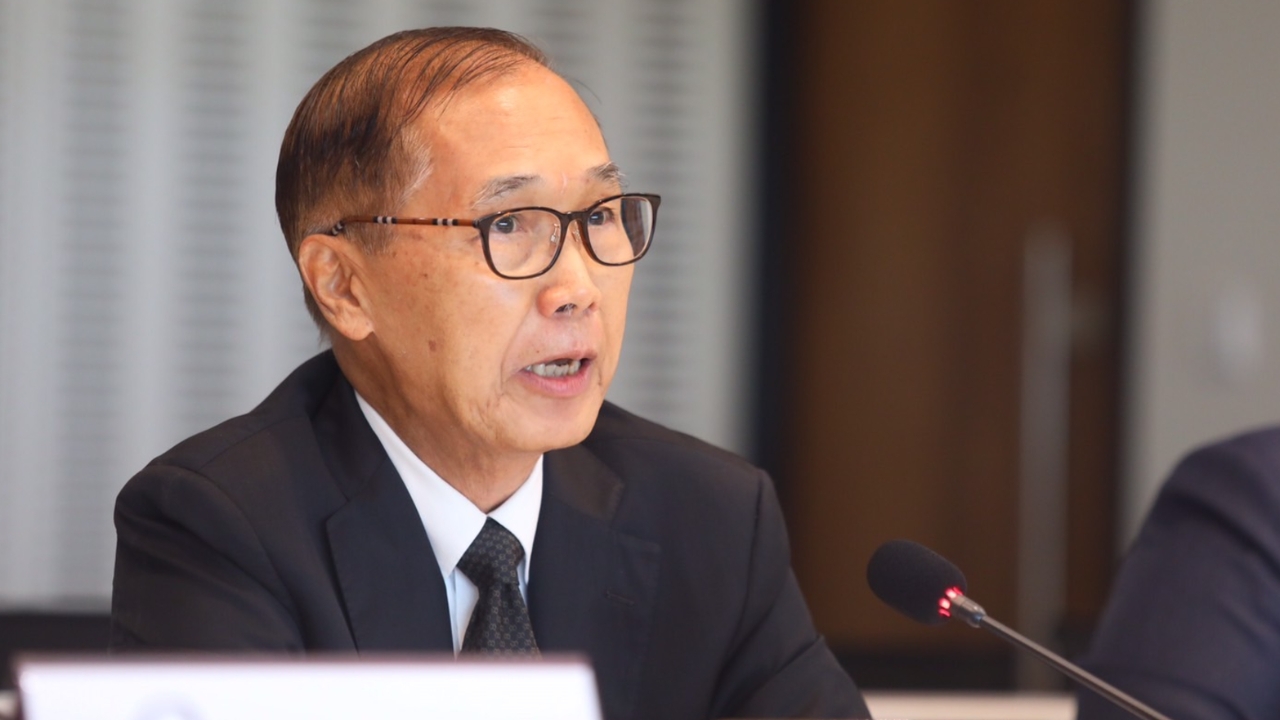
Former Thai Ambassador to the United States, Pisal, urges close monitoring of trade agreement negotiations with the US, noting that if taxes exceed 12.5%, the government will be considered to have failed. He also proposes three strategies should the Prime Minister have the opportunity to discuss with Trump.
On 21 September 2026 at the Parliament building, the People's Party held a press conference reporting on the 13th Shadow Cabinet meeting. A key agenda was a briefing by Mr. Pisal Manawapat, former Thai Ambassador to the United States, on the progress of the Thailand-US Reciprocal Trade Agreement (ART) negotiations.
Mr. Pisal stated that the US is currently implementing measures under Section 301 related to Thailand on two issues: imports of goods made with forced labor, and structural overcapacity problems. Meanwhile, the Thai government is pushing forward with ART negotiations. The Ministry of Commerce said in early September that both sides have been continuously discussing technical issues to reach a conclusion.
If the negotiation results lead to Thai exports facing tariffs higher than 12.5%, the Shadow Cabinet will consider the government to have failed in this negotiation, as it would disadvantage Thai products against regional competitors. Negotiating solely with the US Trade Representative may prevent Thailand from leveraging all its advantages, since the Trade Representative focuses mainly on trade issues, whereas the Thailand-US relationship also involves security and geopolitical dimensions that can be used in the talks.
Mr. Pisal further explained that the US is Thailand’s top export market, with exports valued at about 2.37 trillion baht in 2025. The Ministry of Commerce estimates that trade with the US supports over 400,000 jobs in Thailand. He therefore proposes three approaches for the government if the Prime Minister has a chance to discuss with President Donald Trump:
1. The Prime Minister should directly explain to the US President that Thailand needs time to restructure trade. The government should review product lists and enforce laws against grey market businesses, grey factories, and product mislabeling that use Thailand as a transit point for exports to the US. It should also regulate migrant labor to ensure exported goods are free from forced labor. These actions will directly address US concerns, especially the Section 301 investigation on products made with forced labor. Currently, the US imposes varying tariffs based on trade partners’ measures to ban such imports.
2. Thailand should affirm continued support for Thai companies investing in the US that create jobs, and request President Trump’s support in encouraging US companies to consider shifting investments from other regional countries to Thailand. Thailand’s security ties and alliance with the US should be part of the negotiation leverage. This is a card Thailand should use, as negotiations should not be limited to trade balance figures and tariff rates but link economic benefits with the strategic relationship between the two countries.
3. The Prime Minister should seek opportunities to invite President Trump to visit Thailand when he travels to the region, while building channels to connect with individuals who have access to the US administration and using high-level diplomacy to support the negotiations.
Mr. Pisal added that Deputy Prime Minister and Finance Minister Anek Niti Thantapraphas should use the upcoming annual meetings of the World Bank and International Monetary Fund (IMF) in Bangkok to build relations with US Treasury Secretary Scott Bessent. Personal relationships can be another channel to protect Thailand’s interests in dealings with the US government moving forward.
“The government needs to understand what bargaining tools Thailand has and who to use them with, because the outcome of these negotiations will directly impact the competitiveness of Thai products in the country’s largest export market, as well as employment in manufacturing, industry, and agriculture,” Mr. Pisal concluded.