

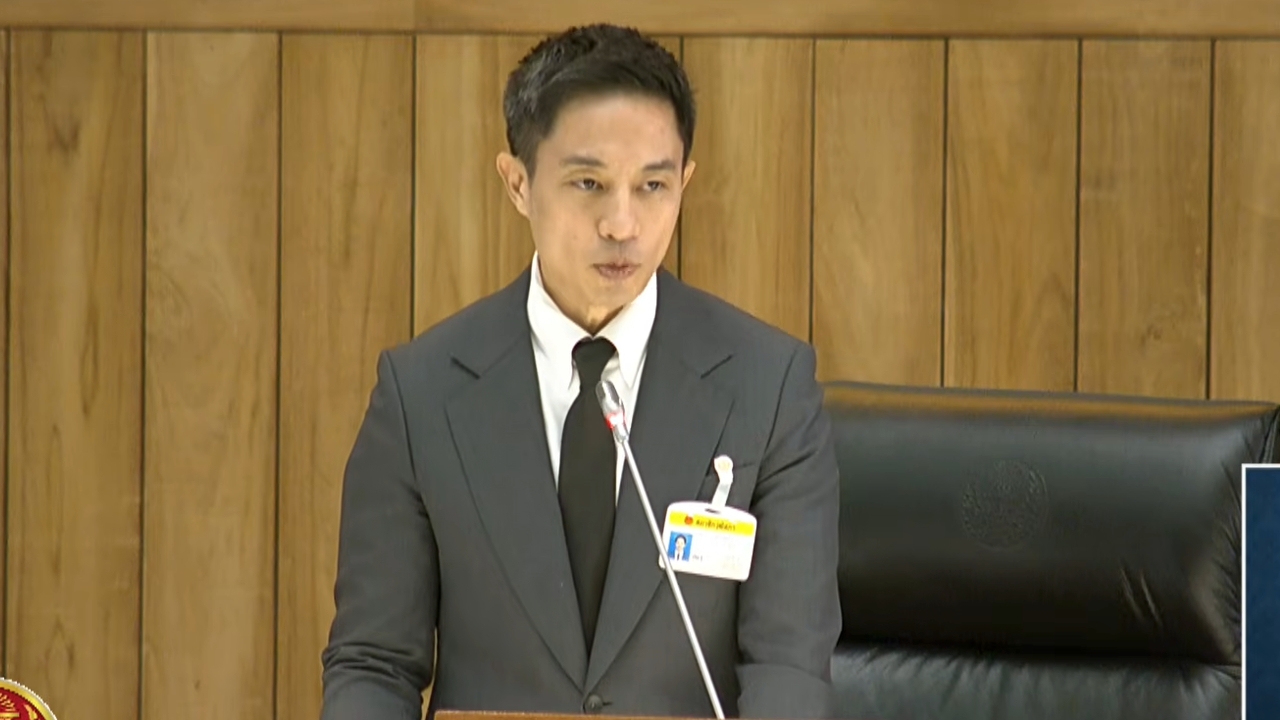
Senators propose a report to overhaul the election system, stripping the Election Commission of authority to issue yellow or red cards or to order new elections, limiting its powers.
At 10:00 a.m. on 21 Sep 2026 GMT+7, a Senate session chaired by Senate President Mongkol Surasajja considered a report with recommendations for developing Thailand's election process to be free and fair. The Political Development, Public Participation, Human Rights, Freedoms, and Consumer Protection Committee reviewed the report. Key proposals include amending three laws to improve election efficiency: 1. Constitutional amendments such as assigning candidates in constituency elections the same number as their nationwide party number to reduce voter confusion; allowing 50,000 citizens to petition the parliamentary president to remove Election Commissioners by a two-thirds parliamentary vote; 2. Amendments to the Election Commission Act to lower the minimum age of commissioners from 35 to 70 years, and to restructure the nomination committee to be more aligned with the public; 3. Amendments to the Election Act requiring the Election Commission to verify candidate qualifications and report within three days, and exempting certain acts benefiting the public, such as allowing government agencies and local authorities to provide transport for persons with disabilities and the elderly to vote fairly. These proposals aim to create a new democratic ecosystem by reforming organizational structures, management processes, and ensuring equal protection of citizens' rights.
New Breed group strips Election Commission's powers.
Reporters noted that during the debate, many senators, especially those from the New Breed group, supported stripping the Election Commission of powers beyond organizing elections. They argued the Commission should not have authority to rule on yellow or red card penalties or order new elections. They also supported allowing 50,000 citizens to petition to remove Election Commissioners. Senator Pornchai Witayalertpan of the New Breed group stated that the Election Commission’s dual role as organizer and adjudicator—investigating, ruling, ordering recounts or new elections—creates conflicts of interest. He proposed separating election management from election oversight to prevent self-review. The Commission recently considered 427 complaints but filed only 77 cases to court, including 26 involving senators. Given the volume of complaints and concerns, the issue is whether to adjust minor details or reconstruct the entire system. He proposed dissecting and rebuilding the Election Commission structure, emphasizing that the game organizers should not be the same as the game referees. The Election Commission has seven members but holds extensive legal powers over political processes, including investigation, adjudication, and ordering new elections. With greater power comes greater responsibility to the public, so mechanisms should be restored allowing 50,000 citizens to petition for the removal of independent organizations.
Mocking the Election Commission for frequently issuing blue cards.
Senator Nantana Nantawaropas argued that election management should be divided into two parts: management and oversight. The Election Commission should only handle election administration, while courts should manage oversight by issuing yellow, orange, red, or black cards. She noted the Election Commission rarely issues these penalties but mostly gives blue cards approving results smoothly. On the Commission’s appointment, she stressed it must be connected to the public rather than selected by senators who were not elected by the people—calling the current constitutional arrangement grotesque and urgently in need of reform. The current system risks power concentration by parties controlling independent bodies. She suggested that members of parliament should select independent officials, and that Election Commission members should come from diverse backgrounds, not limited to civil servants, to avoid turning independent bodies into retirement havens for bureaucrats. She also recommended lowering the minimum age for Election Commission candidates to 35 and establishing penalties for dishonest officials, allowing citizens to petition for removals. Regarding election result reporting, she called for rapid and transparent processes, criticizing the Commission for completing the Senate election only at 5 a.m., causing suspicion over delays. She pointed out unclear rulings on invalid ballots and emphasized respecting voters' intentions, even if marks slightly exceed or fall short of designated boxes. She also criticized the Election Commission’s poor communication with the public and its opposition to external campaign support, citing the case of iLaw being sued. She hopes these reforms will make Thai elections truly free and fair.
“Phisit” criticizes those who stir protests as impatient.
Senator Phisit Apiwatthapong raised concerns about Section 49 of the Election Commission Act. This section requires state agencies to forward election-related offense reports to the Election Commission within seven days if the Commission decides to act itself. He questioned the blurred line between the Election Commission and other investigative bodies, especially the Department of Special Investigation (DSI). He asked whether it is standard for the DSI, under the Ministry of Justice, to investigate elections. Is it fair for an independent body to be overseen by agencies whose ministers are politicians? He stated that once the Election Commission issues a decision, the law should be respected. He expressed fatigue over recurring protests and coups followed by rewriting constitutions since 2007, wondering if this cycle will repeat again in 2027. He explained that Thailand has multiple constitutions because people are impatient to wait for others to finish governing and prefer to use parliamentary processes. He called the report good but said it would be more complete if Section 49 were also reviewed.