

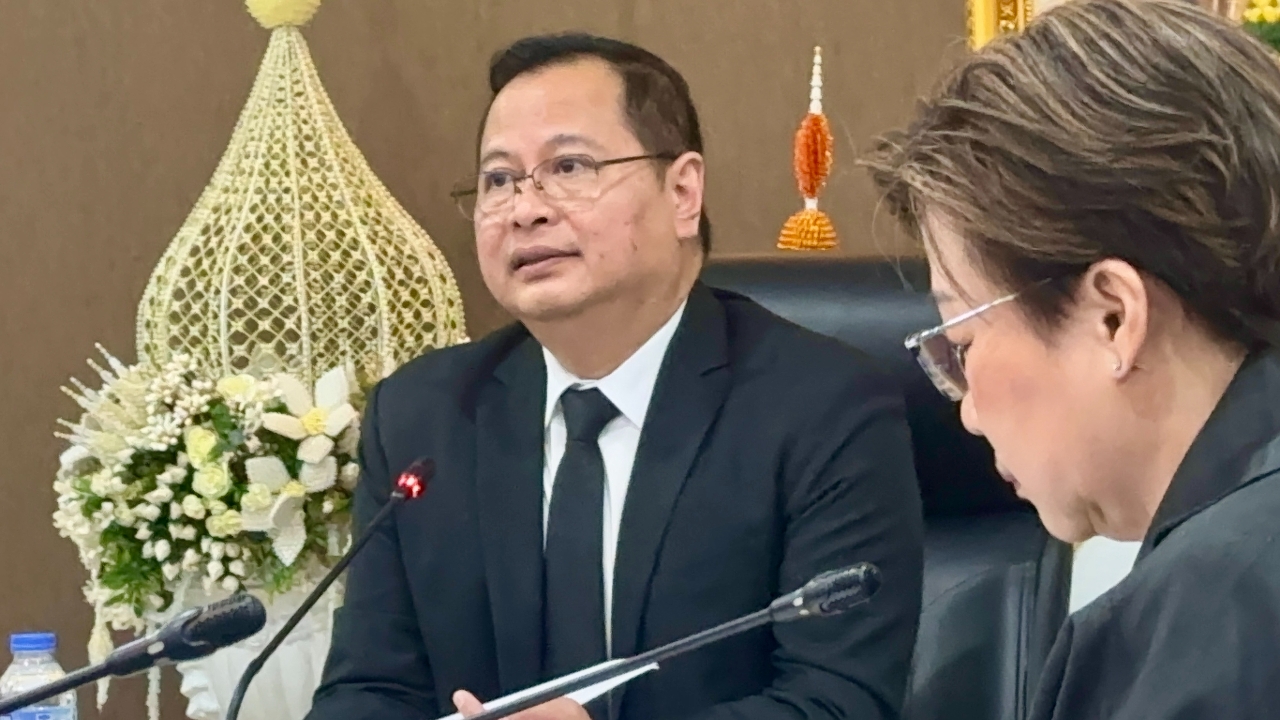
Pakorn convened the first meeting of the Peace Promotion Committee to resolve a 20-year conflict, emphasizing amnesty to end prosecutions and erase criminal records, hoping to settle old disputes and prevent recurrence.
At 14:00 on 21 Sep 2026 GMT+7 at the Government House, Pakorn Nilprapunt, Deputy Prime Minister and chairman of the Peace Promotion Committee, chaired the meeting. Present were Pol. Lt. Gen. Rutthaphon Naowarat, Minister of Justice and vice chairman; Piyasiri Watthanawarangkul, Permanent Secretary of the Ministry of Justice and committee secretary; committee members including Hansa Homhual, Secretary-General of the National Human Rights Commission; Wutthisan Tanchai, Chair of the Education Equity Fund; Ticha Na Nakorn, social worker and child rights advocate; Kanaphon Janhom, criminal law expert from Chulalongkorn University’s Faculty of Law; Associate Professor Dr. Yutthaporn Isarachai, political scientist from Sukhothai Thammathirat Open University; and Yupa Taweewattanakitboworn, Secretary-General of the Prime Minister’s Office.

Before the meeting, Pakorn said this committee is politically important for fostering unity and reconciliation. Over the past 20 years, political differences have caused disputes and distrust among politicians, civil servants, related parties, and families—a conflict that should not have happened. The amnesty law aims to strengthen and restore a peaceful society by ending ongoing prosecutions and expunging criminal records as stipulated.
Pakorn added that recent political, institutional, and organizational lessons taught us to avoid recurring incidents. Public expression is a democratic beauty, but differences should not escalate into divisions fueled by emotions. This law seeks to build a better society and hopes to fully resolve past conflicts as a lesson to prevent future ones.
"Yutthaporn" Reveals Multiple Channels for Stakeholders to Request Justice
After the meeting, Yutthaporn Isarachai, committee member, said many agencies await clarity on fostering reconciliation. The law has been in effect for one month. The peace promotion under Sections 7 and 8, plus exceptions in Section 3, applies to the amnesty law and offenses involving state agencies as per the annex of the Peace Promotion Act, which must be implemented accordingly.

Associate Professor Dr. Yutthaporn said the chairman Pakorn and other members agreed that agencies must comply with this act. For unclear cases or if state agencies refuse, complaints can be submitted to the committee. The meeting established convenient channels for stakeholders to file requests via mail, email, or official procedures, with public communication planned to gather feedback. This process will continue accordingly.
"Aunt Mon" Declares Everything Will End Gracefully
Meanwhile, committee member Ticha Na Nakorn said the policy allows for broad political interpretation to include all involved during conflict periods, aiming to bring closure. The committee’s consensus is reassuring, and she expressed gratitude, affirming that everything will conclude beautifully.
